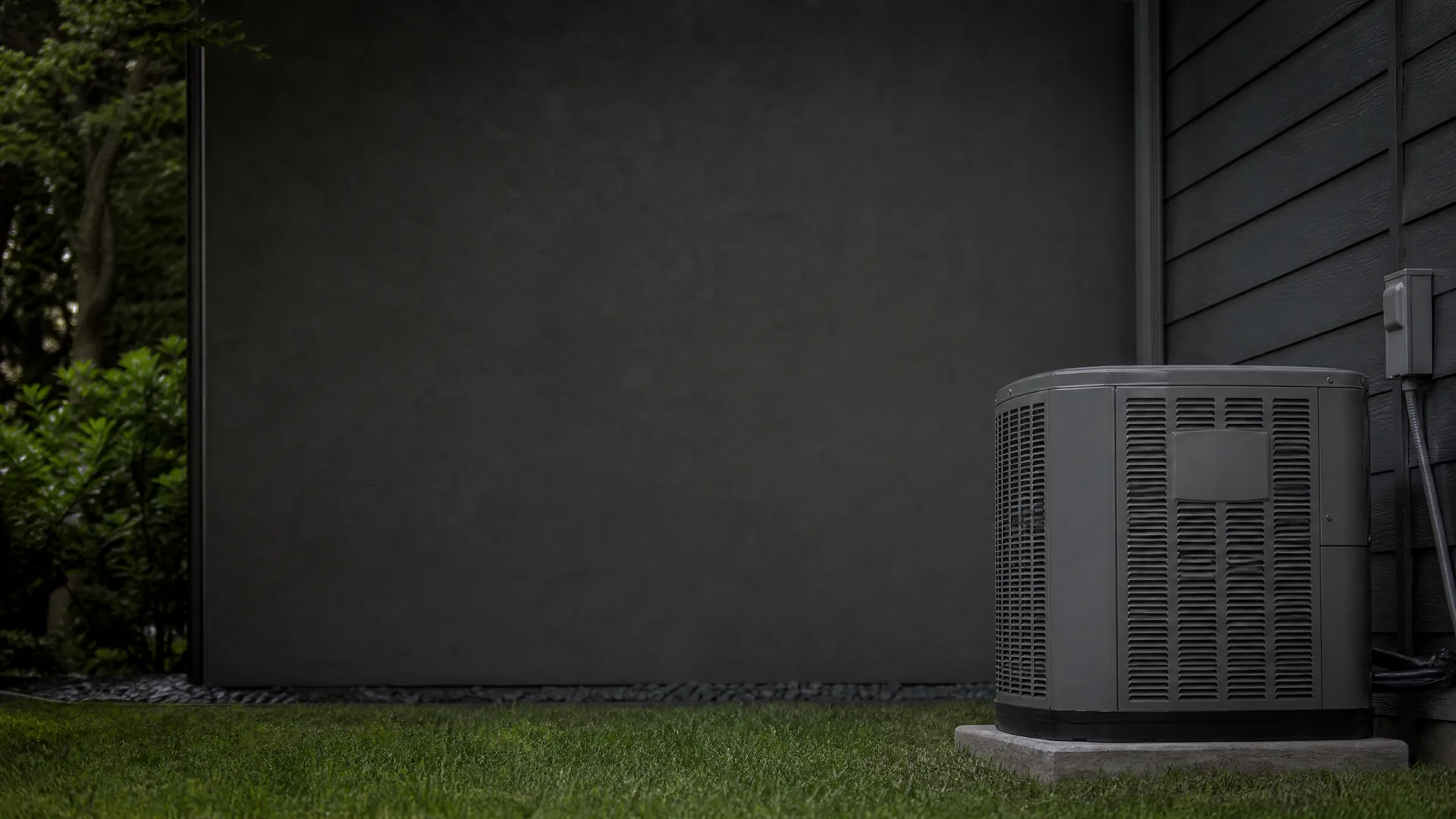
AC can't keep up on hot days in Rock Hill, SC

Get matched with someone who does this kind of work in York County.

Get matched

Why can't my AC keep up when it's really hot outside?

By late afternoon on a hot day, the house just won't cool down no matter how low you set the thermostat. You've checked the filter, maybe even checked the breaker, and the unit is running, it's just not winning. In Rock Hill summers, this isn't rare, and it usually points to something specific rather than the heat itself being the whole story.

Your AC is undersized for the load, or it's lost capacity

Every air conditioner is rated to remove a certain amount of heat per hour, and that rating was matched to your house under normal conditions. On a 95 degree day with high humidity, the unit has to work harder just to hold steady, let alone pull the temperature down. If the system is low on refrigerant, has a dirty coil, or the airflow is restricted somewhere in the ducts, that extra demand is what exposes it. A unit that keeps up fine in May can fall behind in July and August because the gap between outside and inside temperature is so much bigger. Long, humid summers here mean the equipment runs for hours at a stretch with little break, so any weakness in the system shows up as soon as the heat index climbs.

A woman wrapped in a knit blanket sits on a gray sofa in a living room, looking toward a bright window with houseplants and an armchair in the background.
A woman with long dark hair in a green knit sweater sits on a couch indoors, smiling and looking toward a window with a blurred room behind her.
A woman with dark hair in a bun wearing a cream knit sweater sits on a gray sofa in a bright living room, looking off to the side.
A woman in a gray cowl-neck sweater sits on a light sofa with cushions, smiling and looking to the side, with a kitchen and window visible behind her.
A gray outdoor air conditioner condenser unit on a concrete pad beside a house with dark horizontal siding and a stone base, surrounded by gravel, with a flowering shrub at left and a concrete walkway in front.
A clean condenser with good airflow around it can move heat out of the house even when it's 95 outside.
An outdoor air conditioner condenser unit sits on a concrete pad beside a stucco wall, with refrigerant lines and conduit running to the wall and a shrub to the left.
Grime caked on the fins and a cabinet that's been breathing dirty air for years can't shed heat fast enough to keep up.

When your system can't shed heat fast enough, it doesn't just fail quietly. It runs longer to make up the difference, pulling power the whole time the sun is up. You'll see that on the bill before you see it anywhere else. The upstairs bedrooms go first, since heat collects there, and by evening they can sit five or more degrees above what the thermostat claims downstairs. Kids come in from outside and the house doesn't feel like relief anymore. Meanwhile the compressor is working past what it was built to do hour after hour, and that kind of strain is what shortens the life of a unit that might otherwise run another several years. None of this fixes itself when the weather breaks for a day. The heat comes back the next afternoon and the same struggle starts over, so the part that's losing the fight keeps losing it until someone looks at what's actually wrong.

An outdoor air conditioner condenser unit sits on a gray pad beside a light vinyl-sided wall, on a concrete slab next to a gravel bed.
Before you get your air conditioner repair
A gray outdoor air conditioner condenser unit on a concrete pad beside a house with horizontal lap siding, with a wall-mounted disconnect box and conduit, mulch bed, shrub, and lawn nearby.
After you get your air conditioner repair

Get matched with an air conditioner pro in York County

Send the request and finding a pro stops being your problem.

No charge to send it. You decide if you hire them.

Why Heat Breaks Down the System

  • The outdoor unit moves heat from inside your house to the air outside, and that only works if outside air can actually pull heat off the coil.
  • On a 95 degree day the coil is already starting from a smaller temperature gap, so the compressor has to run longer to move the same amount of heat.
  • Refrigerant has to be at the right pressure to absorb heat inside and release it outside, and a system low on charge loses capacity fastest on the hottest days.
  • A unit sized for a normal July afternoon doesn't have spare capacity to call on when the temperature climbs past what it was built for.
  • The blower has to push enough air across the indoor coil for the system to pick up heat from the house in the first place.
  • Once the compressor runs close to nonstop in the heat, there's no idle time left for the system to catch up if anything is working below its best.

An air conditioner doesn't make cold air. It moves heat from inside your house to the air outside, and that outside air has to be cooler than the coil for the exchange to work at all. On a mild day that gap is wide and the system barely has to try. On a 95 degree afternoon in Rock Hill, the gap shrinks, and the compressor has to run longer and harder to move the same amount of heat out of the house. That's the basic math behind a system that "can't keep up." Everything downstream depends on that exchange happening cleanly. Refrigerant has to sit at the right pressure to pick up heat indoors and let it go outdoors, and a system that's lost some of its charge loses capacity fastest exactly when it's hottest out, not on the mild days when nobody notices. The blower matters too. It has to push enough air across the indoor coil, because the coil can only pick up heat from air that actually reaches it. And sizing matters. A unit matched to a normal July afternoon was never built with spare capacity sitting in reserve. Once the outside temperature climbs past what the system was designed around, and the compressor is running close to nonstop just to hold ground, there's no slack left to absorb a weak capacitor, a dirty coil, or a refrigerant leak. Whatever was marginal in May becomes the reason the house doesn't cool in August.

Cooling runs May through September

Five months of cooling is most of what your AC does all year, so May through September is when every weak part shows itself. A unit that limps along in March will struggle a lot more once the afternoons stay in the 90s for weeks at a stretch.

NOAA nClimDiv 1991-2020

A gray outdoor air conditioner condenser unit sits on a concrete pad beside a house with horizontal lap siding, with conduit and an electrical disconnect box on the wall, dark mulch and a shrub to the left, and a concrete walkway in the foreground.

A condenser that can breathe

The fins are clean and the air around the unit moves freely. Heat from the house transfers to the outside air the way it's supposed to, even when the afternoon sits in the 90s. The compressor cycles off instead of running straight through the day.

An outdoor air conditioning condenser unit on a concrete pad beside a house with horizontal lap siding, with a shrub and mulch bed to the left and conduit and a small electrical box on the wall to the right.

A condenser that's choking

Years of dirt have packed into the grilles and the cabinet looks its age. Heat has nowhere to go, so the compressor runs long and hard just to hold the house a few degrees below outside. That strain shows up on the bill and eventually in a part that gives out.

An older woman with short gray hair in a cream knit sweater smiles while looking to the side, standing behind a wooden board holding a round loaf of bread, with a dark window and lamp-lit interior behind her.
A woman and a child wrapped in a knitted blanket sit together on a couch in a dimly lit room with a glowing table lamp behind them.
A smiling man in a denim shirt and white t-shirt stands in an open dark doorway of a stucco house, facing a woman with long brown hair and a green jacket seen from behind in the foreground.

An AC that can't keep up on a 95 degree day has a reason, and it's fixable

A system that falls behind in the afternoon heat isn't broken beyond help. Something specific is stopping it from shedding heat the way it should, whether that's a dirty coil, a weak capacitor, or a charge that's drifted low. A contractor who checks it on site will find which one it is and tell you straight what it takes to fix.

You don't have to figure out which part it is before you ask for help. Once you send the request, a contractor who works on systems like yours in the Rock Hill area will reach out and take it from there. You've already done the hard part just by noticing something's wrong instead of waiting out the summer with a house that won't cool down.

A dark ceramic vase holding a leafy green branch sits on a round wooden table, with a blurred cushioned wooden armchair, woven basket, window and shelving with pottery in the background.
An outdoor air conditioner condenser unit sits on a concrete pad beside a house with horizontal lap siding and an electrical disconnect box, next to a large stucco wall, with lawn, gravel edging and shrubs in the foreground.

Find an air conditioner repair pro in York County

After this form, you can stop searching for an air conditioner pro.

RepairCentral ACYork County, SC
Step 1 of 2

What ZIP code is the job in?