






Profile view of a bearded man wearing a dark green baseball cap and a dark gray T-shirt against a plain light background.

Heat pump not cooling in Rock Hill, SC

RepairHeat PumpYork County, SC
Step 1 of 2

What ZIP code is the job in?

A heat pump that runs but doesn't cool is usually stuck in the wrong mode or starved of airflow or refrigerant. Check the thermostat first. It needs to say "cool," not "auto" or "heat," and the temperature set below room temperature. If that's right and air blowing out still feels warm or barely moves, the problem is likely a dirty filter choking airflow, a frozen outdoor coil, or a refrigerant leak. Summers around Rock Hill run long and humid, and a heat pump works harder here than in most places, which wears on the parts that keep refrigerant moving and coils clean. An outdoor unit caked in grass clippings or leaves can't shed heat properly, and that alone can stop cooling cold. If the outdoor fan isn't spinning, or you hear it humming without turning, that unit needs a technician before it burns out the compressor. Left alone, most of these problems get worse, not better.

Why does a heat pump problem in Rock Hill hit harder in summer

  • Winter nights average 33°F

    Winter nights averaging 33°F mean the heat pump works hard in cold weather too, but you called about cooling, which tells its own story.

  • Heat runs October through April

    Seven months of heat a year puts long hours on the same reversing valve and compressor you now need for cooling.

  • Cooling runs May through September

    Five months of cooling means May through September gives you almost no slack if the system sits broken while parts get ordered.

NOAA nClimDiv 1991-2020

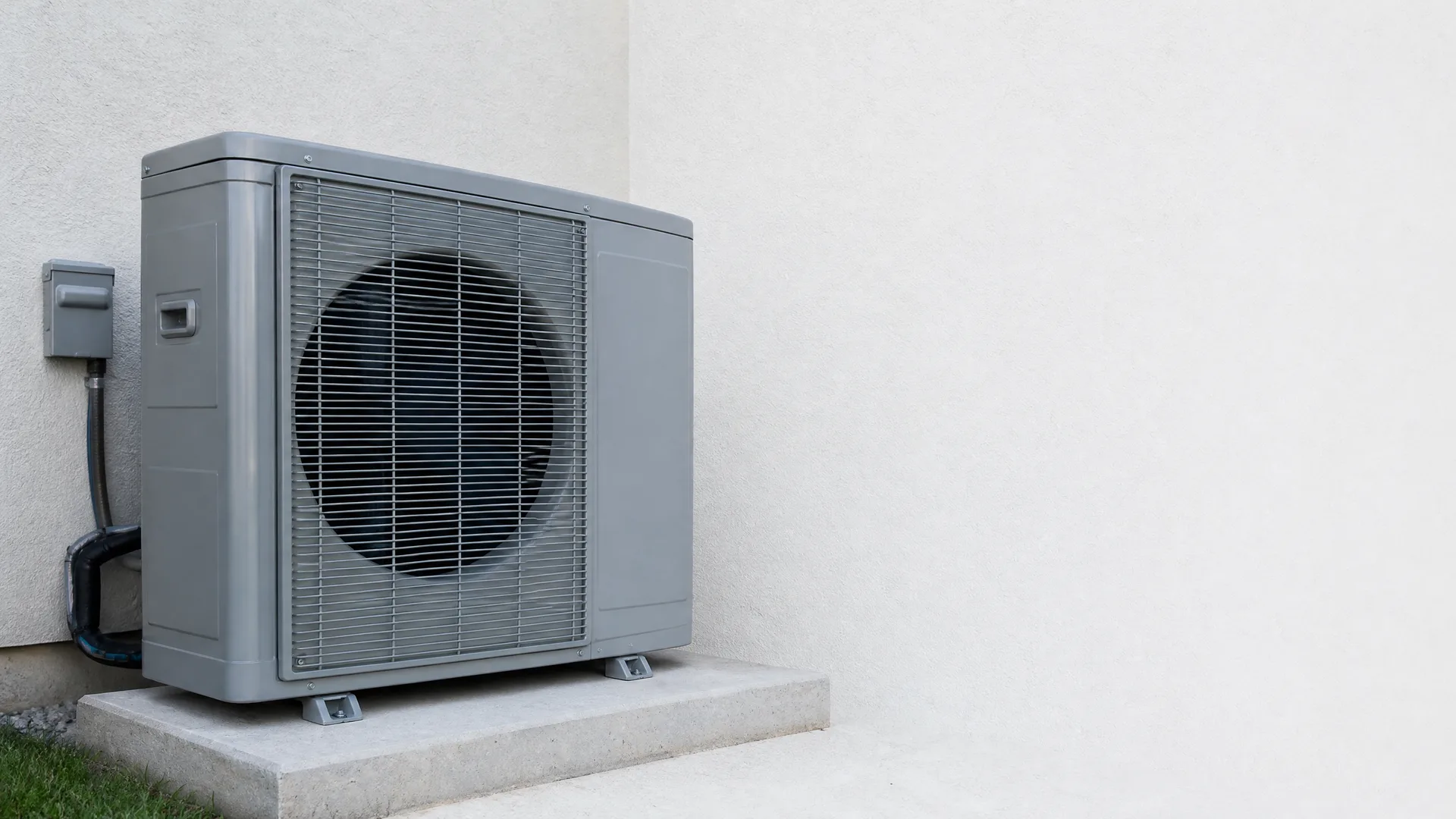
A gray outdoor heat pump unit on a concrete pad against a light stucco wall, with an electrical disconnect box and conduit on the wall to its left.

The outdoor unit is running

If the fan outside is spinning and air is moving through your vents but it's warm, the heat pump is likely stuck in heat mode or low on refrigerant. A reversing valve that won't switch can push the system backward even with the thermostat set right. This still counts as a working system with a specific fault, and a contractor can usually narrow it down fast once they're on site.

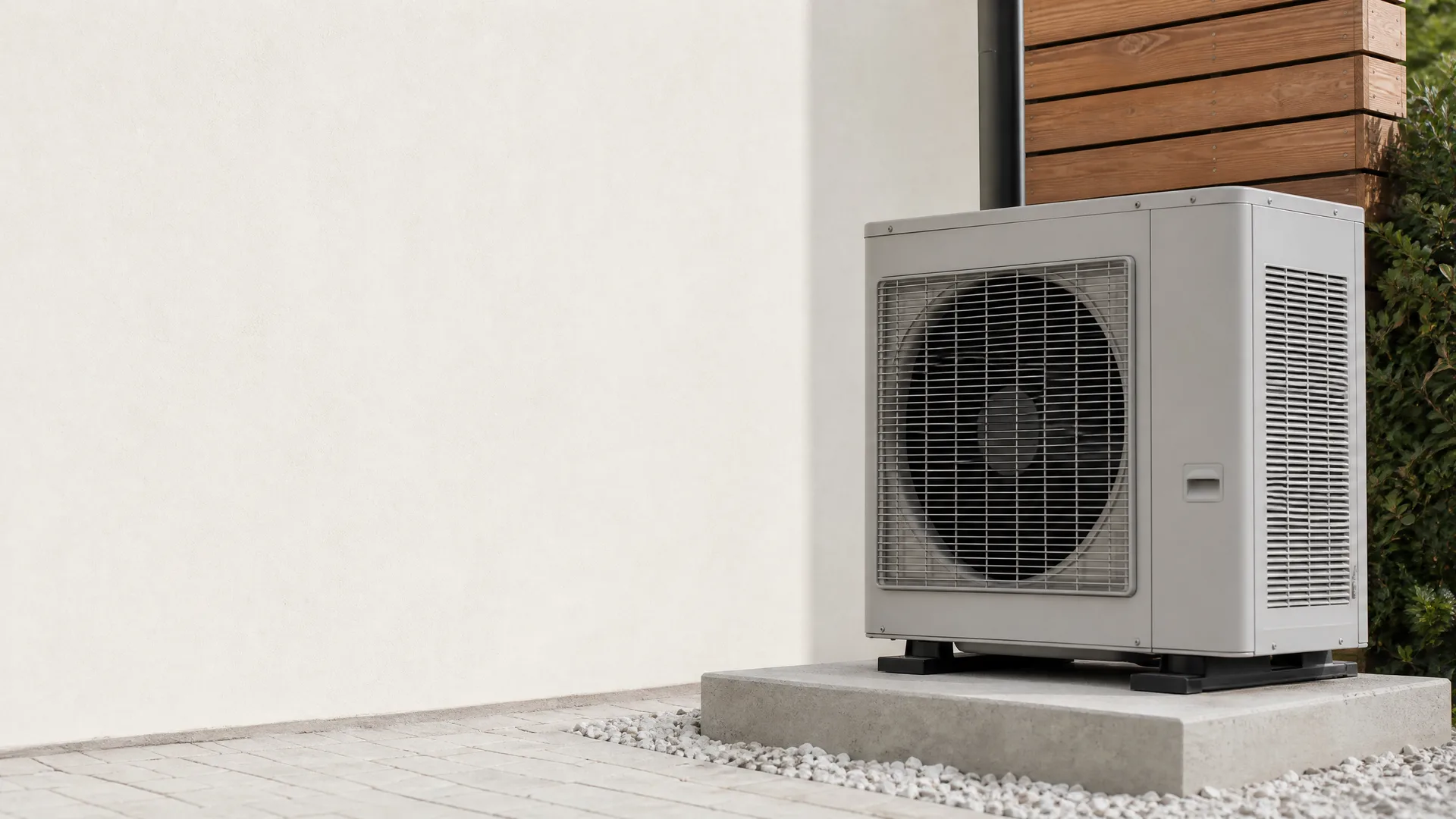
A gray outdoor heat pump unit with a large fan grille sits on a concrete pad beside a pale stucco wall, with horizontal wood cladding and a green shrub behind it and paving stones and gravel in front.

The outdoor unit is silent

If the condenser outside isn't running at all, the problem sits upstream of the refrigerant cycle. A tripped breaker, a blown capacitor, or a failed contactor will all keep that unit from starting no matter what the thermostat says. Check your breaker panel first. If it hasn't tripped, the fault is likely inside the unit itself, and that's not something to keep testing on your own with a multimeter.

Power here costs 13.25 cents per kilowatt-hour

At 13.25 cents per kilowatt-hour, running a heat pump that's stuck in the wrong mode or low on charge costs you more than normal cooling ever would. A unit fighting itself still draws power the whole time it runs, so a stuck reversing valve or a low charge shows up on your bill before it gets fixed.

EIA-861 2025

How the Switch Actually Fails

  • The reversing valve is a solenoid-controlled valve that switches refrigerant flow between heat and cool modes.
  • A stuck reversing valve often hums or clicks when it tries to switch without actually changing direction.
  • Low refrigerant charge shows up as ice on the outdoor coil or on the copper line running to the house.
  • The outdoor fan and compressor can both run fine while the indoor coil still can't pull heat out of the air.
  • A dirty filter restricts airflow across the indoor coil, which drops suction pressure and can mimic a refrigerant problem.
  • Technicians check suction and head pressure with gauges to tell a valve problem from a charge problem before opening anything up.

A heat pump cools by running the same refrigerant loop as a furnace does in reverse. The reversing valve is what flips it. It's a solenoid-controlled valve, and when the thermostat calls for cool, it's supposed to shift refrigerant flow so the indoor coil pulls heat out of the air instead of pushing heat into it. When that valve sticks halfway, the system can run like it's trying to do both at once. You might hear a hum or a clicking sound from the outdoor unit as it attempts to throw the switch and fails. Meanwhile the compressor and outdoor fan can both be running completely normally, which is what throws people off. Everything outside looks and sounds fine. The problem is inside, at the coil, where the refrigerant isn't doing what it should.

Low refrigerant charge looks different but gets blamed for the same symptom. It shows up as ice forming on the outdoor coil or along the copper line set running into the house, even in July heat. A dirty filter can produce a similar effect by choking airflow across the indoor coil, which drops suction pressure and reads a lot like a charge problem even though the refrigerant level is fine.

Telling these apart isn't a guessing game. A technician hooks up gauges to read suction and head pressure, which shows whether the valve is doing its job before anyone opens up the system to look further.

A bearded man in a plaid flannel shirt stands indoors looking out a window at a snow-covered conifer, with a steaming dark mug on the windowsill and wooden cabinets behind him.
A bearded man in a dark gray T-shirt sits smiling on a light gray couch, with a houseplant and a framed picture on the wall behind him.

You'll feel this before you understand it. The vents are blowing, the outdoor unit is running, but the air coming into the room doesn't feel right, and the house won't come down to the temperature you set. If it's just started, give it a day. If it's gone on longer than that and the inside air feels thick or sticky along with the warm registers, that's not a thermostat problem. That's refrigerant or a valve that won't fully switch. Either way, the compressor outside doesn't know the difference. It keeps drawing power whether the air it's producing is cooling your house or not, so the bill shows up the same as a summer where everything worked. The longer it runs stuck, the more it leans on a compressor that's already carrying the heaviest months of its year. A faint hiss by the outdoor unit or airflow that feels weaker than usual are early signs worth checking before the house itself feels the difference.

What This Looks Like In Your House

  • A heat pump stuck in heat mode in July will push warm air through your vents while the outdoor unit keeps running.
  • Your power bill reflects every hour the compressor runs, whether it's actually cooling your house or just fighting itself.
  • Warm air at the registers for more than a day or two with high humidity indoors points to a refrigerant or valve problem, not a thermostat setting.
  • A reversing valve that won't fully switch can leave your system drawing power without delivering the cooling you're paying for.
  • Low refrigerant charge often shows up first as weak airflow or a faint hiss near the outdoor unit before the house ever feels warm.
  • Letting a stuck valve or low charge run through a Rock Hill summer adds strain to a compressor that's already working its longest months of the year.
A woman in a cream turtleneck sweater stands beside a multi-pane window looking out at falling snow, with a dimly lit living room containing a lamp, sofa and shelves behind her.
A woman in a beige turtleneck sweater stands by a large window with snow-covered trees outside, in a living room with a lit lamp, sofa with cushions, and a wood stove with visible flames.
A woman with long dark hair in a beige knit turtleneck sweater stands beside a window with snow outside, looking off to the side, with a warmly lit living room containing a sofa, lamps and a coffee table behind her.
A woman with shoulder-length brown hair in a beige knit sweater stands near a window looking outside at falling snow and snow-covered evergreens, with a dimly lit living room, sofa, lamp, bookshelf and framed landscape painting behind her.
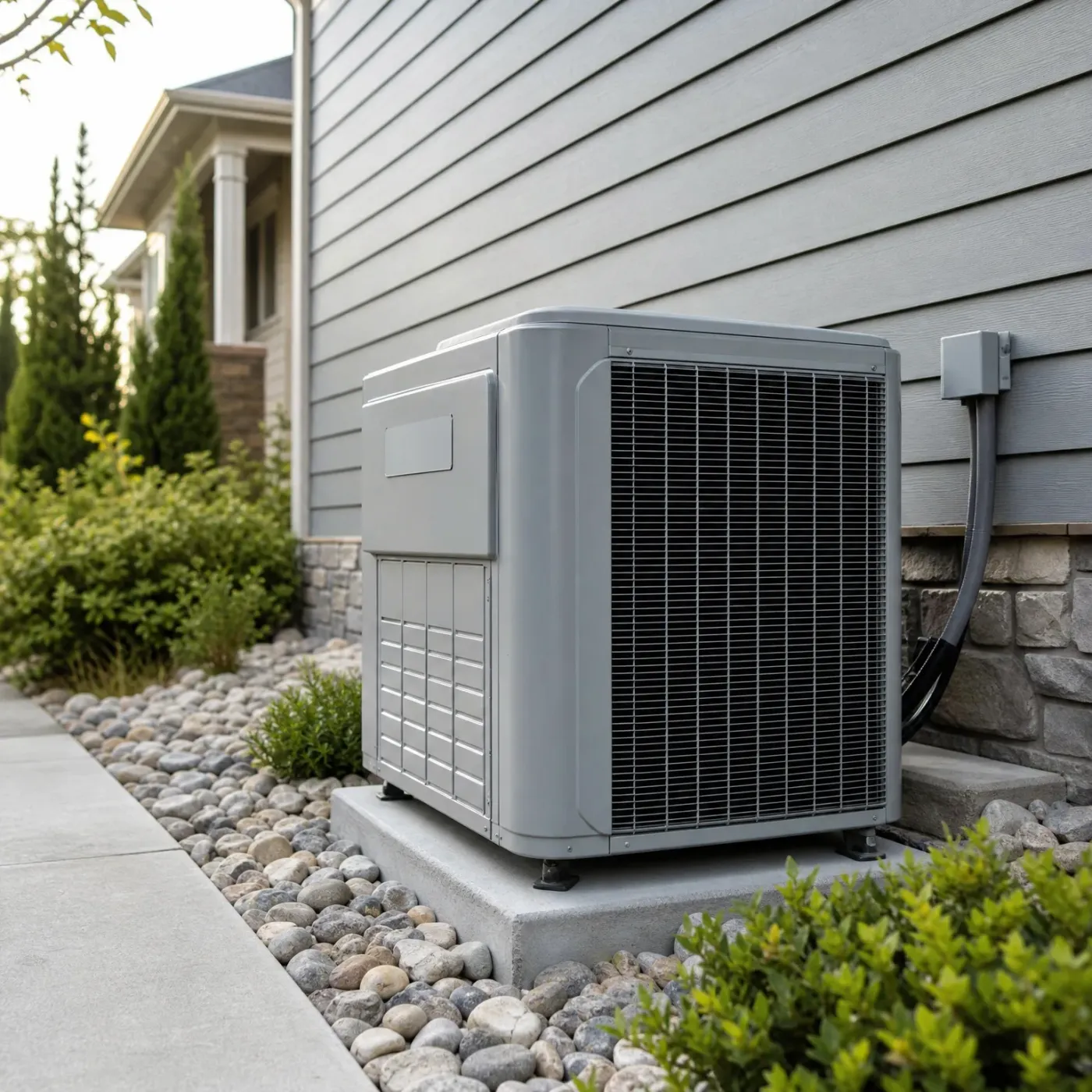
A gray outdoor heat pump unit on a concrete pad beside a house with light gray horizontal lap siding and a stone base, surrounded by river rock and shrubs next to a concrete walkway.

Get matched with a heat pump pro in York County

A licensed pro who repairs heat pumps in York County gets your request.

Get matched with a pro who fixes heat pumps in York County.

Find a licensed pro

Asking costs nothing, and the choice to hire stays yours.

Why does your house feel warm even with the AC running

You set the thermostat to 70 and it still feels like 78 in the back bedrooms. The vents blow air, but it's not cold, maybe even warm to the hand. The outdoor unit hums along like normal, so nothing looks broken from where you're standing. Some rooms might cool a little while others don't move at all. If you leave it running like this for days, you're not getting ahead of the heat, and the compressor keeps cycling without ever catching up, which means the bill climbs while the house stays sticky. The longer a stuck system runs this way, the more it can wear on parts that were never built to fight themselves all summer.

A gray outdoor heat pump unit with a large fan grille sits on a concrete pad beside a house with horizontal lap siding, next to a green shrub, mulch bed, and lawn.

The unit when it's working right

This is a clean, clear setup. Nothing blocks the grilles, the pad sits level, and the conduit running up the wall is doing its one job, feeding power to the unit. Airflow in and out is unrestricted, which is half of what a heat pump needs to cool.


An outdoor air conditioner condenser unit on a concrete pad beside a house with horizontal lap siding, with a gray electrical disconnect box and conduit on the wall and bare dirt and mulch in the foreground.

The unit when something's off

Dust and grime cake the grilles here, and that buildup chokes airflow across the coil. A coil that can't breathe can't pull heat out of your house, no matter what the thermostat says or what mode the reversing valve is stuck in.

Fix It Yourself or Call Now

Call a contractor now

  • A reversing valve stuck mid-cycle can push the compressor to run constantly without ever switching to cool, and that's not something you can fix by resetting the thermostat.
  • Low refrigerant means a leak somewhere in the lines, and every day it runs low puts more strain on the compressor itself.
  • A contractor who works on heat pumps all summer in York County knows which of these two problems is more common and can usually tell within minutes of checking pressures.
  • Matching you with one local, licensed contractor means one company handling the diagnosis, not several calls competing for the job.
  • If the system is pulling full power but not cooling, the compressor is working against itself the whole time, and that doesn't stop until someone intervenes.

Check it yourself first

  • Confirm the thermostat is set to "cool," not "auto" or "heat," and that the set temperature is below the room's current reading.
  • Walk outside and check whether the condenser fan is spinning; if it's dead still, the issue may be electrical rather than the valve or charge.
  • Look at the air filter. A filter clogged with months of dust can starve the system of airflow and make it seem like a refrigerant problem when it isn't.
  • Check if any vents are closed or blocked by furniture, since restricted airflow on the indoor side can mimic a stuck reversing valve.
  • If the thermostat is correct, the fan is running, and the filter is clean, the problem is inside the system and not something to keep testing on your own.
A gray outdoor condenser unit on a concrete pad beside a white horizontal-siding house, with refrigerant lines and conduit running to a wall-mounted disconnect box, bare soil in front and a green shrub at left.

Clean unit, clear airflow

This outdoor unit sits open on its pad, grilles clear and the conduit and lines running straight into the wall disconnect. Air moves through the coil without a fight. A unit that looks like this can still have a stuck reversing valve or low charge, but at least airflow isn't part of the problem.

A weathered outdoor condenser unit on a concrete pad beside a house with light horizontal siding, surrounded by bare dirt and a shrub.

Dirt caked on the grilles

Grime like this across the grilles and top panel chokes the airflow the coil depends on to cool. A heat pump working this hard to breathe will run long and still leave your house warm, and it adds strain on top of whatever else is wrong with the system.

An outdoor air conditioner condenser unit on a gray composite pad beside a house with horizontal lap siding, with refrigerant lines and a conduit running to a wall-mounted disconnect box, and a shrub at left.
Before you get your heat pump repair
A gray outdoor condenser unit on a concrete pad beside a beige vinyl-sided house, with a wall-mounted disconnect box, flexible conduit, mulch bed, shrubs and a concrete walkway in front.
After you get your heat pump repair
  1. The thermostat calls for cool and sends a signal to the reversing valve

  2. The reversing valve shifts to route refrigerant through the cooling path

  3. The compressor pressurizes refrigerant and sends it to the outdoor coil

  4. The outdoor fan pulls air across the coil to release heat outside

A woman in a cream cardigan and jeans stands with one hand raised facing an open front door of a gray horizontal-siding house, with a black lantern wall light, a potted shrub with yellow flowers, and a stone-faced porch column.

A heat pump that won't cool has a reason, and it's findable

Warm air blowing from your vents in the middle of summer comes down to a short list: the thermostat mode, the reversing valve, the airflow, or the refrigerant charge. One of those is the reason your house in Rock Hill won't cool down no matter where you set the dial. None of them fix themselves, and running the system while it's stuck only adds to the power bill without adding any comfort.

A local contractor who works on heat pumps all season has seen this exact complaint plenty of times and knows where to look first. Getting matched means one contractor familiar with this equipment reaches out to you directly, not a handful of companies competing for the job. You'll know what's wrong and what it takes to get cold air moving through your house again.

A light gray sofa with gray and beige textured throw pillows and a cream knit blanket beside a white-framed window, with a small round side table holding a ceramic vase and potted greenery.
A dark standing-seam metal roof and stone gable end with a capped chimney in the foreground, with trees draped in hanging moss and misty mountain ridges under a cloudy sky behind.

Find a heat pump repair pro in York County

Find a local pro

No fee to send it, and nothing to sign.

A heat pump that's stuck heating instead of cooling won't fix itself. Every day it runs that way adds to your power bill without cooling your house. A contractor local to Rock Hill who works on these year round can usually tell you over the phone what's likely wrong before ever seeing the unit.