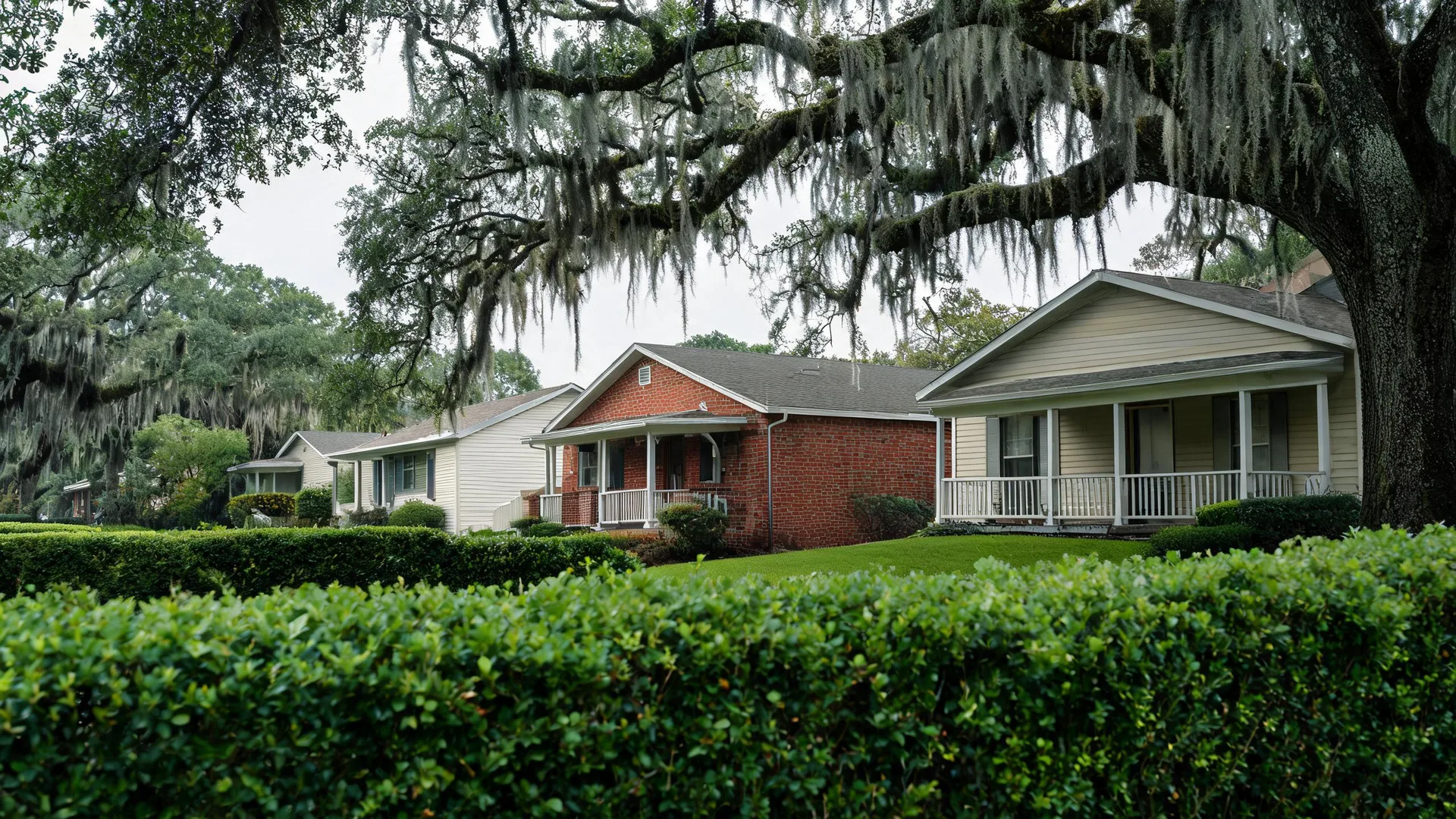







A row of single-story houses, one brick and others with light siding and covered porches, set behind a trimmed green hedge and lawn, under large oak branches draped with Spanish moss.

AC Installation in Lexington, SC

Tell us about the job

Takes about a minute. No obligation.

New system or replacementCentral ACLexington County, SC
Step 1 of 2

What ZIP code is the job in?

Ask what size unit the contractor is proposing and how they landed on it. The right size comes from a load calculation that looks at the square footage, the windows, the insulation, and the layout, not a guess based on the old unit. A system that's too big cools the room fast then shuts off before it pulls the moisture out of the air, leaving the house cold and clammy. One that's too small runs constantly and still can't keep up on the hottest days. Ask too what happens to the existing ductwork, since new equipment moving air through old, leaky or poorly sized ducts won't perform the way the brochure says it will. And ask about the warranty terms on the compressor and on the labor, because contractors don't always cover them the same way.

5 months
May through September, your air conditioner is on duty
91°F
the average summer afternoon it cools against
74 hail events
in ten years, and hail bends the fins on outdoor coils
13.4 SEER2
the federal minimum any new unit must meet
Isometric cutaway illustration of a house showing attic ductwork, an indoor air handler, and an outdoor condenser unit connected by lines.
Your air conditioner works hardest from June through September.

NOAA nClimDiv, 1991–2020 normals

The rating on the label is tested under set conditions in a lab, not in your house.

What the compressor and the coil size actually do on your hottest day depends on the install, not just the number on the sticker.

Most homes in Lexington heat with electricity, and a new AC installs straight into that setup

69.3% of homes heat with electricity
Cooling runs May through September
Summer afternoons average 91°F
Power costs more hereSouth Carolina electricity ran 14.23 cents per kilowatt-hour in 2024, so efficiency on a new system shows up on every bill.

Cooling here runs May through September. If the current system is on its way out, April is the month to deal with it, before the first hot stretch hits. Replacing it ahead of season means the contractor can take the time to do a proper load calculation and pick a date that works, instead of fitting you in during an emergency call with whatever unit is on the truck. Wait until the system fails on a hot day and you're stuck without cooling while someone scrambles to find equipment sized right for your house.

Efficiency pays here

Power costs more here, so an efficient system pays you back on every bill.

Find a contractor
A man seen from behind in a dark work shirt and tan pants carries a worn canvas tool bag up concrete steps toward a dark green paneled front door, with a potted shrub at left.
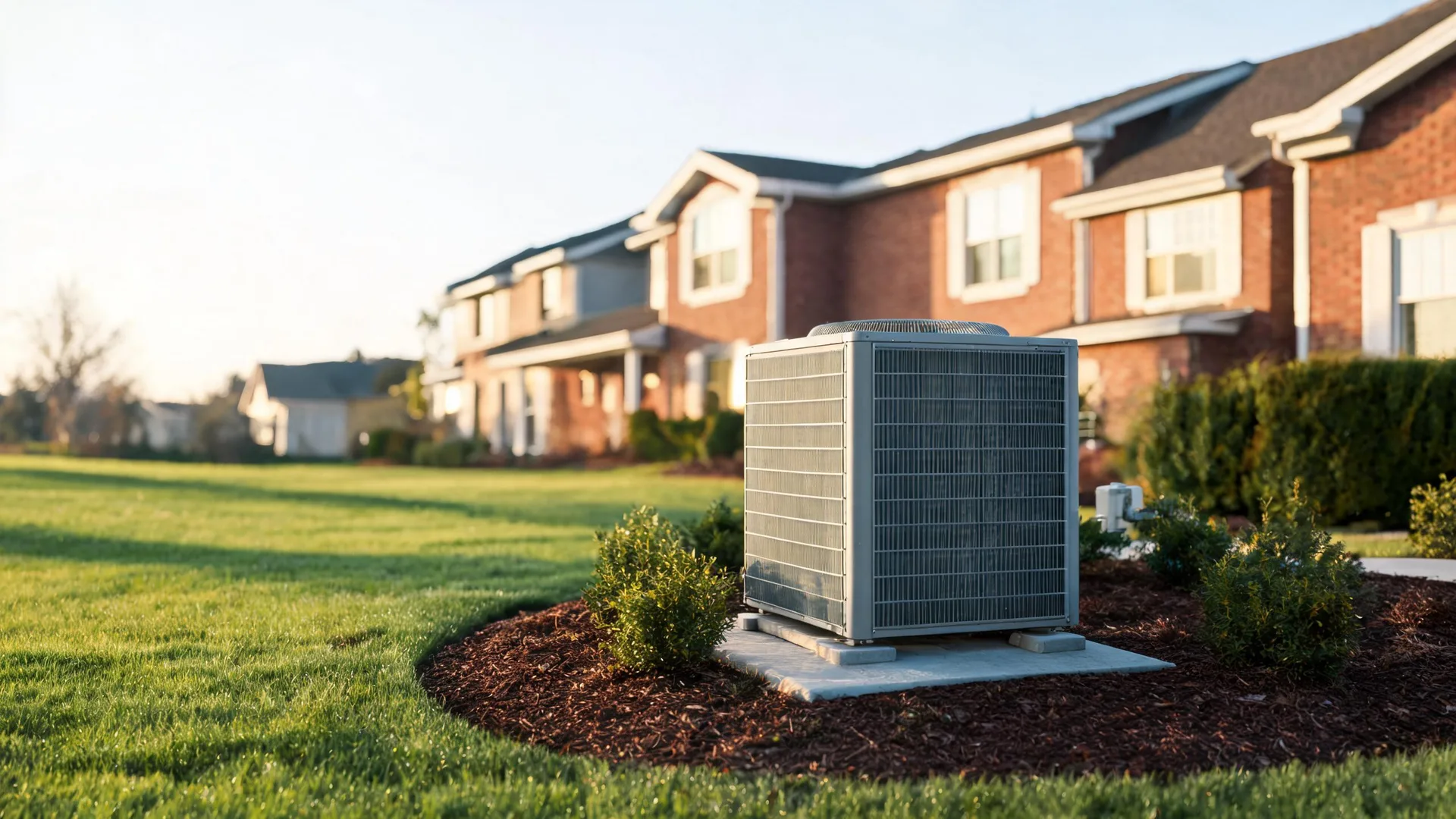
A gray residential air conditioning condenser unit mounted on a concrete pad outdoors, surrounded by green grass under a partly cloudy blue sky.

Sized right, it runs the way it's built to

A system that's sized right runs long, steady cycles that pull moisture out of the air on the way to cooling it. Oversize it and you get short bursts, the thermostat satisfied before the coil ever gets cold enough to dry the air out, so the house feels cool but clammy. Undersize it and the compressor runs nearly nonstop on the hottest afternoons, straining to hold a temperature it was never built to reach on its own. Either way the equipment pays for it over time. Short cycling means more starts and stops, and the start is what wears on a compressor the most. Running flat out for hours does the same kind of damage from a different direction. A properly sized system spends most of its life in that long, steady middle, which is exactly where it's built to last.

The equipment is one line item

The condenser and the coil are only part of what gets priced. Line sets, a new disconnect, a pad, electrical work if the breaker or wiring doesn't match the new unit's draw, and refrigerant lines run or replaced all factor in. Houses with the same size system can land on different jobs once the contractor sees what's already there to work with.

Ductwork changes the job

If the ducts are undersized, leaky, or routed poorly for the new equipment, fixing that is part of the install, not an extra. A coil and compressor matched on paper still won't move the air right through a duct system that can't carry what it's rated for, so a contractor pricing the job has to account for what's already in the walls and attic, not just the unit going outside.

Overhead view of an outdoor AC condenser unit on a concrete pad next to a house with a dark shingle roof.

A higher-efficiency unit would save about $30 a year to run in Lexington County compared with a new unit at the federal minimum.

  • A higher-efficiency unit$370 a year
  • A new unit at the federal minimum, 14.3 SEER2$400 a year

Estimates for a typical Lexington County home, from EIA household energy data, South Carolina fuel prices and NOAA climate normals. Your home will differ.

Installation day starts with the old equipment coming out, the indoor coil, the outdoor condenser, and usually the line set running between them. If the line set is being reused, it gets flushed or replaced, because old refrigerant oil left behind can contaminate new equipment. The new condenser goes on the pad, the coil goes in the air handler or furnace cabinet, and the lines get run and connected. Once everything's in place, the system gets evacuated with a vacuum pump to pull out moisture and air before any refrigerant goes in, since either one left in the lines causes problems down the road. Then it's charged to the manufacturer's spec, not just topped off by feel. Before anyone leaves, the system should run through a full cycle while the contractor checks the temperature split at the vents and makes sure the charge and airflow are actually doing what they're supposed to.