AC leaking water inside in Lexington, SC

RepairCentral ACLexington County, SC
Step 1 of 2

What ZIP code is the job in?

Why is my AC leaking water inside my house?

Water showing up around your indoor unit or dripping from the ceiling is never nothing. With Lexington summers running long and muggy, your AC runs almost constantly from spring into fall, and that long run time is exactly what makes this kind of leak show up here more than in places with shorter summers.

Your condensate drain line is clogged or your drain pan has rust through it

Your AC pulls moisture out of the air all day long, and that water has to go somewhere. It runs off the evaporator coil into a drain pan, then down a condensate line and out of the house. Algae and dirt build up inside that line over a long cooling season and block it, so the pan fills and overflows. An older pan can also rust through and leak straight down. Either way, the water you're seeing isn't coming from outside. It's water your own system pulled out of the air and couldn't get rid of. With how many hours your AC logs here between April and October, that line has a lot of chances to clog.

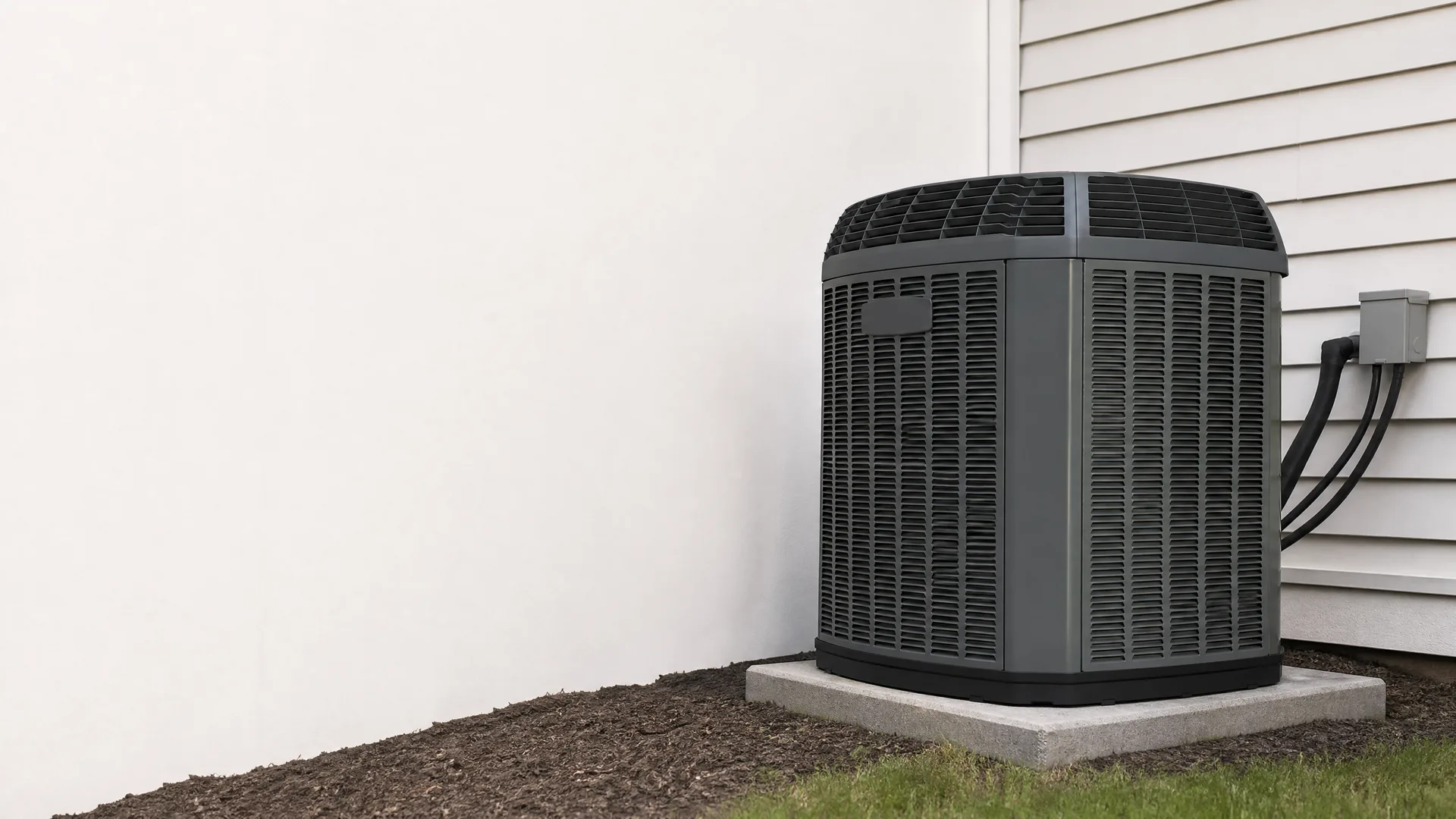
A gray outdoor air conditioning condenser unit on a concrete pad beside a house with horizontal lap siding and a stone veneer base, with a disconnect box and conduit on the wall, mulch bed and shrub to the right, and mowed grass in the foreground.

Water draining the way it should

A working system sends condensation through the drain line and out near the outdoor unit, away from the house. You won't see water around the indoor equipment or stains spreading on the ceiling below it. The pad outside stays dry, and the unit runs without any sign of backup.

An outdoor air conditioner condenser unit on a gray composite pad beside a house with horizontal siding, a concrete foundation, a basement window, and a conduit and disconnect box on the wall.

Signs of a clog or a blocked coil

Dirt and dust built up on the outdoor cabinet often point to buildup elsewhere in the system too, including the coil or the drain line inside. Either one can back up condensation until it has nowhere to go but into your house. A local tech who sees this every summer can tell you which one it is.

What are you seeing around your unit right now

A wet spot on the carpet or subfloor near the indoor unit. A brown stain spreading across the ceiling if the unit sits in the attic. A musty smell in the hallway below it. Water pooling in the drain pan or dripping steadily enough that you've already put a towel down. Sometimes it's just a damp patch that comes back no matter how many times you dry it. Left alone, that water sits in drywall and subfloor and feeds mold, and with how many hours your system runs each summer here, the water doesn't let up on its own. The ceiling or floor underneath will keep taking the damage until the leak itself gets fixed.

An outdoor air conditioner condenser unit on a concrete pad beside a light-colored stucco wall, with horizontal siding and a small electrical box to the left and gravel at lower left.

Where the clog usually forms

The drain line runs from the indoor coil to the outside, and it's narrow, about three quarters of an inch. Algae and mold grow inside it over a long cooling season, and dust from the coil washes into it too. Once enough builds up, water backs up into the drain pan instead of leaving the house. A shop vac at the outside end can pull a clog like this out, but it reaches only so far down the line.

A dark gray outdoor air conditioning condenser unit on a concrete pad beside a house with light siding and a stucco wall, with mulch and grass in the foreground.

The pan itself can fail

Under the pan is the overflow pan, a second pan meant to catch water if the first one fills or cracks. Older units have pans made of thin metal that rusts through over years of condensation sitting in it. Newer ones are plastic and can still crack if something presses on them. Either way, a float switch is supposed to shut the system off before water spreads, and it's worth checking whether yours has one.

Call It In Or Wait

Call it in now

  • A contractor can usually clear a clogged drain line and have the pan draining again in the same visit.
  • Catching it early means the water damage stops at a stain instead of soaked subfloor or sagging ceiling drywall.
  • If the float switch already shut the system off, a cleared line and a reset gets your AC running again that day.
  • Algae and dust buildup in the line only gets worse with another month of South Carolina humidity pushing through it.
  • A local contractor who services this equipment every summer knows which fitting on the line usually clogs first.

Wait and see

  • If the float switch hasn't tripped yet, the system keeps cooling while water keeps finding its way out somewhere.
  • A small ceiling stain now can spread into soft drywall or a sagging patch before the season is over.
  • Standing water in the drain pan is the kind of damp spot that draws mold if it sits for weeks.
  • Waiting through another stretch of muggy weather gives algae more time to thicken inside that drain line.
  • Once the float switch does trip and shuts the unit down, you lose cooling on top of the water problem.
A woman with dark shoulder-length hair in a beige knit sweater stands in a living room looking off to the side, with a sofa, lamp, houseplant and window behind her.
A woman with dark hair in a bun and a green button-up shirt looks off to the side in a living room with a gray sectional sofa, cushions, a woven pendant lamp, and a wall shelf with plants and a picture frame.
A woman with dark hair in a loose updo, wearing a white top and cream cardigan, sits on a light sofa with cushions and looks off to the side in a bright living room with white shelving, a mirror, a lamp and a large potted plant.
A woman with dark hair in a loose bun and a light grey sweatshirt sits near a curtained window, looking to the side and smiling slightly, with a blurred living room and sofa behind her.
A kitchen interior with a wooden table in the foreground holding a closed laptop, a ceramic mug and a potted plant, with a wood-fronted counter, sink with black faucet, bowl of green fruit, vase of branches and a window showing a sunset sky behind.

How the drain system is supposed to work

Your indoor unit has a coil that pulls moisture out of the air, and that water drips into a shallow pan underneath. From there it runs down the drain line and out of the house. Some systems also have a second, smaller line called the auxiliary drain, and a float switch sitting in the pan or the line that's meant to shut the system off if water backs up. When all of that is working, you never see or think about any of it.

A contractor who services AC systems around Lexington all summer knows this path by heart, and knows which parts of it tend to fail first in homes here. Instead of searching around, calling a few companies, and walking each one through what you're seeing, you explain it once to someone local who already has a good guess before they open the panel. That's one visit, one person, one explanation.

Living room interior with a light sofa holding a dark green cushion and a brown knit throw, a tall leafy plant by a black-framed window, a wooden coffee table with a round tray, and wooden shelves holding vases and books.
A gray outdoor air conditioning condenser unit on a concrete pad beside a house with horizontal gray siding, with a wall-mounted electrical disconnect box and insulated refrigerant lines, and blue hydrangeas in a mulched bed to the left.

Draining the way it should

This is a system with a clear line and a dry pan. Condensation leaves the coil, runs out through the drain line, and lets go near the outdoor unit on the pad. No standing water, no stains, no reason to look twice at the equipment inside the house.

A gray outdoor air conditioner condenser unit on a concrete pad beside a house with beige horizontal siding, with an electrical disconnect box and insulated refrigerant lines on the wall and dry leaves on the ground.

Backed up and showing it

Rust on the shroud and dirt packed into the fins come with age, and the drain line ages right along with the unit. A line that's been running dirty for years clogs easier and more often, and once it backs up, the water has to go somewhere inside the house.

A woman with her hair in a bun holds a sleeping child, both wrapped in a cream knitted blanket on a gray sofa, with a lit lamp, framed photos, and a window behind them.
An older woman in a gray turtleneck sweater smiles while looking to the side in a warmly lit kitchen, with a round loaf of bread and a striped cloth on the counter in front of her and a frost-covered window behind.

Explain it one time

A clogged drain line doesn't clear itself, and every day you wait is another day that water sits against your subfloor or soaks into ceiling drywall. Finding someone to look at it usually means a search through companies you don't know, a few calls to see who answers, and explaining the same leak over and over before anyone shows up. Submit this request and it goes to one licensed contractor working in Lexington, not a handful competing for your business. Someone who services AC systems around Lexington all summer has seen this exact drain line clog more times than they can count and knows where to check first. You get one call back, from someone who already knows what you're dealing with before they walk in. The stain on your ceiling or the water on the floor isn't going to wait for a slow afternoon. Get it in front of someone who can clear that line before the damage spreads any further than it already has.

Dimly lit living room with a pedestal fan on a dark wood floor, a potted plant by blinded windows, a beige sectional sofa with cushions, a low table and a rug.

It's a little after two in the afternoon, mid-July, and the blinds are drawn against the sun because the light coming through earlier made the room unbearable. A floor fan runs next to the couch, turning back and forth. You've been in and out of the kitchen most of the day, and on your way through you catch the carpet feeling damp near the baseboard by the hallway, right under where the ceiling has started to show a faint brown ring. You press your foot into it. Still wet. Outside, the heat sits heavy over the yard, the kind of afternoon where the AC hasn't shut off in hours, and somewhere above the hallway ceiling, water that should have run outside is finding its way into the house instead.


A gray outdoor air conditioner condenser unit on a concrete pad beside a house with light vinyl siding, with an electrical disconnect box and conduit on the wall and a leafy shrub with dark mulch to the right.
The condenser sits clean on its pad, lines and conduit running up to the disconnect, nothing unusual to see.
An outdoor air conditioner condenser unit on a concrete pad beside a house with horizontal lap siding, with a gray electrical disconnect box and conduit on the wall and a green shrub over pine-needle mulch at left.
A grille this caked with dirt restricts the airflow the coil needs, and a struggling system is more likely to freeze and back up water inside.
A single-story red brick ranch house with white-framed windows and a dark shingled roof, surrounded by leafy green trees, with a wide asphalt driveway in the foreground reflecting sunlight under an overcast sky.

Summer air here holds a lot of moisture. The dew point averages 68°F across June, July and August, according to NOAA climate data for Lexington County, and anything near that mark feels heavy and sticky. For your AC, that means the coil is pulling more water out of the air than it would in a drier climate, all summer long. More water means a steadier stream running through that drain line, and a steadier stream means less margin before a partial clog turns into standing water in the pan. If your system is already borderline, these three months are when it shows.

NASA POWER T2MDEW

A dirty outdoor air conditioning condenser unit on a concrete pad beside a house wall with horizontal siding above a painted brick foundation, with a gray electrical disconnect box and conduit on the wall.
Before you get your air conditioner repair
A gray outdoor air conditioning condenser unit on a concrete pad beside a house with horizontal lap siding, with a wall-mounted disconnect box and conduit to the left and a green shrub with mulch to the right.
After you get your air conditioner repair

Cooling runs May through September

Five months of that is a long stretch for a drain line to stay clear. Your system is pulling water out of the air almost every day from May to September, and all of it has to leave through that same narrow line. The longer it runs without a break, the more chance algae and dust have to build up and back the water up into the house.

NOAA nClimDiv 1991-2020

Where this leaves you

  • Water around your indoor unit or on the ceiling below it almost always traces back to a clogged drain line or a full pan.
  • A contractor can confirm the clog, clear the line, and check the float switch in one visit.
  • Fixing the drain stops the water, but anything already soaked into subfloor or drywall is a separate repair.
  • Lexington's long, muggy run of months means the line fills with condensation again next summer, so a clear line now doesn't rule out a future clog.
  • A local contractor who services this equipment every summer has seen this exact clog more times than a general handyman has.
  • One contractor means one visit and one person who already knows what you told them, not several companies asking the same questions.

Water on the floor or a stain spreading across the ceiling comes from the same place almost every time: the drain line is clogged or the pan has filled past where it should. That part is straightforward. A contractor can find the clog, clear it, and check the float switch while they're there, and the dripping stops that same visit. What doesn't get undone in that visit is whatever the water already touched. Subfloor that's soaked or drywall that's stained or sagging is its own repair, separate from the drain itself.

Clearing the line now buys you the rest of this summer, not every summer after it. Lexington's stretch of warm, muggy months runs long, and the line will be carrying condensation out of the house day after day from May into September. It can clog again next year the same way it did this year, so a clear line today is good news for today, not a guarantee.

When you do call someone, it helps that the person showing up has seen this exact problem many times before, because drain line clogs and full pans are routine for anyone who services AC systems through a Lexington summer. You're also not stuck explaining the same leak to three different companies and sorting through three different quotes. One local contractor takes the call, hears what you've seen, and goes from there.

Sunlit corner of a room with a wooden sideboard holding a ceramic vase of olive branches and a dark wooden bowl, beside a white-framed window, a hardwood floor and woven rug.
A wooden cabinet holding a pale ceramic vase with leafy branches stands beside a beige wall in a sunlit room with hardwood floors, a jute rug, and a window showing green foliage outside.
Sunlit room corner with a beige upholstered sofa holding a rust-brown cushion, beside floor-length linen curtains at a window, over a wood floor with a woven rug.
Corner of a room with beige walls, a framed photograph, a floor-length linen curtain beside a window, an upholstered armchair with a knit pillow, white baseboards and trim, wood flooring and a pale rug.
Sunlit living room corner with a beige upholstered armchair with a cushion, linen curtains beside a wooden-framed window, green vertical panelled wall with a framed print, and a wooden table edge over a woven rug.

Skip the calls to every shop

A licensed pro who repairs air conditioners in Lexington County gets your request.

Describe it once

No fee to send it, and nothing to sign.