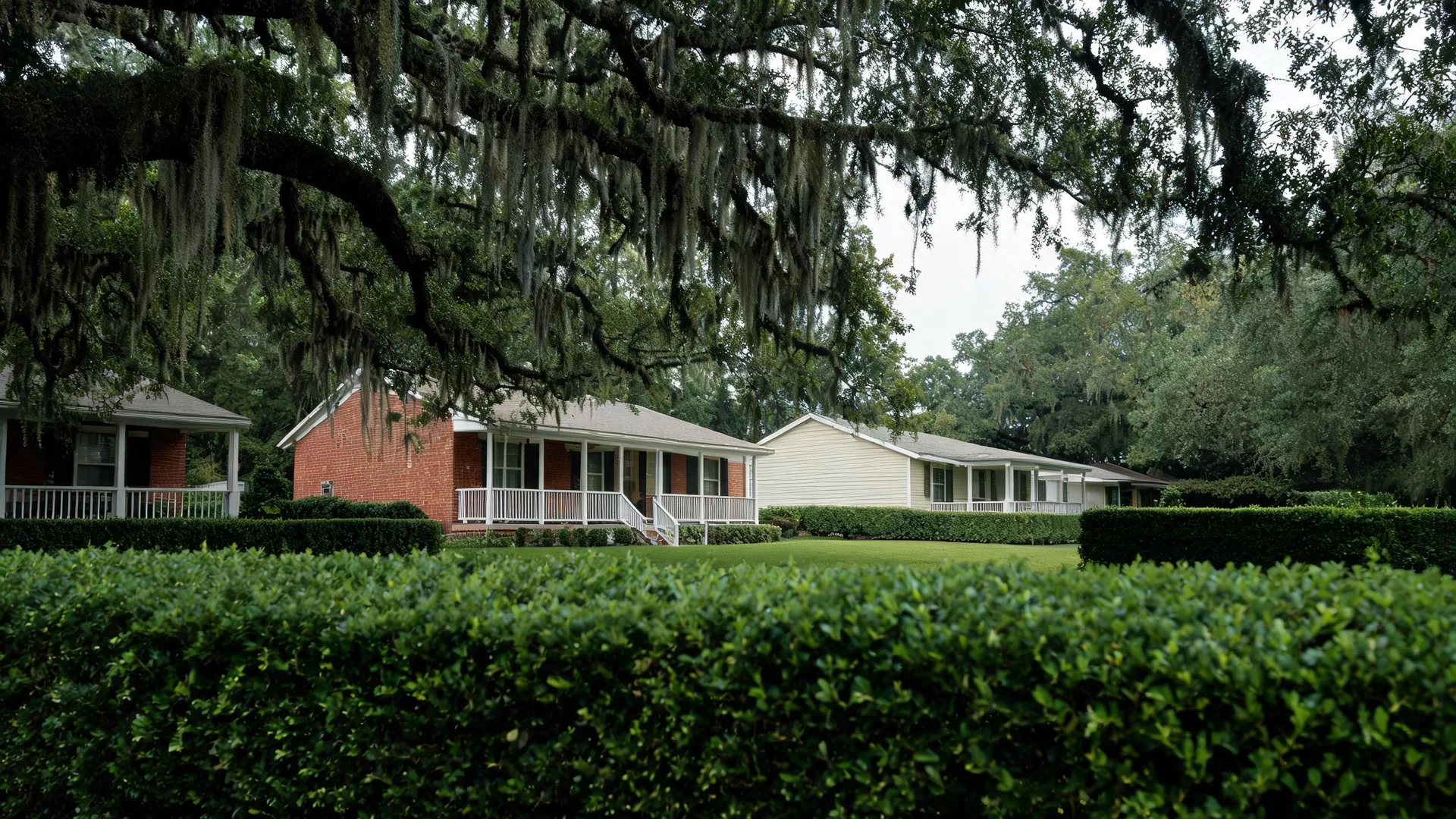






Single-story brick and white-sided buildings with covered porches behind a trimmed hedge and lawn, framed by overhanging oak branches draped with Spanish moss.

AC Maintenance in Abbeville, SC

Tell us about the job

Takes about a minute. No obligation.

Tune-up, service, or cleaningCentral ACAbbeville County, SC
Step 1 of 2

What ZIP code is the job in?

A dirty coil or a low charge makes the compressor work harder to move the same heat out of your house. That extra draw shows up on the meter. South Carolina electricity ran 14.23 cents per kilowatthour in 2024, higher than a lot of the country, so a few extra hours a day of hard running adds up faster here than it would somewhere cheaper. An AC that's never been serviced isn't failing, it's just spending more than it needs to for the same cool air. A tune-up catches the coil, the charge, the airflow, the things that quietly drive that number up before anything actually breaks.

5 months
May through September, your air conditioner is on duty
89°F
the average summer afternoon it cools against
4 hail events
in ten years, and hail bends the fins on outdoor coils
24 wind events
in ten years, and wind drives debris into outdoor units
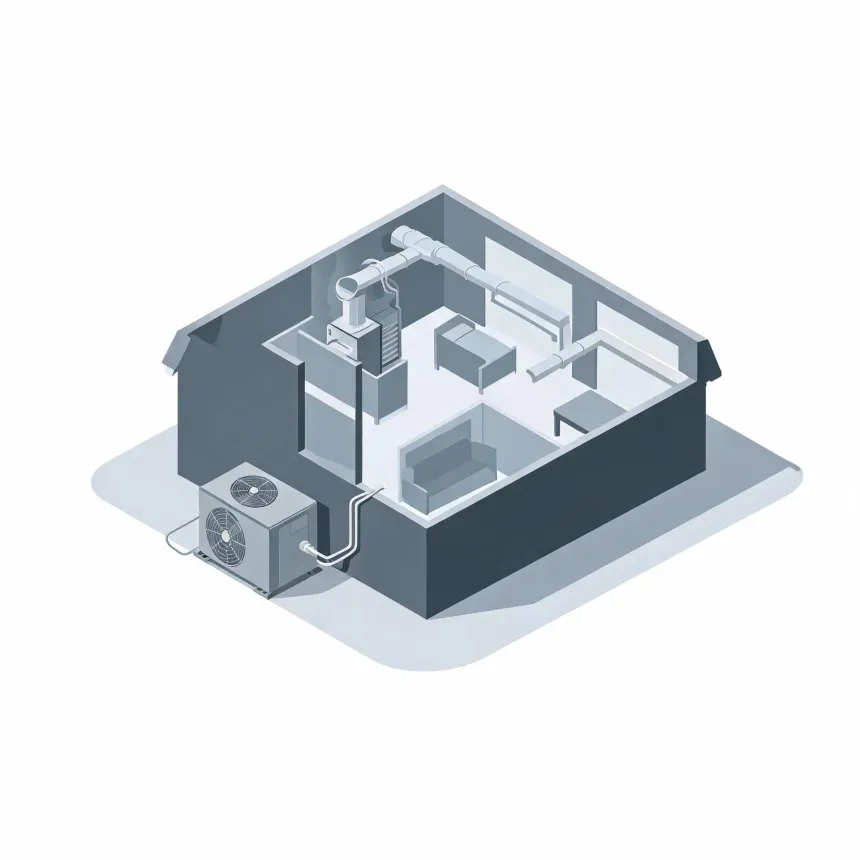
Isometric grayscale illustration of a cutaway house interior showing a furnace with ductwork, interior rooms with furniture, and an outdoor condenser unit connected by lines at the exterior wall.
Your air conditioner works hardest from June through September.

NOAA nClimDiv, 1991–2020 normals

Summer afternoons here average 89 degrees, and that lasts from May through September.

Your AC runs hard for five months straight, so worn parts show up fast once the heat sets in.

Most of what hits Abbeville is wind, not winter, and a tune-up once a year covers it

35 severe weather events from 2015 to 2024
45% of homes statewide lost power a day or more in 2024
24 damaging wind events from 2015 to 2024
One visit a year covers itHalf the homes here were built in 1980 or earlier, but your AC's age is what sets the schedule, not your house's

A quick tune-up gets you a glance and a hose-down. The tech rinses the outdoor coil, checks that the system kicks on, and leaves. A thorough one checks the refrigerant charge against what the system actually calls for, not just whether it's cooling. It pulls the blower wheel out, or at least looks it over, because a coated blower wheel cuts airflow the same way a dirty filter does. It checks the capacitor's output against its rating, since a capacitor can test as working and still be weak enough to strain the compressor on startup. It checks the contactor for pitting, clears the condensate drain so it doesn't back up once the system is running hard, and takes temperatures off the supply and return to see if the system is actually moving the heat it should. Anyone can hose off a coil. Catching a weak capacitor or a clogged drain before it strands you is the part worth paying for.

A tune-up costs less than the power a neglected AC wastes

Checking the coil, the charge and the airflow now is what keeps the compressor from working harder than it has to. At 14.23 cents per kilowatthour, that extra work costs more here than in most places.

Find a contractor
A man in a backwards cap, dark long-sleeved shirt and brown work pants, seen from behind, carries a worn canvas tool bag up steps toward a dark green paneled front door beside a potted shrub.
An outdoor residential air conditioning condenser unit mounted on a concrete pad, surrounded by gravel with a blue sky in the background.

The wear happens either way

A compressor doesn't fail on day one of being ignored. It fails after running dirty and low for a while, because the heat still has to go somewhere, and a coil caked in dust or a charge that's drifted off just means the compressor forces it out anyway. The motor bearings wear the same way, a little every hour the system runs, and nobody hears it happening until the bearing seizes or the motor starts pulling more current than it should. A capacitor loses its charge slowly, which is why it tends to give out in the middle of a run rather than at startup. None of this shows up as a sudden break. It shows up as a system that ran fine for a long stretch on a schedule nobody kept, then stopped running at all.

The filter is airflow, not air quality

A filter clogged with dust and pet hair chokes off the air moving across the indoor coil. Starve that coil of airflow and it can get cold enough to ice over. Once ice forms, it blocks even more airflow, and the system can end up running with barely any air moving at all while the compressor keeps working.

The drain line decides where the water goes

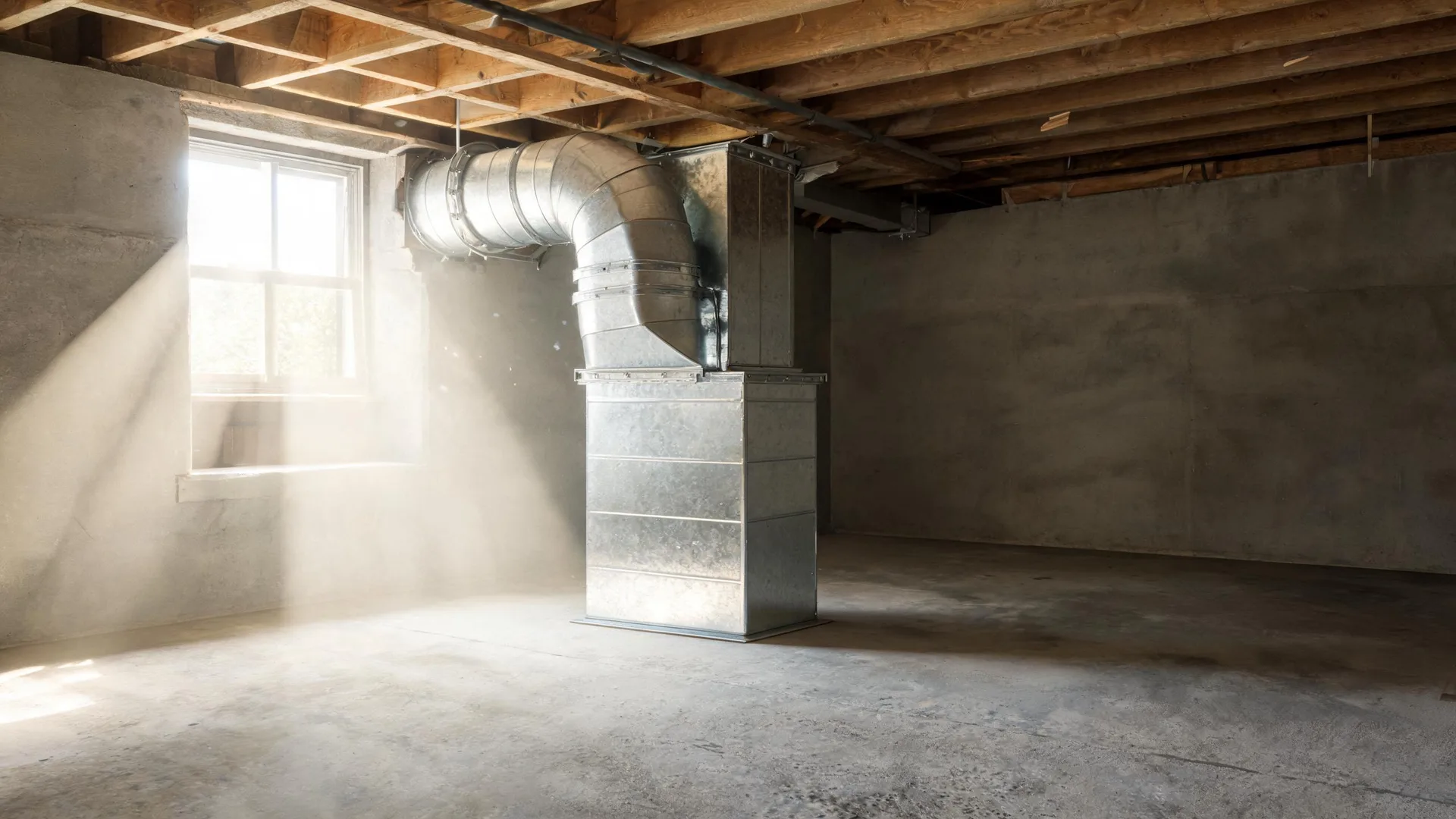
The indoor coil pulls moisture out of the air all day while it runs, and that water has to leave through the condensate drain. Algae and dust build up inside that line over time and narrow it until it backs up. When it clogs fully, the water backs up into the drain pan and from there into the ceiling or the closet the air handler sits in.

Overhead view of an air conditioning condenser unit on a concrete pad next to a house with asphalt shingle roofing and vinyl siding.

Book your AC tune-up in April, before homes here start needing cooling in May.

  1. Jan
  2. Feb
  3. Mar
  4. Apr
  5. May
  6. Jun
  7. Jul
  8. Aug
  9. Sep
  10. Oct
  11. Nov
  12. Dec

A tune-up checks the refrigerant charge, cleans the coils, tests the capacitor and tightens the electrical connections.

A tune-up is also when a tech checks things you can't see from the thermostat. Low refrigerant doesn't just mean warmer air, it means the system is losing charge somewhere, and that leak won't fix itself. Left alone, it can wear on the compressor until replacing the whole unit is the only option left. The tech also checks the electrical connections at the disconnect box and inside the unit, since a loose connection generates heat and can burn a wire or trip the system off. None of this is visible from inside the house. It only shows up when someone opens the cabinet and looks.