





A red brick wall with a row of low shrubs and mulch bed on the left, a mown lawn in the center, and a single-story light-colored house with a gabled roof beyond, backed by pine trees under an overcast sky.

AC Maintenance in Aiken, SC

Tell us about the job

Takes about a minute. No obligation.

Tune-up, service, or cleaningCentral ACAiken County, SC
Step 1 of 2

What ZIP code is the job in?

Skip maintenance long enough and the first sign is usually weak cooling, not a dead system. Dust builds up on the coil and acts like a blanket, so the refrigerant inside can't pull heat out of the air the way it should. The system runs longer to make the same cool air, and that extra runtime wears on the compressor. A clogged filter adds to the problem by starving the system of airflow, which can let the coil frost over even on a hot day. None of this happens suddenly. It builds for months until the day the system just can't keep up anymore.

5 months
May through September, your air conditioner is on duty
91°F
the average summer afternoon it cools against
52 hail events
in ten years, and hail bends the fins on outdoor coils
185 wind events
in ten years, and wind drives debris into outdoor units
Isometric grayscale illustration of a cutaway house showing interior rooms, ceiling ductwork connected to an indoor air handler, and an outdoor condenser unit linked by lines along the exterior wall.
Your air conditioner works hardest from June through September.

NOAA nClimDiv, 1991–2020 normals

Your AC runs all summer here, May through September, with afternoon highs averaging 91°F in June, July and August.

Five months of 91 degree afternoons wears parts down early, and a check before summer starts catches what's already worn.

Half the homes here were built in 1989 or later, so a lot of these systems still have good years left

Half the homes here were built by 1989
Cooling runs May through September
Summer afternoons average 91°F
Running this costs more hereSouth Carolina electricity ran 14.23 cents per kilowatthour in 2024, and a dirty coil burns through more of it

A few things usually show up before a system fails outright. Warm air out of the vents when the thermostat is set low is the big one, especially if it was ice cold last season. Short cycling, where the system kicks on and off every few minutes instead of running a steady stretch, points to a problem even if the air coming out still feels cool. Ice on the copper line running to the outdoor unit means airflow or refrigerant is off, and running it that way just makes the coil work harder. A hissing or bubbling sound near the lines can mean a refrigerant leak, which won't fix itself and won't get better on its own. Water pooling near the indoor unit usually means the condensate drain is clogged, and that backup can damage the unit itself if it sits long enough. Any of these is worth a look before the system has to work through a long stretch of heat.

Check it before the season

It works hard here, so worn parts show up fast once the season starts. Get it checked before then.

Find a contractor
An outdoor residential air conditioning condenser unit mounted on a concrete pad, surrounded by gravel with a blue sky in the background.

Before the heat and the storms both hit

Wind and hail come through here too, 185 damaging wind events and 52 hail events in the county over the last ten years. A storm like that can knock debris into the outdoor unit or bend the fins without anyone noticing right away. A check before summer catches that kind of damage along with whatever the heat has already worn down.

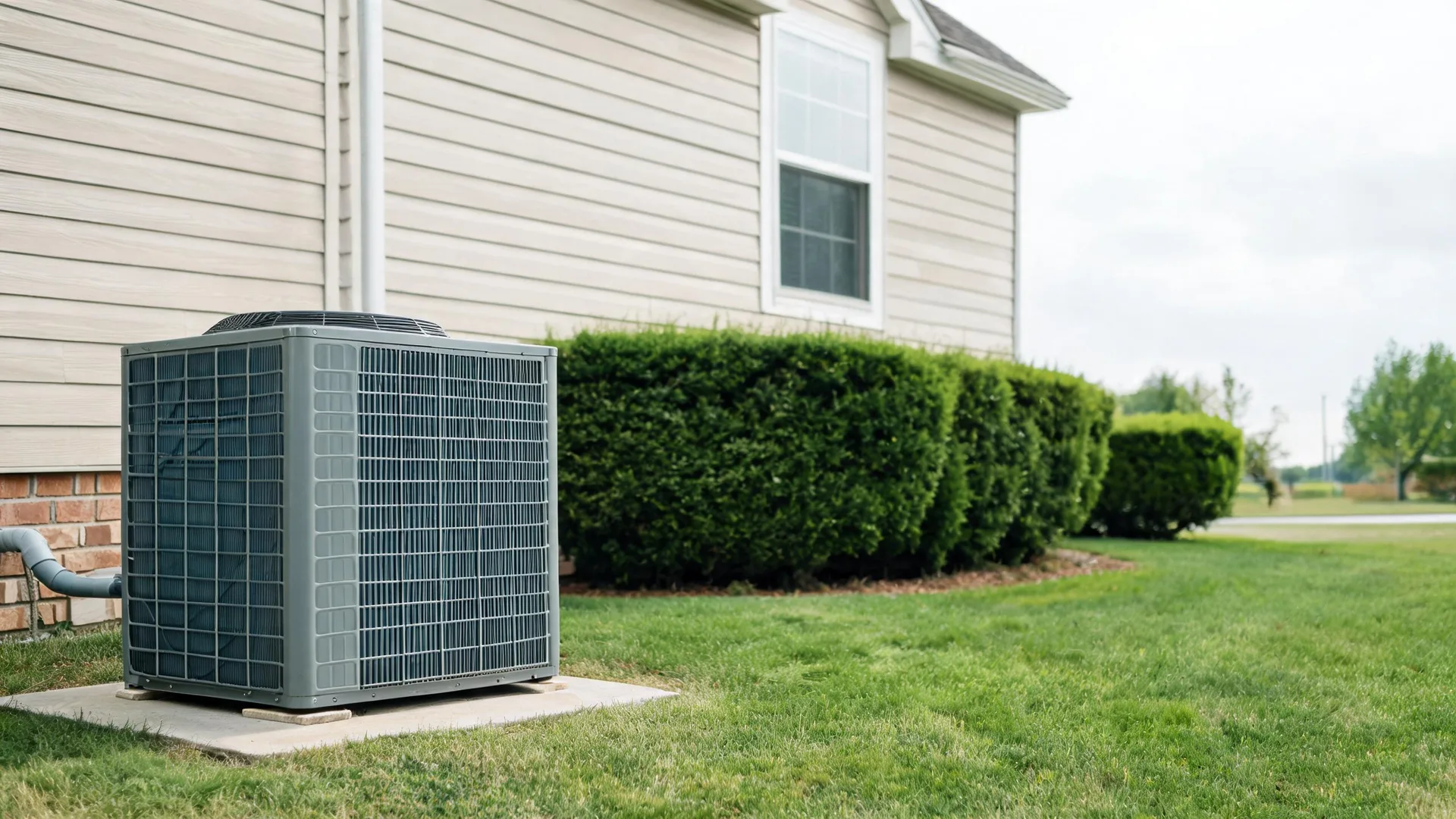
Keep the area around the outdoor unit clear

The outdoor unit needs open space to pull air through the coil. Grass clippings, leaves, mulch and plant growth within a couple feet of it block that airflow, and the fan ends up working against itself. Keep it clear and keep anything from being stacked or stored against it.

Change the filter on a set schedule

A dirty filter is the one thing in this whole system you can check and fix yourself without tools. Hold it up to the light. If you can't see through it, it's past time. A fresh filter protects the coil and keeps the blower from straining, and it's the cheapest thing you can do for the system between visits.

An outdoor air conditioning condenser unit installed beside the exterior wall of a blue vinyl-sided house at sunset.

Book your AC tune-up in April, before homes here start needing cooling in May.

  1. Jan
  2. Feb
  3. Mar
  4. Apr
  5. May
  6. Jun
  7. Jul
  8. Aug
  9. Sep
  10. Oct
  11. Nov
  12. Dec

A tune-up checks the refrigerant charge, cleans the coils, tests the capacitor and tightens the electrical connections.

A real tune-up starts with the coil, not the thermostat. The tech pulls the panel and checks the coil for dust and grime, because that's what kills efficiency first. Refrigerant charge gets checked against the manufacturer's spec, not just topped off by feel. Electrical connections get tightened, since a loose one generates heat and can burn a component over time. The capacitor gets tested, because a weak one makes the compressor work harder to start every cycle. The condensate drain gets cleared so it can't back up and overflow later. The blower motor and fan get checked for wear and lubricated if the design calls for it. None of this is guesswork. It's the same list, checked the same way, every time, because that's what catches a small problem while it's still small.