





Two single-story houses, one brick and one with pale siding, both with covered porches, sit behind a mowed lawn and a trimmed hedge, framed by large oak branches draped with Spanish moss under an overcast sky.

AC Maintenance in Anderson, SC

Tell us about the job

Takes about a minute. No obligation.

Tune-up, service, or cleaningCentral ACAnderson County, SC
Step 1 of 2

What ZIP code is the job in?

Skip maintenance long enough and the signs show up slow, which is why they get ignored until the system quits on a hot day. Dirt builds up on the condenser coil outside and the evaporator coil inside, and once that happens the system can't shed heat the way it should. It runs longer to do the same job, and the extra strain wears on the compressor. A dirty filter adds to the problem, since it chokes airflow and makes every other part work harder than it needs to. Refrigerant also needs checking, because a slow leak won't announce itself. It just shows up as warm air coming out of the vents until someone finds the leak and fixes it.

5 months
May through September, your air conditioner is on duty
89°F
the average summer afternoon it cools against
33 hail events
in ten years, and hail bends the fins on outdoor coils
111 wind events
in ten years, and wind drives debris into outdoor units
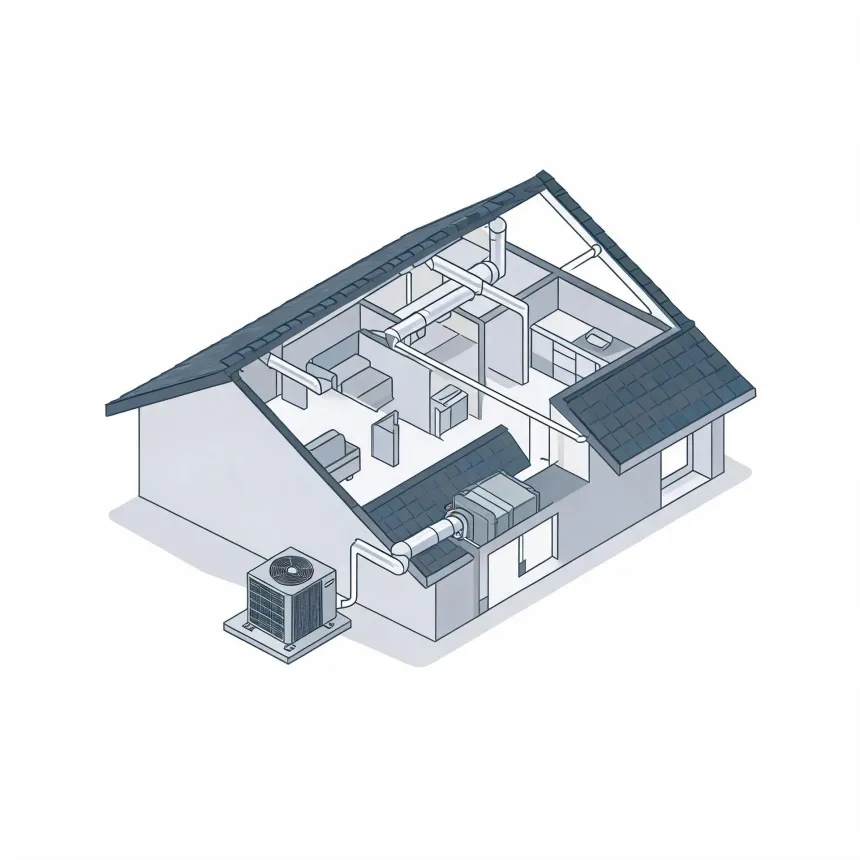
Isometric line illustration of a cutaway single-story house showing interior rooms, ceiling ductwork and an air handler, connected to an outdoor condenser unit on a pad beside the building.
Your air conditioner works hardest from June through September.

NOAA nClimDiv, 1991–2020 normals

Anderson County runs its AC from May through September, with afternoon highs averaging 89°F.

Five months of 89 degree afternoons wears parts down fast, so a check before the season starts catches what's already going.

A dirty system runs longer, and power here costs 14.23 cents a kilowatt-hour

Power costs 14.23 cents a kWh statewide
Cooling runs May through September
Summer afternoons average 89°F
Book It Before MayAC runs May through September here. Get it checked in April, before the heat does.

Half the homes in Anderson County were built in 1988 or later, so a lot of AC systems here are still well within their working life. A newer system is worth protecting with a yearly check, not because something's wrong, but because catching a weak capacitor or a slow refrigerant leak early is what keeps a system running well for years instead of a few seasons. A technician checking the charge, the electrical connections and the coils once a year is simple work compared to a repair that could've been caught sooner. Skip those checks and a system that should have a long life ahead of it starts losing ground early.

Check it before the season

It works hard here, so worn parts show up fast once the season starts. Get it checked before then.

Find a contractor
An outdoor residential air conditioning condenser unit mounted on a concrete pad, surrounded by gravel with a blue sky in the background.

Hours add up whether anyone's watching or not

An AC unit doesn't wear out evenly. It wears out at whatever point is weakest, and that point gets found by hours of runtime, not by a calendar. A compressor that short cycles on a failing capacitor racks up the same strain whether it's doing it in the first year or the tenth. A fan motor bearing that's starting to go makes an odd noise long before it seizes, but only someone listening for it catches that early. The capacitor holds the motors steady. The contactor makes and breaks the electrical connection. The fan motor pushes air across the coil. These are the parts doing the most work every time the system runs, and none of them give much warning. A capacitor tests weak for a while before it tests dead. A system looked at once a year catches that window. A system left alone finds out the hard way.

Gauges out, not just a glance

A thorough tune-up means the covers come off. The technician checks refrigerant pressure with gauges, tests capacitor strength with a meter, and pulls the blower wheel to look for dirt buildup that cuts airflow. A quick visit means someone looks the unit over, maybe hoses off the condenser coil, and calls it done without ever confirming the charge or testing anything electrical.

What gets missed shows up later

A capacitor that tests weak but still works will fail eventually, usually on the day it's asked to run longest. A refrigerant level that's never checked against the gauges can mask a slow leak for a long stretch. None of that shows up from a visual check. It only shows up when the system stops cooling and the reason turns out to be something a full check would have caught.

An outdoor air conditioning condenser unit installed beside the exterior wall of a blue vinyl-sided house at sunset.

Book your AC tune-up in April, before homes here start needing cooling in May.

  1. Jan
  2. Feb
  3. Mar
  4. Apr
  5. May
  6. Jun
  7. Jul
  8. Aug
  9. Sep
  10. Oct
  11. Nov
  12. Dec

A tune-up checks the refrigerant charge, cleans the coils, tests the capacitor and tightens the electrical connections.

A real tune-up starts outside at the condenser coil. It gets washed clean so the system can shed heat the way it's supposed to. Inside, the technician pulls the blower compartment and checks the evaporator coil the same way. Electrical connections get tightened, since vibration works them loose over time. The contactor gets checked for pitting, and the capacitor gets tested against its rating instead of just confirming the fan spins. Refrigerant gets checked with gauges, comparing pressures against what the system is supposed to run at, not just feeling the line and guessing. The drain line gets checked too, since a clogged one backs up and spills water instead of draining it outside. Last comes a full system cycle, watching how it starts up, runs and shuts off. A problem that only shows up under a full load won't show up any other way.