Aerial view of a square outdoor air conditioning condenser unit on a concrete pad beside a house wall with a sliding glass door.

AC Maintenance in Barnwell, SC

Tell us about the job

Takes about a minute. No obligation.

Tune-up, service, or cleaningCentral ACBarnwell County, SC
Step 1 of 2

What ZIP code is the job in?

The refrigerant charge is never obvious

A system low on refrigerant still blows cold air at the vent, just not as cold as it should be. The only way to know the charge is right is to check the pressures with gauges. Run it low too long and the compressor wears out before its time.


A dirty coil hides behind normal airflow

The outdoor coil can be coated in dirt and grass clippings while the fan still spins and air still moves through the house. A dirty coil makes the system work harder to dump heat outside, and that strain is what leads to a tripped breaker or a compressor that quits. Washing it out is routine during a tune-up and easy to miss otherwise.

5 months
May through September, your air conditioner is on duty
91°F
the average summer afternoon it cools against
3 hail events
in ten years, and hail bends the fins on outdoor coils
53 wind events
in ten years, and wind drives debris into outdoor units
Isometric illustration of a cutaway single-story house showing attic ductwork, an indoor air handler, interior rooms with furniture, and an outdoor condenser unit connected by lines, on a white background.
Your air conditioner works hardest from June through September.

NOAA nClimDiv, 1991–2020 normals

A system that still cools can still be wearing itself out.

The warning signs are weak airflow, short cycling, and a warm room that takes longer to come down, and by the time you notice them the strain has already been there a while.

Barnwell sees 67 severe weather events a decade. Your outdoor unit sits outside for all of them.

67 severe weather events from 2015 to 2024
45% of homes statewide lost power a day or more in 2024
53 damaging wind events from 2015 to 2024

Cooling starts in May here and runs through September, five months straight with no break built in. April is the month to get it checked, before that stretch starts. Whatever is wrong on the first day of May stays wrong through the rest of it, since the system does not get a slow week to show its problems early. A refrigerant leak or a dirty coil found in April is a quick fix. Found in the middle of summer, it is a system straining through the hottest stretch of the year with a contractor booked solid.

One check a year is enough to cover the season

One visit covers the system for the whole season. The appointment itself does not change with the age of your house or what kind of home you have. It is the same check either way.

Find a contractor
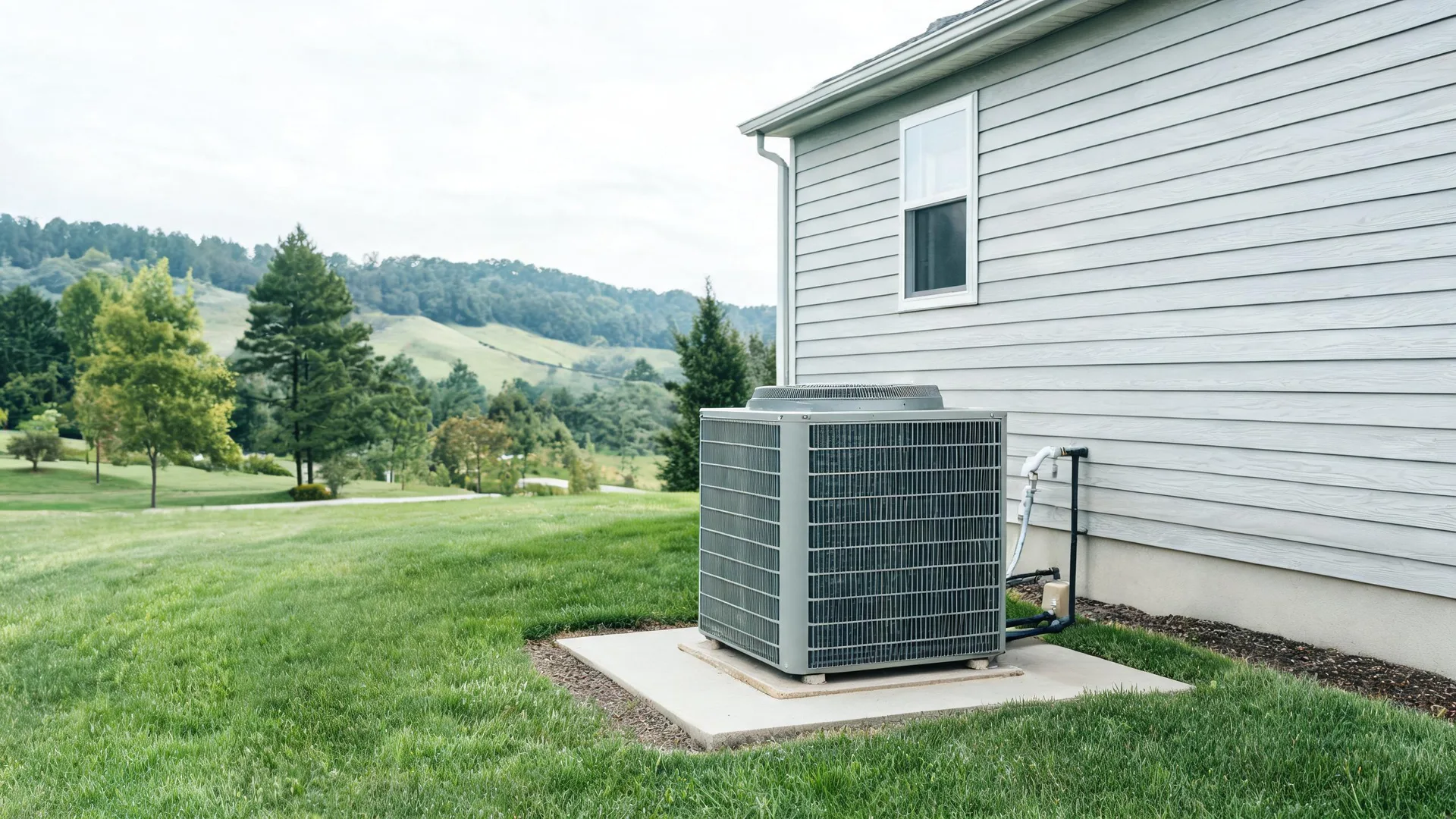
A gray residential air conditioning condenser unit mounted on a concrete pad outdoors, surrounded by green grass under a partly cloudy blue sky.

Five months of afternoons near 91

Five months of cooling here, May through September, and the afternoons it runs against average 91 degrees in June, July and August. That is the load on the system most days of the week, not just the worst ones. A capacitor or contactor on its way out gives up sooner under that kind of draw. The time-lapse shows one day, but the system runs this same stretch day into night for five months straight, with little break after dark.

A capacitor doesn't fail all at once

The capacitor weakens a little every time the compressor starts. A technician can test it with a meter and tell you how much life is left, before it leaves you with a system that won't start at all, usually on the hottest day it has to work.

A dirty blower wheel just works harder, quietly

Dust builds up on the blower wheel and it moves less air for the same effort, so the motor runs longer to reach the same temperature. Nothing trips and nothing fails. A yearly cleaning is what keeps that strain from piling up unnoticed.

Overhead view of a gray residential air conditioning condenser unit mounted on a concrete pad beside a house with asphalt shingle roofing.

Book your AC tune-up in April, before homes here start needing cooling in May.

  1. Jan
  2. Feb
  3. Mar
  4. Apr
  5. May
  6. Jun
  7. Jul
  8. Aug
  9. Sep
  10. Oct
  11. Nov
  12. Dec

A tune-up checks the refrigerant charge, cleans the coils, tests the capacitor and tightens the electrical connections.

A tune-up starts with the thermostat calling for cool and a tech watching what actually happens in response, not just whether air comes out. The capacitor gets tested under load, not just looked at. The contactor gets checked for pitting, since that's what welds shut or fails to close when it's worn. Refrigerant pressures get checked against the manufacturer's numbers, not guessed at. The condenser coil gets washed, the evaporator coil gets inspected, and the drain line gets cleared so it isn't sitting there waiting to back up and shut the system down on its own. The blower wheel gets looked at too, since a coating of dust there robs airflow long before anyone notices. None of this takes long on a system that's healthy. It takes longer, and matters more, on one that's starting to fail quietly.