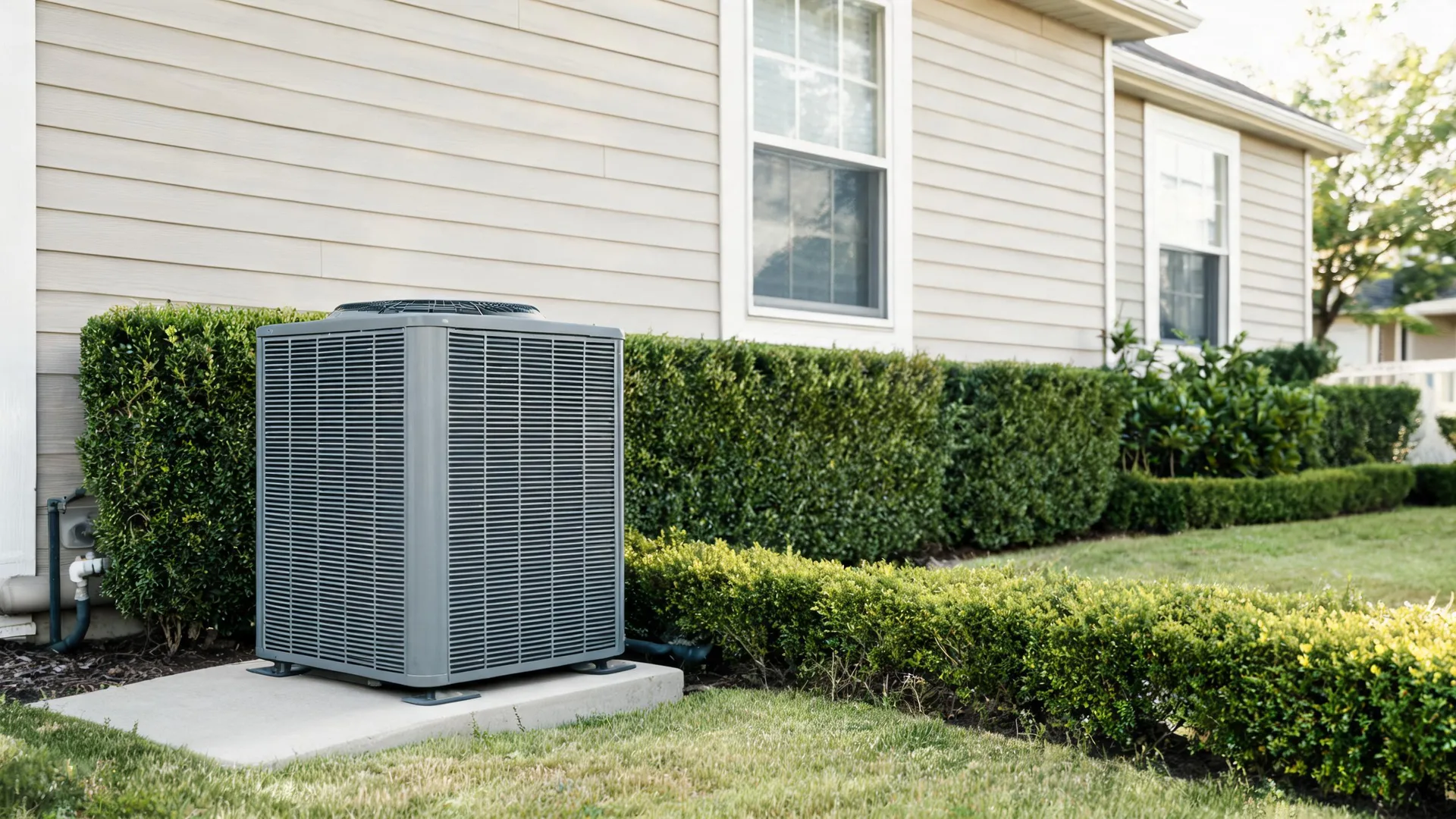
An outdoor air conditioning condenser unit positioned on a concrete pad next to a blue-sided house, surrounded by green shrubs and flowering hydrangeas at sunset.

AC Maintenance in Cheraw, SC

Tell us about the job

Takes about a minute. No obligation.

Tune-up, service, or cleaningCentral ACChesterfield County, SC
Step 1 of 2

What ZIP code is the job in?

Warm air from the vents when it's set to cool

Your air conditioner should blow noticeably cold air once it's been running a few minutes. If it's lukewarm, the problem could be a dirty filter choking airflow, a low refrigerant charge, or a compressor on its way out. The longer it runs that way, the harder the compressor works to make up for it.


A system that short cycles or won't shut off

An AC that kicks on and off every few minutes, or one that runs nonstop and never seems to catch up, is telling you something. A dirty coil, a failing capacitor, or a thermostat sensor reading the room wrong can all cause this. Left alone, that extra cycling wears out the compressor faster than normal use ever would.

5 months
May through September, your air conditioner is on duty
90°F
the average summer afternoon it cools against
43 hail events
in ten years, and hail bends the fins on outdoor coils
111 wind events
in ten years, and wind drives debris into outdoor units
Isometric cutaway illustration of a single-story house showing interior rooms with furniture, attic ductwork connected to an indoor air handler, and an outdoor condenser unit on a pad linked by refrigerant lines.
Your air conditioner works hardest from June through September.

NOAA nClimDiv, 1991–2020 normals

A neglected AC pulls more power to do the same job.

At 14.23 cents a kilowatt-hour, a dirty coil or low charge in a Cheraw system costs more to ignore than to fix.

May is when it goes to work. Book the check in April.

Cooling runs May through September
Summer afternoons average 90°F
111 damaging wind events from 2015 to 2024

One tune-up a year is enough for most AC systems, and nothing about Chesterfield County changes that. Half the homes here were built in 1986 or earlier, which means the house's age tells you nothing about the age of the unit cooling it. What matters is the equipment itself. Mobile homes make up 37.5% of the housing stock in this county, and those often run on packaged units set outside rather than a split system with an attic or basement coil. Whatever the setup, a yearly check on the coil, the charge, and the capacitor keeps it running the way it was built to run.

Five months of 90-degree afternoons is hard on a system

Afternoons here average 90°F through June, July and August, and the system runs from May through September to keep up. That is a long stretch for a compressor to run flat out. Get it looked at before May and whatever is wearing thin shows up on a technician's gauges, not on the first hot day of the year.

Find a contractor
An outdoor air conditioning condenser unit mounted on a concrete pad beside a house, with electrical conduit running to a wall-mounted disconnect box.

Check it while it's off, not while it's struggling

A technician checking the system now is looking at the same compressor, the same capacitor, the same coil that will run every afternoon from May through September. Whatever shows weak on the gauges today is what would have failed in July. Get that look before the first hot day, not after it.

The filter is doing more than you think

Every bit of air the system moves has to pass through that filter first. A filter clogged with dust forces the blower to work harder, and that drop in airflow across the coil can let the coil ice over even on a hot day. Once ice builds up, the system stops cooling until it melts. Checking the filter is the one piece of maintenance that does not need a technician, and it is the cheapest insurance the system has.

The coil and drain fail quietly

The indoor coil has to stay clean to pull heat out of the air inside the house. Dirt on that coil, or on the one outside, makes the compressor run longer to do the same job. Underneath the indoor coil, a drain line carries away the water that condenses as the system runs. When that line clogs, the water backs up into the pan and can shut the system down or spill out where it shouldn't. None of this shows up by looking at the unit from across the room. A technician has to open it up and check.

Overhead view of an outdoor AC condenser unit on a concrete pad next to a house with a dark shingle roof.

Book your AC tune-up in April, before homes here start needing cooling in May.

  1. Jan
  2. Feb
  3. Mar
  4. Apr
  5. May
  6. Jun
  7. Jul
  8. Aug
  9. Sep
  10. Oct
  11. Nov
  12. Dec

A tune-up checks the refrigerant charge, cleans the coils, tests the capacitor and tightens the electrical connections.

A tune-up means checking against a standard, not just looking the system over. The refrigerant charge gets measured against what the manufacturer specs, because too much or too little makes the compressor work harder either way. The capacitor gets tested under load, since a weak one can still start the system and still fail within weeks. The condenser coil outside gets cleared of grass clippings and debris, and the indoor coil gets inspected for dirt or mold building up on the fins. Electrical connections get checked for corrosion, because a loose wire at the contactor generates heat and can burn a connection open. The blower motor and fan get checked for wear, and the drain line gets flushed so it can't back up once the system is running every day. None of that shows up from looking at the unit. It takes someone taking it apart.