






Two illuminated white Southern-style houses with wraparound porches and staircases, framed by a Spanish moss-draped tree on a quiet street at night.

AC Maintenance in Chester, SC

Tell us about the job

Takes about a minute. No obligation.

Tune-up, service, or cleaningCentral ACChester County, SC
Step 1 of 2

What ZIP code is the job in?

A technician checks things you would never think to look at. The refrigerant charge, for one. A system low on charge still blows cold air, just not as cold as it should, so you don't notice until the compressor has been straining for months. They'll also check the condenser coil for dirt and the capacitor for weak output, both of which can shorten a compressor's life long before the unit fails outright. Electrical connections get tightened, since a loose one generates heat and can trip a breaker or burn a wire. None of this shows up from the thermostat. It shows up as a system that quietly works harder than it needs to, until the day it doesn't work at all.

5 months
May through September, your air conditioner is on duty
89°F
the average summer afternoon it cools against
8 hail events
in ten years, and hail bends the fins on outdoor coils
44 wind events
in ten years, and wind drives debris into outdoor units
Isometric illustration of a cutaway house showing interior ductwork, an indoor air handler and furniture, connected by lines to an outdoor condenser unit on a pad.
Your air conditioner works hardest from June through September.

NOAA nClimDiv, 1991–2020 normals

Chester County logged 61 severe weather events in the past ten years, most of it damaging wind.

Your outdoor unit sits outside through all of it, so a maintenance check is the time to look for bent fins, hail marks, and debris caught in the coil.

Cooling starts in May here, so April is when the check needs to happen

Cooling runs May through September
Summer afternoons average 89°F
Power costs 14.23 cents a kWh statewide
Chester County needs one AC check a yearHalf the homes here were built in 1980 or earlier, half in 1980 or later. Age alone doesn't call for more visits.

Five months of cooling here, May through September, and June through August the afternoon high averages 89°F. That's a long stretch of the compressor running close to its limit, not just a few hot weeks. A capacitor or a contactor that would last longer in a milder climate wears down faster under that kind of load. Once the heat sets in, a weak part tends to fail on one of the hottest days, not before. Checking the system while it's idle in spring catches that part while it's still weak, not after it's quit.

A system working harder than it should costs more every month it runs

Electricity in South Carolina runs 14.23 cents per kilowatthour, and the compressor is the biggest draw in the house all summer. A dirty coil or a weak capacitor makes it work harder to do the same job, and that shows up on the bill before it shows up as a breakdown. A spring check catches that now, while the part is still weak instead of already gone.

Find a contractor
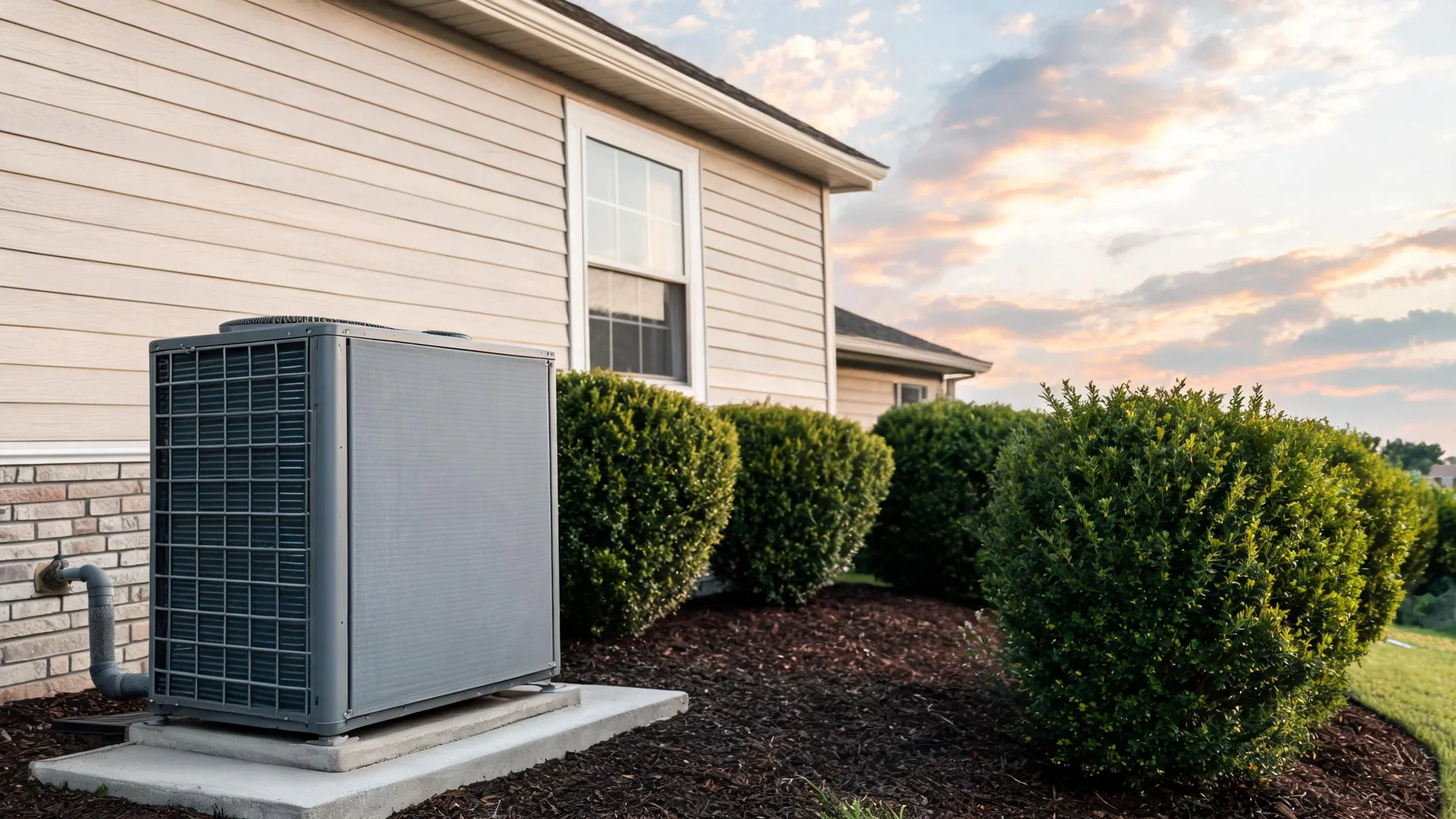
A gray residential air conditioning condenser unit mounted on a concrete pad outdoors, surrounded by green grass under a partly cloudy blue sky.

Get it looked at while it's still idle

Book the spring check before May, not after the first hot week. Once the compressor's been running flat out in 89 degree afternoons, you're not catching a weak part anymore, you're waiting on a dead one.

A gauge set tells you things a glance doesn't

A quick visit gets you a filter swap and a look at the thermostat setting. A thorough one has the tech hooking up gauges to check refrigerant pressure, pulling the blower wheel to check for dust buildup, and checking the temperature drop across the evaporator coil. That drop tells you whether the system is actually cooling the way it should, not just running.

What a short visit skips is what catches up with you later

Skipping the capacitor test or the coil cleaning doesn't show up right away. The system still turns on, the air still feels cold enough. But a weak capacitor left unchecked is what strands you on the hottest day of the year, and a dirty coil left alone is what pushes the compressor toward an early failure instead of a long life.

Aerial view of a square outdoor air conditioning condenser unit on a concrete pad beside a house wall with a sliding glass door.

Book your AC tune-up in April, before homes here start needing cooling in May.

  1. Jan
  2. Feb
  3. Mar
  4. Apr
  5. May
  6. Jun
  7. Jul
  8. Aug
  9. Sep
  10. Oct
  11. Nov
  12. Dec

A tune-up checks the refrigerant charge, cleans the coils, tests the capacitor and tightens the electrical connections.

A tune-up starts outside, with the condenser fan and the coil fins behind it. The tech clears leaves and grass clippings out of there, since anything blocking airflow makes the whole system work harder to shed heat. Inside, the evaporator coil gets checked too, because a coil caked in dust can't pull heat out of the air the way a clean one does. The drain line gets flushed, since algae and dirt build up in there and a clogged line backs up and overflows. Belts aren't part of the picture on most systems built now, the motors drive directly, but the tech still checks that the blower wheel spins freely and isn't caked with dust. Last, the thermostat gets tested to make sure it's actually calling for cooling and shutting off when it should, not just displaying a number.