





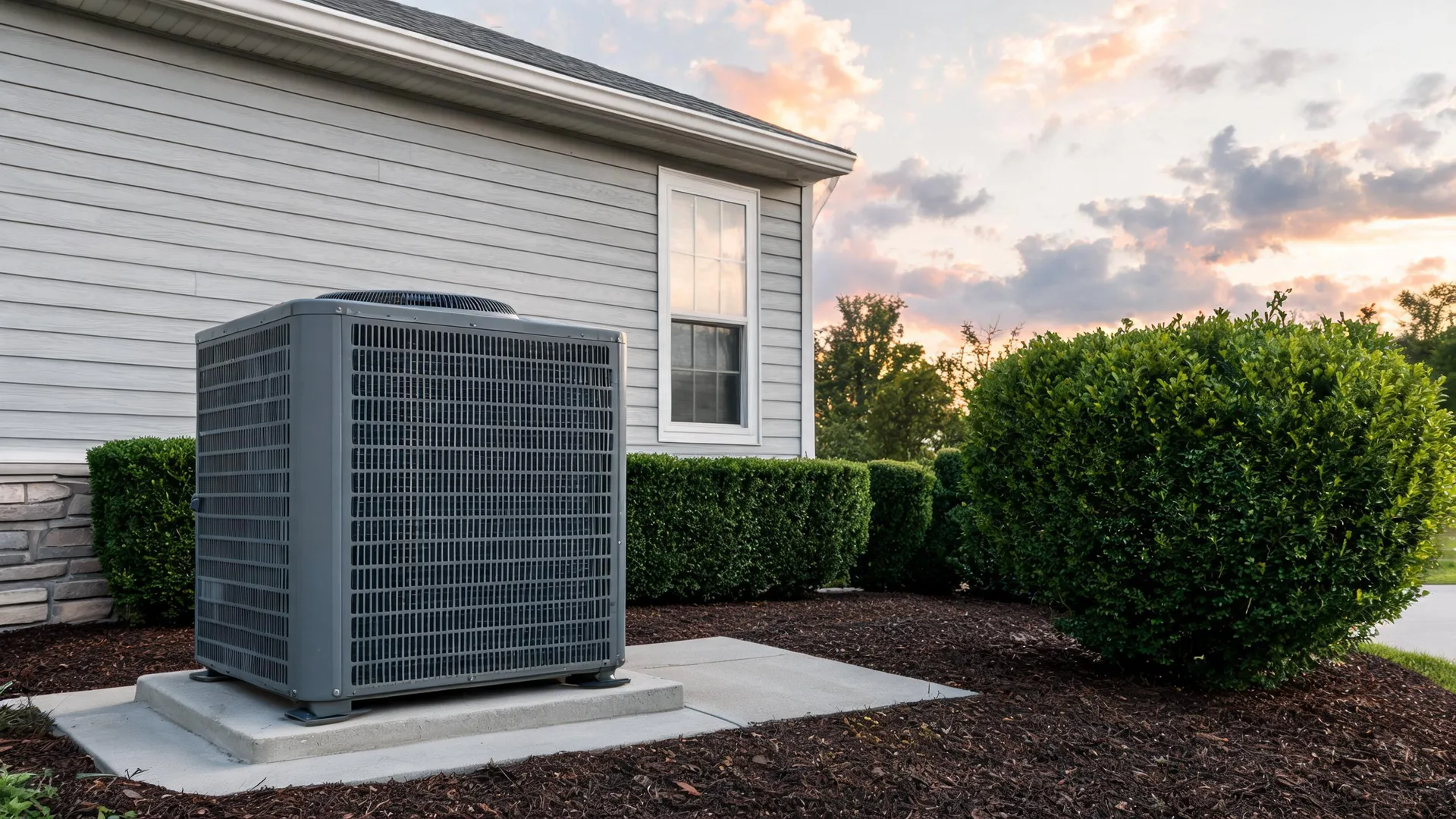
An outdoor air conditioning condenser unit installed beside the exterior wall of a blue vinyl-sided house at sunset.

AC Maintenance in Easley, SC

Tell us about the job

Takes about a minute. No obligation.

Tune-up, service, or cleaningCentral ACPickens County, SC
Step 1 of 2

What ZIP code is the job in?

Pickens County saw 113 severe weather events between 2015 and 2024, and damaging wind was behind most of them. Your outdoor unit sits outside through all of it, taking hail and wind-blown debris that a system in a milder county never has to deal with. Hail dents fins and can bend the coil behind them. Wind drives branches and grit into the cabinet, and that buildup chokes airflow over the coil even when nothing looks obviously broken. A tech checking the unit before summer can catch that kind of damage while it is still minor.

5 months
May through September, your air conditioner is on duty
87°F
the average summer afternoon it cools against
31 hail events
in ten years, and hail bends the fins on outdoor coils
69 wind events
in ten years, and wind drives debris into outdoor units
Isometric cutaway illustration of a small house showing interior rooms, ductwork, an indoor air handler, and an outdoor condenser unit connected by lines, on a plain white background.
Your air conditioner works hardest from June through August.

NOAA nClimDiv, 1991–2020 normals

Your AC runs from May through September here and sits idle the rest of the year.

One visit before May is enough to cover the only months it has to work.

May is when it has to start working. Get it checked in April.

Cooling runs May through September
Summer afternoons average 87°F
69 damaging wind events from 2015 to 2024

Have the outdoor unit checked before storm season puts it to work

Have the outdoor unit looked at before summer. A tech can spot hail dents, bent fins, or debris packed into the cabinet while it's still easy to fix, instead of finding it mid-season when the compressor is already straining against it.

Find a contractor
An outdoor air conditioning condenser unit mounted on a concrete pad beside a house, with electrical conduit running to a wall-mounted disconnect box.

Keep track of it from the start

If your system came with the house, that yearly check is what keeps a young unit young. Book it on the same month each year and there's a record of what the coil and charge looked like last time, so a tech can tell right away if something's changed. That's the easiest way to catch a problem while it's still small.

Keep the airflow clear

Walk past the outdoor unit now and then and clear away leaves, grass clippings, or anything piled against the cabinet. Keep plants trimmed back so air can move through the fins. A filter inside gets dirty too, and a clogged one makes the system pull warm air across the coil instead of cool air through the house. Swapping it out when it looks gray instead of white is something anyone can do without a wrench.

Know what to leave alone

The coil, the refrigerant charge, and anything inside the cabinet are not something to open up or adjust. A bent fin or a low charge needs a tech with the right gauges to fix it without causing more damage. If the unit is making a new noise, tripping a breaker, or not cooling like it used to, that is the point to call someone rather than guess at it.

Overhead view of a gray residential air conditioning condenser unit mounted on a concrete pad beside a house with asphalt shingle roofing.

Book your AC tune-up in April, before homes here start needing cooling in May.

  1. Jan
  2. Feb
  3. Mar
  4. Apr
  5. May
  6. Jun
  7. Jul
  8. Aug
  9. Sep
  10. Oct
  11. Nov
  12. Dec

A tune-up checks the refrigerant charge, cleans the coils, tests the capacitor and tightens the electrical connections.

A real tune-up starts outside at the condenser. The tech pulls the top or side panel and checks the capacitor and contactor, since those wear out from heat cycling more than anything else. They'll wash the coil fins from the inside out, because dirt and grass clippings build up against the coil and block airflow long before it's visible from outside. Refrigerant charge gets checked against the system's actual pressures, not just topped off by feel. The fan motor gets tested for play in the bearings, and the blades get checked for wobble. Inside, they'll check the evaporator coil for the same dirt buildup, check the blower wheel for dust caking on the blades, and confirm the drain line isn't clogged with algae, since a blocked drain backs up and can shut the whole system down on a float switch. Every reading gets compared to what that unit is supposed to do, not just whether it's blowing cold.