Three white clapboard houses with wraparound porches glow with warm interior and landscape lighting beneath Spanish moss-draped oak trees at dusk.

AC Maintenance in Florence, SC

Tell us about the job

Takes about a minute. No obligation.

Tune-up, service, or cleaningCentral ACFlorence County, SC
Step 1 of 2

What ZIP code is the job in?

This county sees real weather

Florence County logged 120 severe weather events between 2015 and 2024, most of it damaging wind. Hail and tornadoes hit too. Your outdoor unit sits outside through all of it, with nothing but a thin coil and a fan to take the hit.


Power doesn't always come right back

Almost half of South Carolina households went at least a day without power in 2024. When the power drops and comes back, your AC needs to be in working order to start back up on its own. A unit with a cracked coil or bent fins from the last storm is not the one you want finding that out for you.

5 months
May through September, your air conditioner is on duty
90°F
the average summer afternoon it cools against
11 hail events
in ten years, and hail bends the fins on outdoor coils
97 wind events
in ten years, and wind drives debris into outdoor units
Isometric cutaway illustration of a single-story house with a dark shingled roof, showing interior rooms with ductwork and an indoor air handler connected to an outdoor condenser unit beside the building.
Your air conditioner works hardest from June through September.

NOAA nClimDiv, 1991–2020 normals

Electricity here runs 14.23 cents per kilowatthour, and a neglected AC burns more of it with every hour it runs.

A tune-up gets the coil and charge back to where they belong, so your AC isn't wasting power all summer to do the same job.

May is the first month your AC works for a living here. Get it checked in April.

Cooling runs May through September
Summer afternoons average 90°F
97 damaging wind events from 2015 to 2024

AC here runs from May through September, with the afternoon high near 90 for June, July and August. That's five straight months of running hard, not a few weeks here and there. A system working that long through that kind of heat wears its parts down sooner than one that only has to carry a few mild weeks. The capacitor, the contactor, the fan motor, all of them are grinding through the hottest stretch of the year every day it runs. This county has also taken damaging wind 97 times over the past decade, so the outdoor unit is getting worn from the inside and knocked around from the outside at the same time. Worn parts tend to fail right when the system is working hardest, not before.

Check it before storm season

Storm season beats up outdoor units here. Have it checked for damage and debris before you need it.

Find a contractor
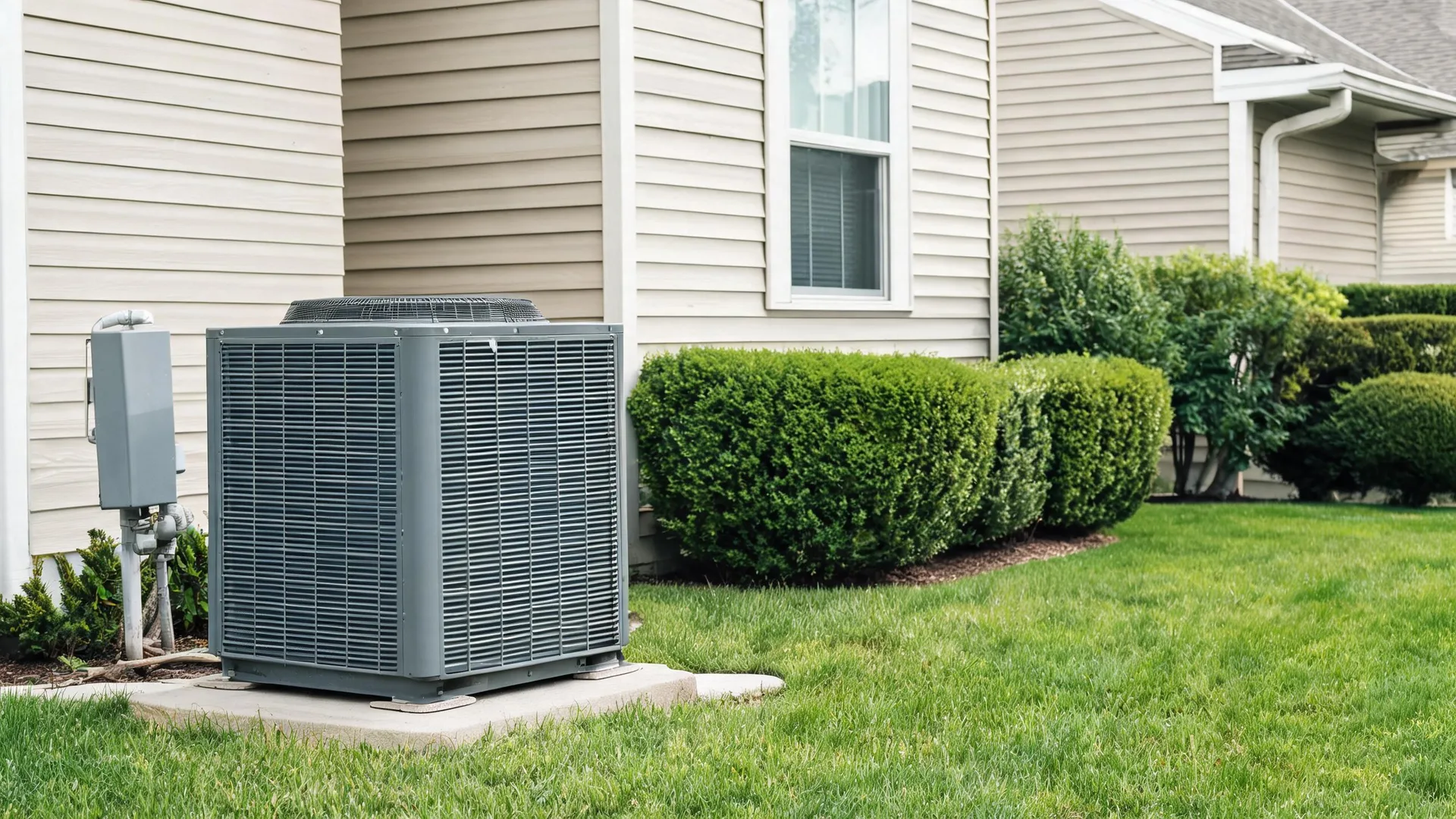
An outdoor air conditioning condenser unit mounted on a concrete pad beside a house, with electrical conduit running to a wall-mounted disconnect box.

Get the worn parts found before the heat does

A tune-up before May catches the worn capacitor or the dirty contactor while the system still has slack to cover for it. Wait until July and that same part is failing during a 90 degree week, with the AC already running flat out. Have it looked at while there's still room to fix something small before the season asks everything of it.

Dirt does the damage slowly

A dirty coil or a clogged filter doesn't stop your AC, it just makes it work harder to do the same job. The compressor runs longer to move the same heat. Heat builds up where it shouldn't. That kind of strain doesn't show up right away, it shows up as a shorter life on parts that would have otherwise lasted.

Small problems don't stay small

A refrigerant charge that's a little low, or a capacitor that's starting to weaken, won't shut your system down right away. Left alone, the compressor keeps working against conditions it wasn't built to handle, and that's what turns a part you could have replaced into a compressor you have to replace.

Overhead view of an outdoor AC condenser unit on a concrete pad next to a house with a dark shingle roof.

Book your AC tune-up in April, before homes here start needing cooling in May.

  1. Jan
  2. Feb
  3. Mar
  4. Apr
  5. May
  6. Jun
  7. Jul
  8. Aug
  9. Sep
  10. Oct
  11. Nov
  12. Dec

A tune-up checks the refrigerant charge, cleans the coils, tests the capacitor and tightens the electrical connections.

A tune-up starts outside, with the coil. A tech washes out the dirt and cut grass packed between the fins so the coil can shed heat the way it's supposed to. Inside the unit, the capacitor gets tested under load, not just looked at, since a weak one can still show the right numbers sitting idle. The contactor gets checked for pitting, because a contactor that's burning will eventually stick or fail to close at all. The refrigerant charge gets checked against what the system is supposed to hold, not topped off by guess. The condensate line gets cleared so it drains instead of backing up. The fan motor and blower get checked for wobble or noise that means the bearings are going. None of this is guesswork, and none of it takes long. It's the same handful of checks, done right, that tell you whether the system is ready or just quiet for now.