







Overhead view of an air conditioning condenser unit on a concrete pad next to a house with asphalt shingle roofing and vinyl siding.

AC Maintenance in Greenwood, SC

Tell us about the job

Takes about a minute. No obligation.

Tune-up, service, or cleaningCentral ACGreenwood County, SC
Step 1 of 2

What ZIP code is the job in?

Electricity in South Carolina ran 14.23 cents per kilowatthour in 2024, and your AC is one of the biggest draws on your bill all summer. A dirty coil or a low charge makes the compressor work harder to hit the same temperature, and it pulls that extra power every single cycle, all season. None of that shows up as a problem you can see. The unit still cools the house, just not for what it should cost to do it. A yearly tune-up catches the dirty coil or weak charge before it costs you another summer of higher bills.

5 months
May through September, your air conditioner is on duty
90°F
the average summer afternoon it cools against
8 hail events
in ten years, and hail bends the fins on outdoor coils
53 wind events
in ten years, and wind drives debris into outdoor units
Isometric cutaway illustration of a single-story house showing interior rooms with furniture, overhead ductwork, an indoor air handler unit, and an outdoor condenser unit connected by lines at the side of the building.
Your air conditioner works hardest from June through September.

NOAA nClimDiv, 1991–2020 normals

May is the first full month of cooling in Greenwood County.

April is when the check belongs, before the compressor is running hard every day.

One tune-up a year covers a five-month season

Half the homes here were built by 1977
Cooling runs May through September
Summer afternoons average 90°F
Five months of 90 degree afternoonsAfternoons average 90°F in June, July and August, and the AC runs May through September.

A tune-up starts with the panel off, and that's the part of the unit you never see. The tech checks refrigerant pressure against what the system calls for, a gauge reading against the manufacturer spec, not a guess. They'll check capacitor strength, since a capacitor can test weak well before it fails outright, and a weak one makes the compressor and fan motor work harder to start every cycle. They check the contactor for pitting, clean the condenser coil of the dirt and grass clippings that cut its ability to shed heat, and flush the condensate drain before algae clogs it and backs water up into the house. They'll check that the blower wheel is balanced and that amp draw on the motors falls where it should. None of this is visible from the thermostat. The house feels the same whether the charge is right or low, right up until the day it isn't.

Get it checked before the season runs up your rate

A tune-up now checks the coil, capacitor and charge before the compressor runs hard all season. Whatever a dirty coil or weak charge costs you to run, it costs you again every cycle at 14.23 cents a kilowatthour.

Find a contractor
A man in a dark shirt and brown work pants, seen from behind, carries a worn duffel bag up stone steps toward a dark green front door of a house with light siding and a potted shrub.
An outdoor air conditioning condenser unit mounted on a concrete pad surrounded by gravel, photographed against a partly cloudy blue sky.

The season doesn't let up once it starts

Five months of running flat out at 90 degrees is what wears a capacitor down or lets a coil get caked with enough dirt to matter. Once the season starts, the unit doesn't get a break to catch up. A tune-up before May is the only slot where checking those parts doesn't mean doing it while the compressor is already working hard every afternoon.

A weak part doesn't announce itself

A capacitor loses strength slowly, not all at once. The compressor still starts, just with more strain on the start winding each time, until one afternoon it doesn't start at all. Nobody skips maintenance and watches the capacitor die. It just happens, usually on the hottest day running.

A dirty coil changes nothing you can see

A condenser coil caked with dirt can't shed heat the way it's built to. The refrigerant stays hotter than it should through the whole cycle, so the compressor runs longer to reach the same temperature on the thermostat. The thermostat still reads right. The strain is on parts nobody's watching.

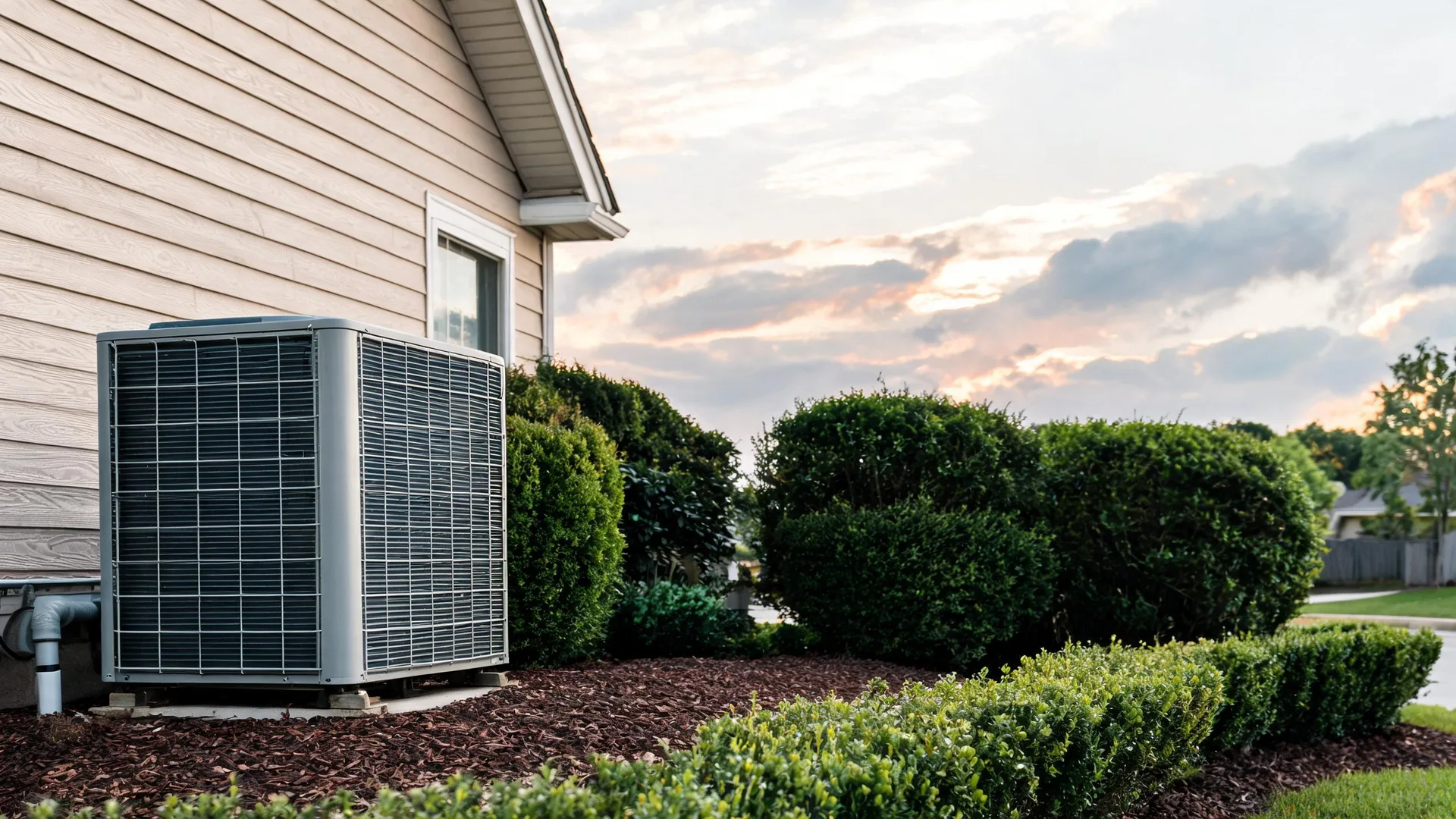
An outdoor air conditioning condenser unit mounted on a concrete pad next to a blue-sided residential house at sunset.

Book your AC tune-up in April, before homes here start needing cooling in May.

  1. Jan
  2. Feb
  3. Mar
  4. Apr
  5. May
  6. Jun
  7. Jul
  8. Aug
  9. Sep
  10. Oct
  11. Nov
  12. Dec

A tune-up checks the refrigerant charge, cleans the coils, tests the capacitor and tightens the electrical connections.

A tune-up also covers what happens outside the unit itself. The outdoor fan motor gets checked for play in the bearings, since a motor that wobbles on its shaft wears out faster and can start rubbing against the fan blade. The refrigerant lines get a look for worn insulation, especially anywhere they run exposed, because bare line loses its charge to the air instead of the house. The tech checks the disconnect box and wiring for corrosion, since a loose connection there runs hot and can trip the unit off on its own. They'll also check the evaporator coil inside, not just the condenser outside, because a coil choked with dust restricts airflow the same way a dirty filter does. Any one of these can go unnoticed for a while on its own. Left alone together, they're what shortens the life of the unit.