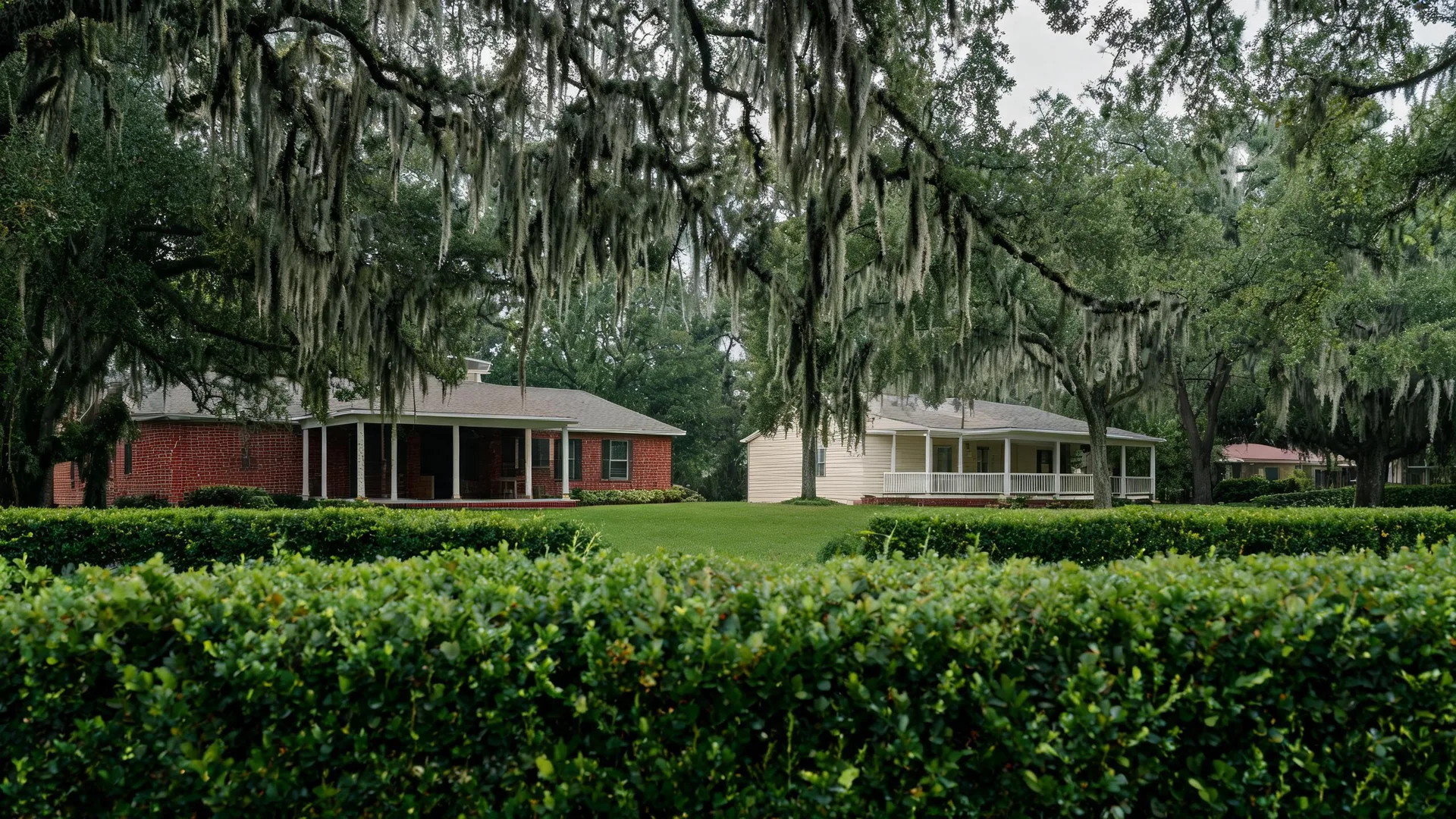





A red brick single-story house with a covered porch and a nearby cream-colored house with a wraparound porch, seen across a lawn behind a trimmed hedge, framed by large moss-draped oak branches.

AC Maintenance in Hardeeville, SC

Tell us about the job

Takes about a minute. No obligation.

Tune-up, service, or cleaningCentral ACJasper County, SC
Step 1 of 2

What ZIP code is the job in?

A few signs mean the system wants a look before anything fails outright. Warm air out of the vents when the thermostat is set low points to a refrigerant or airflow problem, not something to wait out. Short cycling, where the unit kicks on and off again fast, wears the compressor harder than normal runs do. A hissing or bubbling sound near the indoor coil usually means a refrigerant leak, and that only gets worse left alone. Weak airflow at the registers can mean a clogged filter, but it can also mean the blower motor is struggling. Water pooling near the indoor unit means the condensate line is blocked or the pan is cracked, and that water damages the floor and the unit both the longer it sits.

6 months
May through October, your air conditioner is on duty
90°F
the average summer afternoon it cools against
4 hail events
in ten years, and hail bends the fins on outdoor coils
206 wind events
in ten years, and wind drives debris into outdoor units
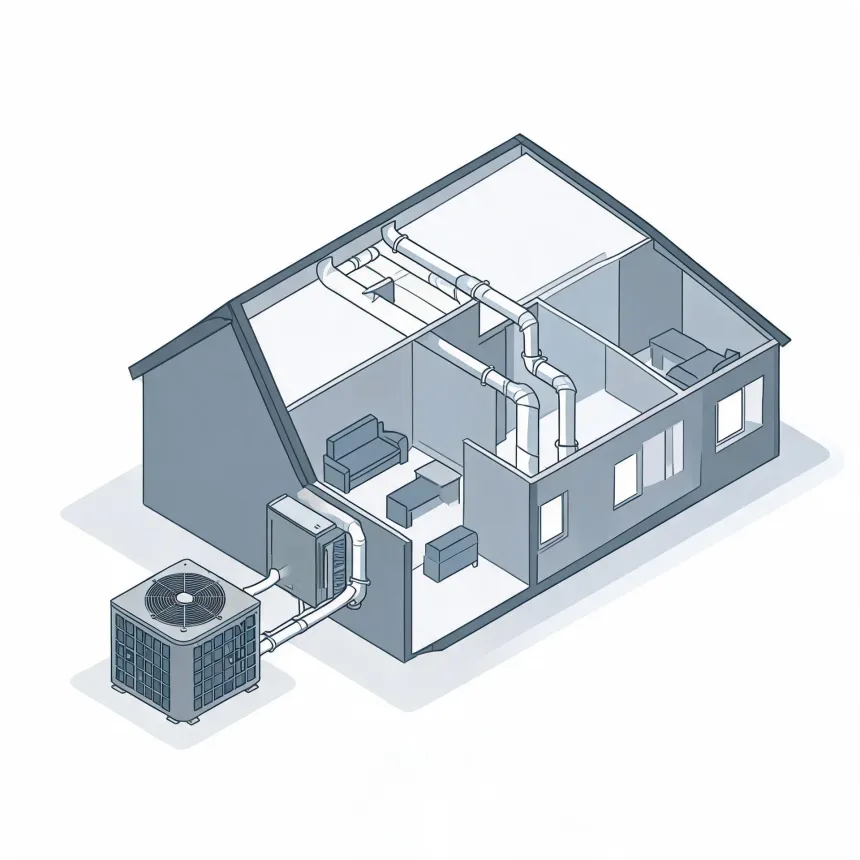
Isometric line illustration of a cutaway house showing interior rooms with ductwork, an indoor air handler, and an outdoor condenser unit connected by lines, on a white background.
Your air conditioner works hardest from June through September.

NOAA nClimDiv, 1991–2020 normals

Half the homes in Jasper County were built in 2003 or later.

A system that age still has years ahead of it, and a yearly check is what keeps it that way.

Six months of 90 degree afternoons wear a system down before you notice

Cooling runs May through October
Summer afternoons average 90°F
206 damaging wind events from 2015 to 2024
May is when it gets testedCooling runs May through October here. April is when to get it checked.

A dirty coil or a weak capacitor makes the compressor work harder to do the same job, and that shows up on the power bill. South Carolina homes paid 14.23 cents per kilowatt-hour in 2024, on the higher side for this region, and a system running hard through the hot months here adds that up fast. A yearly check catches the dirty coil, the low refrigerant charge, the weak capacitor, before the system starts pulling more power to make up for it. The cost of that visit is small next to a summer of the system working harder than it needs to.

Keep it in good shape

If your system is fairly new, a yearly check keeps it in good shape for longer.

Find a contractor
An outdoor air conditioning condenser unit mounted on a concrete pad beside a house, with electrical conduit running to a wall-mounted disconnect box.

The season starts before you're ready for it

Cooling runs May through October here, six months of 90 degree afternoons. A worn part sitting through that stretch does not stay just worn. Get it checked before May, while there is still time to replace a weak part instead of waiting for it to fail mid summer.

Change the filter without waiting for a reminder

A dirty filter chokes airflow, and the system runs longer to move the same amount of air. Look at it in good light. If you can't see through it, swap it. Pleated filters last longer than the thin fiberglass kind, but neither lasts forever with pets or a dusty house.


Keep the outdoor unit clear

The outdoor unit needs open air on all sides to shed heat. Pull weeds, cut back grass, and keep leaves from piling against the cabinet. Don't stack anything against it or run the grill next to it. Hose off the fins from the inside out if they look caked with dirt, but skip the pressure washer. It bends the fins flat and that cuts airflow the same way dirt does.

Overhead view of a gray outdoor AC condenser unit on a concrete pad beside a mulched garden bed and a house with vinyl siding.

Book your AC tune-up in April, before homes here start needing cooling in May.

  1. Jan
  2. Feb
  3. Mar
  4. Apr
  5. May
  6. Jun
  7. Jul
  8. Aug
  9. Sep
  10. Oct
  11. Nov
  12. Dec

A tune-up checks the refrigerant charge, cleans the coils, tests the capacitor and tightens the electrical connections.

A real tune-up means the tech opens the cabinet and checks things a filter change never touches. The refrigerant charge gets measured against what the system calls for, because too little or too much both make the compressor work harder than it should. The capacitor gets tested under load, since a weak one can still start the system most days and then fail on the one day it matters. The coil gets inspected for dirt and the drain line gets checked for a clog, before either turns into warm air or standing water. Electrical connections get tightened, because a loose one generates heat and heat shortens the life of whatever it touches. None of this is guesswork. It's measurements against a spec sheet, and the system either passes or it doesn't.