A row of single-story houses, one of red brick and others with pale siding, behind a mowed lawn and a tall trimmed hedge, framed by large oak branches draped with Spanish moss.

AC Maintenance in Hartsville, SC

Tell us about the job

Takes about a minute. No obligation.

Tune-up, service, or cleaningCentral ACDarlington County, SC
Step 1 of 2

What ZIP code is the job in?

The coil gets dirty before anyone notices

A condenser coil caked in dust and grass clippings can't shed heat the way it should. The system still runs, still blows cold air for a while, but it works harder to do it. That extra strain is quiet. Nobody hears a warning for it until the compressor wears down faster than it should have.


A small refrigerant leak turns into a dead compressor

Left unchecked, a slow leak drops the charge low enough that the compressor starts running hot and dry. A tech checking the charge once a year catches that leak while it's still a repair. Skip that visit and the next sign is a compressor that won't start at all.

5 months
May through September, your air conditioner is on duty
90°F
the average summer afternoon it cools against
18 hail events
in ten years, and hail bends the fins on outdoor coils
129 wind events
in ten years, and wind drives debris into outdoor units
Isometric grayscale illustration of a cutaway house with the roof lifted, showing interior rooms, ductwork, an indoor air handler, and an outdoor condenser unit beside the building.
Your air conditioner works hardest from June through September.

NOAA nClimDiv, 1991–2020 normals

AC in Darlington County runs May through September.

Get it looked at in April, before the first hot month puts it to work.

Five months of 90 degree afternoons wear a system down fast

Cooling runs May through September
Summer afternoons average 90°F
129 damaging wind events from 2015 to 2024

Book it before the season

It starts running hard in the first month of the season here. Book the check the month before.

Find a contractor
A man seen from behind in a dark work shirt and tan pants carries a worn canvas tool bag up concrete steps toward a dark green paneled front door, with a potted shrub at left.
A gray residential air conditioner condenser unit mounted on a concrete pad in an open grass field.

A real tune-up opens the panel

A quick visit checks that the system turns on and blows cold. A thorough one opens it up. That means pulling the panel to look at the capacitor, checking refrigerant pressure against what the system was built to run, flushing the condensate drain so it doesn't back up later, and washing the coil instead of just glancing at it. Anyone can read a thermometer at the vent and call it done. The parts that wear from steady running, the capacitor, the contactor, the coil, don't show themselves in a glance. They show up when someone checks them by hand.

A capacitor loses strength before it quits

The capacitor gives the compressor and fan motor the jolt they need to start. It weakens slowly, long before it fails outright. A system on a weak capacitor still starts, just slower and with more strain on the motor each time. A tech testing it against its rated strength catches that wear. Nobody waiting for the system to stop starting sees it coming.

A clogged drain backs up where nobody looks

The condensate drain carries water away from the evaporator coil as the system runs. Algae and dust narrow that line from the inside, and nothing above the panel shows it happening. A clear line drains on its own. A blocked one backs water up into the pan and past it, usually behind a wall or under the unit, where it sits unnoticed until the damage is already done.

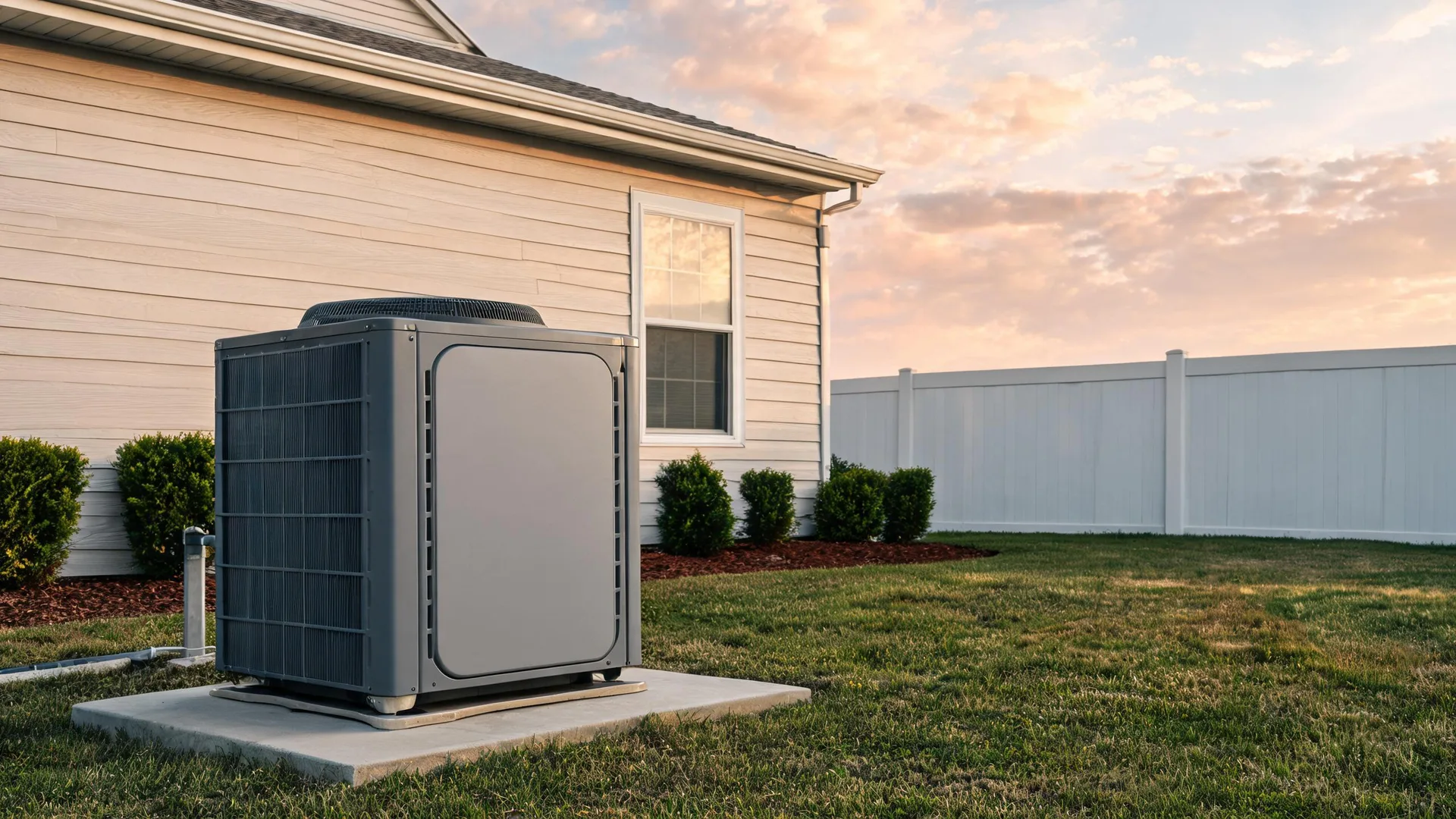
An outdoor air conditioning condenser unit positioned beside a blue-sided house at sunset.

Book your AC tune-up in April, before homes here start needing cooling in May.

  1. Jan
  2. Feb
  3. Mar
  4. Apr
  5. May
  6. Jun
  7. Jul
  8. Aug
  9. Sep
  10. Oct
  11. Nov
  12. Dec

A tune-up checks the refrigerant charge, cleans the coils, tests the capacitor and tightens the electrical connections.

A tune-up worth paying for includes a look at the blower motor and the ductwork it pushes air through. Dust builds up on the blower wheel itself, not just the filter, and a caked wheel moves less air no matter how strong the motor is. That shows up as weak airflow at the vents even when the compressor and coil are fine. The tech should also check the refrigerant lines for wear where they run through the wall or along the pad, since a worn line insulates poorly and makes the whole system work harder to hold its charge. None of this is visible from outside the cabinet. It takes someone opening things up and looking.