






Aerial view of a square outdoor air conditioning condenser unit on a concrete pad beside a house wall with a sliding glass door.

AC Maintenance in Lancaster, SC

Tell us about the job

Takes about a minute. No obligation.

Tune-up, service, or cleaningCentral ACLancaster County, SC
Step 1 of 2

What ZIP code is the job in?

Lancaster County saw 191 severe weather events between 2015 and 2024, most of it wind. Your outdoor unit sits outside through all of it, taking branches, grit and hail against the coil and the fan. Damage like that does not always show up right away. A coil that is bent or caked with debris makes the system work harder to do the same job, and it can go unnoticed until the first hot week of the year. Getting it looked over before storm season builds back up is worth doing while nothing is wrong yet.

5 months
May through September, your air conditioner is on duty
89°F
the average summer afternoon it cools against
46 hail events
in ten years, and hail bends the fins on outdoor coils
133 wind events
in ten years, and wind drives debris into outdoor units
Isometric cutaway illustration of a house interior showing ducted air handling equipment and duct runs through rooms, connected by piping to an outdoor condenser unit on a pad outside the wall.
Your air conditioner works hardest from June through September.

NOAA nClimDiv, 1991–2020 normals

Half the homes in Lancaster County were built in 2000 or later.

A system that age is usually still within its working life, and a yearly check is what keeps it there.

May is the first full month of cooling here. April is when the check should happen.

Cooling runs May through September
Summer afternoons average 89°F
133 damaging wind events from 2015 to 2024
Five months of heat a yearAfternoons in Lancaster County average 89°F through June, July and August.

A dirty coil or a low charge makes the system run longer to cool the same house. That extra runtime costs more here than in most places. Electricity in South Carolina ran 14.23 cents per kilowatt-hour in 2024, and a unit working harder pulls more of it every day it runs, all season. A tune-up catches the dirt and the charge before the system has to work around them. That check costs less than the power wasted running dirty all summer.

Have the outdoor unit inspected before storm season builds back up

Get the outdoor unit checked for bent fins, loose debris and hail damage before the next round of storms comes through.

Find a contractor
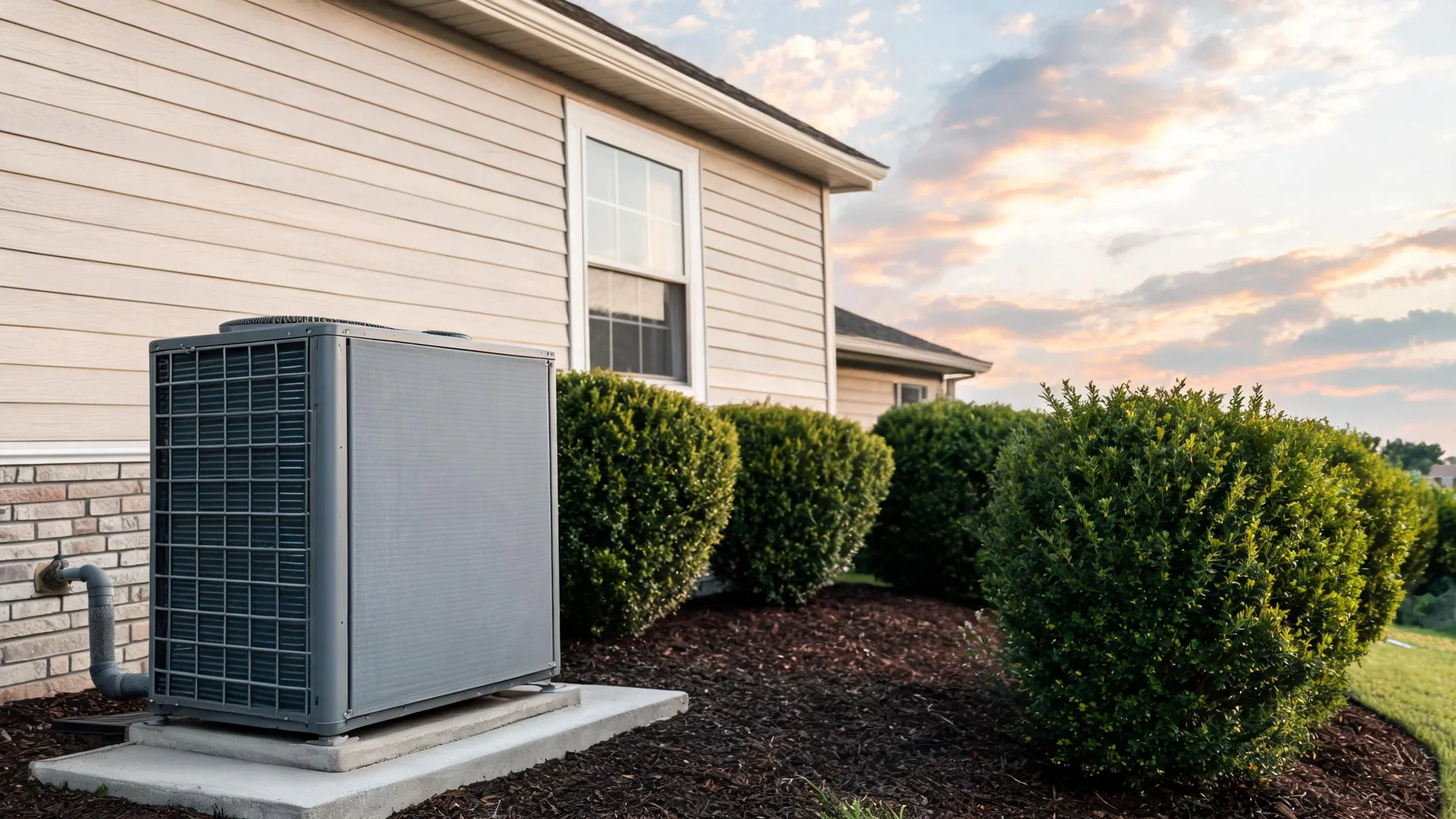
A gray residential air conditioning condenser unit mounted on a concrete pad outdoors, surrounded by green grass under a partly cloudy blue sky.

What runs fine and wears out anyway

A refrigerant charge that is a little low will not trip any alarm. The system still blows cold air. It still cycles on and off like it should. What changes is how long each cycle runs and how much strain sits on the compressor the whole time it works. Over a full season of that, the compressor wears in a way nobody standing in the house would notice. A gauge set on the service ports shows the charge directly, which is something a thermostat reading can't tell you. A coil packed with dust between the fins does the same kind of quiet damage. Airflow drops, the system keeps running, and the only way to see it is to pull a panel and look at the fins, the blower wheel and the condensate drain.

Sounds that mean something's loose or worn

A healthy outdoor unit runs with a steady hum. A grinding noise means a motor bearing is going. A rattle that comes and goes means something inside the cabinet has worked itself loose, often a fan blade hitting its shroud. None of these stop the system from running, so they get ignored until the part they're warning about fails outright.

What a check catches before it becomes a breakdown

A tech checking the system looks at the same things every time. The capacitor's readings get checked against what it should be putting out. The contactor gets checked for pitting. The refrigerant lines get checked for an oil residue that means a slow leak. Each of those can run fine for a while on its own before it takes the compressor down with it. Catching one on a gauge or a meter is the whole point of looking before summer, not after.

Overhead view of a gray residential air conditioning condenser unit mounted on a concrete pad beside a house with asphalt shingle roofing.

Book your AC tune-up in April, before homes here start needing cooling in May.

  1. Jan
  2. Feb
  3. Mar
  4. Apr
  5. May
  6. Jun
  7. Jul
  8. Aug
  9. Sep
  10. Oct
  11. Nov
  12. Dec

A tune-up checks the refrigerant charge, cleans the coils, tests the capacitor and tightens the electrical connections.

A tune-up starts outside at the unit itself. The tech pulls the panel and checks the capacitor's output against its rating, since a weak one is the most common reason a compressor struggles to start. The contactor gets checked for pitting, because a pitted one can stick or fail to make contact at all. The coil gets washed if it's caked with dust, and the fins get straightened if they're bent, since either one chokes airflow across the coil. Refrigerant lines get checked for oil residue, which is what a slow leak looks like before the charge drops low enough to matter. Inside, the blower wheel gets checked for dust buildup and the condensate drain gets cleared, since a clogged drain backs up and can shut the system down on its own.