






Two illuminated white Southern-style houses with wraparound porches and staircases, framed by a Spanish moss-draped tree on a quiet street at night.

AC Maintenance in Newberry, SC

Tell us about the job

Takes about a minute. No obligation.

Tune-up, service, or cleaningCentral ACNewberry County, SC
Step 1 of 2

What ZIP code is the job in?

Skip maintenance long enough and the signs show up slowly, which is why they get missed. A dirty coil makes the compressor work harder to move the same amount of heat, and that strain adds up over time. A clogged filter chokes airflow across the evaporator coil, and the coil can ice over even on a hot day. Low refrigerant from a slow leak won't announce itself. The system still runs, just weaker, and the house takes longer to cool. None of this breaks the unit outright. It just means the compressor is working harder for less, for longer, until something finally gives out.

5 months
May through September, your air conditioner is on duty
91°F
the average summer afternoon it cools against
25 hail events
in ten years, and hail bends the fins on outdoor coils
189 wind events
in ten years, and wind drives debris into outdoor units
Isometric illustration of a cutaway house showing interior ductwork, an indoor air handler and furniture, connected by lines to an outdoor condenser unit on a pad.
Your air conditioner works hardest from June through September.

NOAA nClimDiv, 1991–2020 normals

May is when cooling starts here, and it starts hard.

Have the AC checked in April, before the first real load of the season hits it.

Five months of 91 degree afternoons wear a system down fast

Cooling runs May through September
Summer afternoons average 91°F
189 damaging wind events from 2015 to 2024

One visit a year covers it for a system like this. A technician checks refrigerant charge, cleans the coil, and tests the capacitor and contactor before the heat sets in. That's enough to catch the strain that builds up over a long summer. Half the homes in Newberry County were built in 1981 or earlier, so a fair amount of the equipment out there has been swapped out at least once by now. Older system or newer, once a year is still what it needs. More than that isn't buying you much.

A neglected AC costs more to run here

A dirty coil and a weak capacitor don't shut the system down. They just make it run longer to do the same job, and in South Carolina that extra runtime gets billed at 14.23 cents a kilowatt-hour. A tune-up before the heat sets in is what keeps that bill from creeping up on you.

Find a contractor
A man in a cap, dark long-sleeve shirt and tan work pants walks up concrete steps toward a dark green front door, carrying a worn canvas duffel bag.
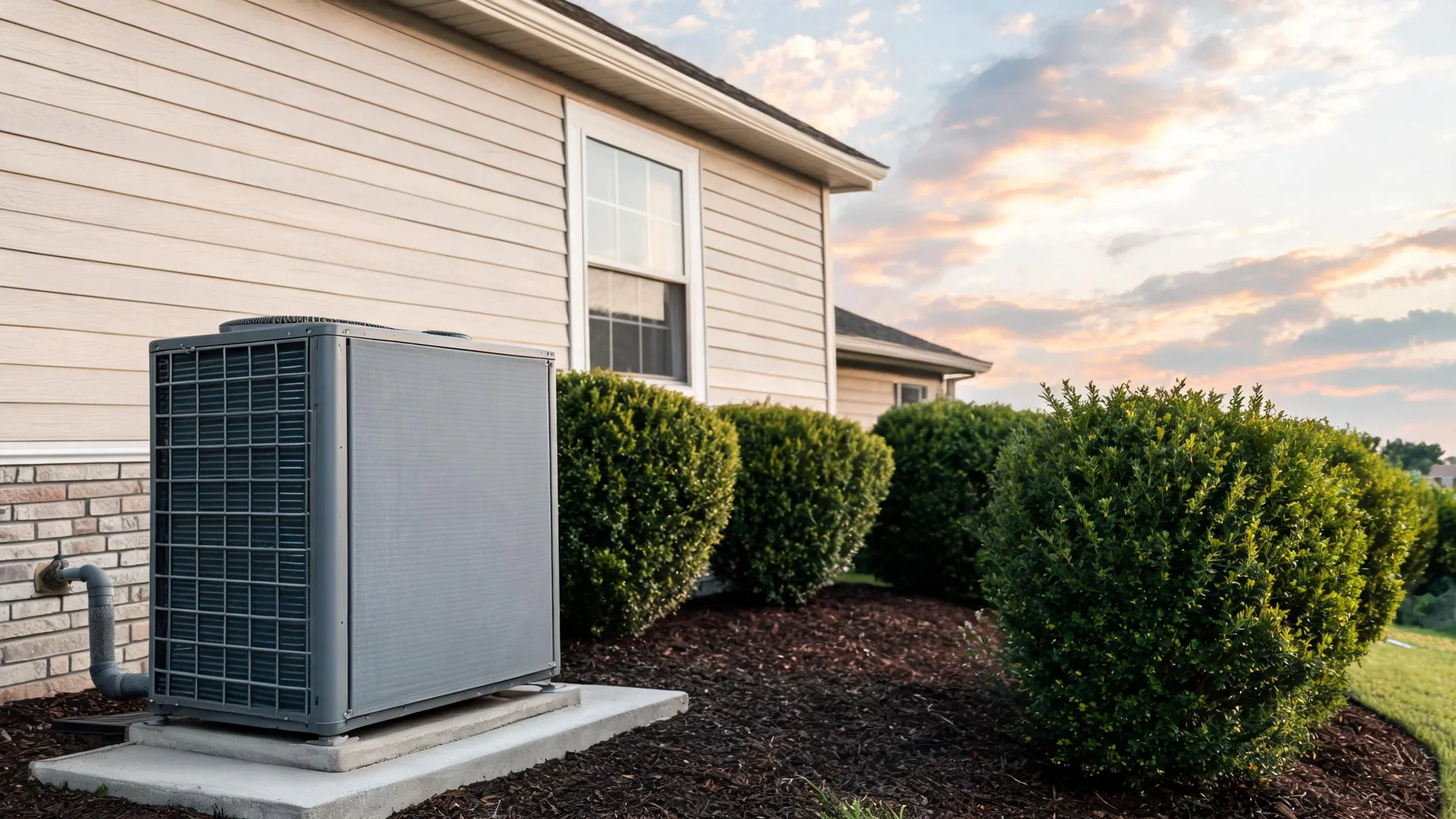
A gray residential air conditioning condenser unit mounted on a concrete pad outdoors, surrounded by green grass under a partly cloudy blue sky.

Once summer starts here, this system doesn't get a day off

Five months of that heat is a lot of hours on a compressor. Once May hits, this system doesn't get a break until fall, and whatever's already weak in it gets found fast. A once a year check before the season starts is what catches a weak capacitor or a coil that needs cleaning while it's still a quick fix instead of a no-cool call in July.

A gauge set has to come out

Checking refrigerant charge means connecting gauges to the service ports and reading pressures against what the system is supposed to run at. A tech who only looks at the outdoor unit and listens for it running isn't measuring anything. Charge that's a little low won't make noise or throw an error. The only way to catch it is to check it.

The coil gets touched, not glanced at

A quick visit means a glance at the outdoor unit and a filter swap. A thorough one means pulling the panel and actually cleaning the evaporator coil and condenser coil, since dirt on either one makes the whole system work harder to move the same heat. The capacitor and contactor get tested under load too, not just eyeballed, because a capacitor can look fine and still be weak.

Aerial view of a square outdoor air conditioning condenser unit on a concrete pad beside a house wall with a sliding glass door.

Book your AC tune-up in April, before homes here start needing cooling in May.

  1. Jan
  2. Feb
  3. Mar
  4. Apr
  5. May
  6. Jun
  7. Jul
  8. Aug
  9. Sep
  10. Oct
  11. Nov
  12. Dec

A tune-up checks the refrigerant charge, cleans the coils, tests the capacitor and tightens the electrical connections.

A full tune-up checks more than refrigerant and the coil. The condensate drain gets flushed, since algae and dirt build up in that line and a clogged drain backs up into the pan or the house. The blower wheel gets inspected too, because dirt on the blades throws off airflow even when the filter upstream is clean. Electrical connections at the disconnect and inside the unit get tightened, since a loose connection builds resistance and heat over time. The thermostat gets checked against the actual temperature in the room, not just its own display. Refrigerant lines get looked over for rubbed spots or worn insulation, since that's where slow leaks usually start.