Two single-story houses, one with red brick and one with light siding, behind a trimmed hedge and lawn under large oak trees draped with Spanish moss.

AC Maintenance in Orangeburg, SC

Tell us about the job

Takes about a minute. No obligation.

Tune-up, service, or cleaningCentral ACOrangeburg County, SC
Step 1 of 2

What ZIP code is the job in?

The coil gets dirty before anyone notices

A dirty condenser coil can't shed heat the way it should, so the compressor works harder and runs longer to cool the same house. That strain is quiet. Nothing shuts off or trips, the system just wears faster until the compressor fails outright.


A clogged filter backs up all winter

When the filter isn't changed, airflow drops and the evaporator coil can ice over. A tech checks this during a tune-up along with the refrigerant charge and the electrical connections, catching the kind of problem that only shows up as a breakdown later.

5 months
May through September, your air conditioner is on duty
91°F
the average summer afternoon it cools against
33 hail events
in ten years, and hail bends the fins on outdoor coils
177 wind events
in ten years, and wind drives debris into outdoor units
Isometric cutaway illustration of a house showing attic ductwork, an indoor air handler, refrigerant lines running outside, and an outdoor condenser unit on a pad.
Your air conditioner works hardest from June through September.

NOAA nClimDiv, 1991–2020 normals

Electricity in South Carolina runs 14.23 cents per kilowatt-hour.

A dirty coil makes your AC draw more of it to do the same job.

Five months of 91°F afternoons wear a system down fast

Cooling runs May through September
Summer afternoons average 91°F
177 damaging wind events from 2015 to 2024

A tune-up is where that gets caught. A tech cleans the coil, checks the charge, and makes sure the system isn't drawing more than it needs to. That's the whole visit. Skip it a few years running and the higher draw is still there, quietly added to every bill the AC runs during.

One tune-up a year is what this system needs

One visit a year covers it. Half the homes in Orangeburg County were built in 1983 or later, so plenty of these systems are still well within their working life. The yearly tune-up is what keeps them there.

Find a contractor
A man in a cap, navy T-shirt and brown work pants, seen from behind, climbs porch steps toward a dark green paneled front door while carrying a canvas tool bag.
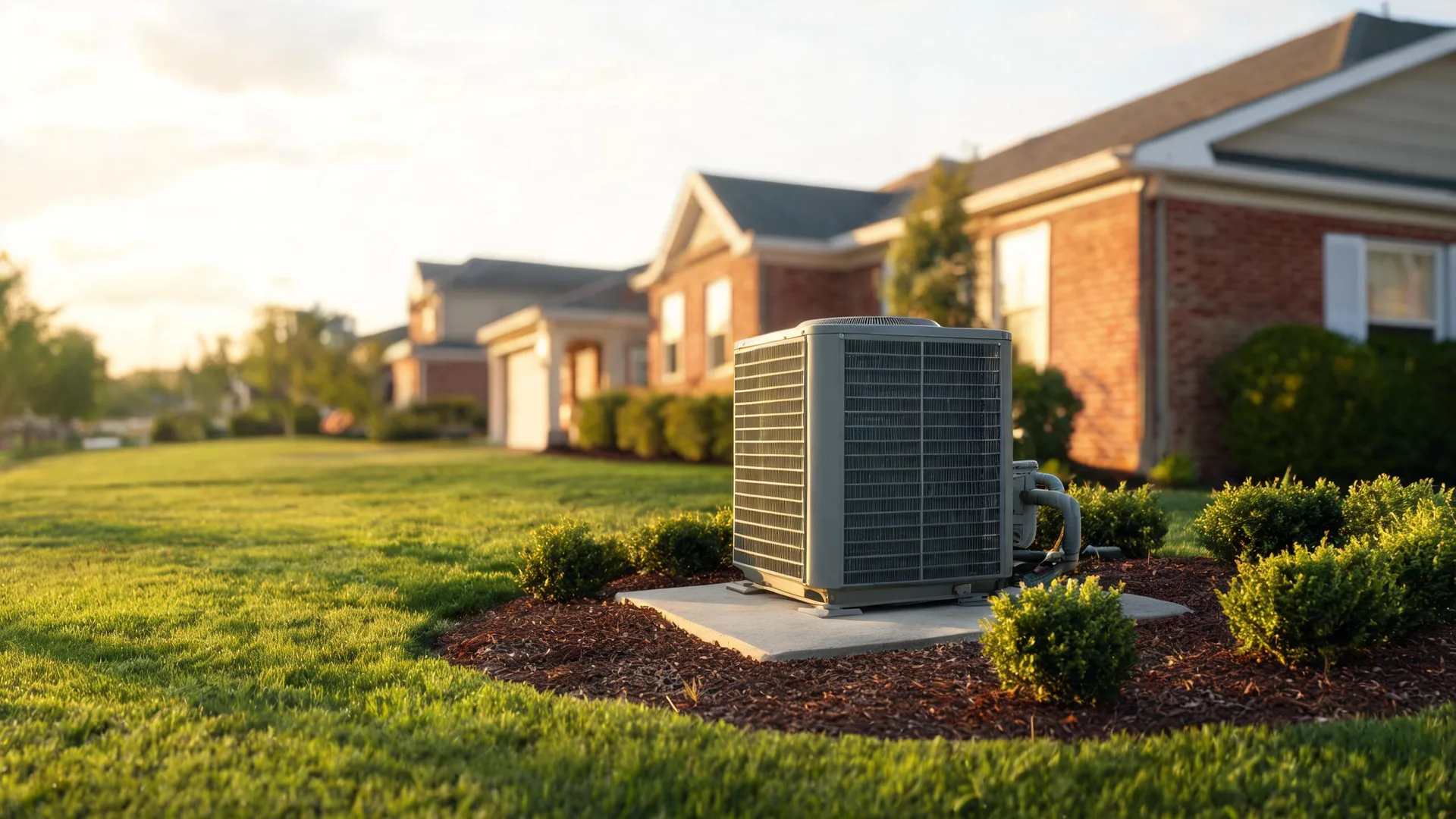
A gray cylindrical air conditioning condenser unit mounted on a concrete pad next to a light-colored vinyl-sided house exterior.

What you can check without a tech

Between visits, the filter is the one thing worth checking yourself. Pull it and hold it up to a light. If light barely gets through, swap it. A dirty filter is the most common reason a coil ices over or a compressor runs longer than it should. Outside, keep the area around the condenser clear. Grass clippings, leaves and shrubs pressed up against it block the airflow it needs to shed heat. A few feet of clearance on every side is enough. Indoors, keep an ear out for anything that sounds different, a new rattle, a hum that wasn't there, air coming out weaker than usual. None of that is something to fix yourself. It's just worth mentioning when the tech comes for the tune-up.

A weak capacitor doesn't announce itself

A capacitor gives the compressor and fan motor the jolt they need to start. As it weakens, the system still starts, so there's nothing to notice. It just gets slower to kick on and works harder once it does, until one day it doesn't start at all. A tech tests it under load, not just by looking at it.

Refrigerant doesn't get used up, it leaks out

A system that's low on charge didn't burn through refrigerant the way a car burns gas. It's lower because it's leaking somewhere, a fitting, a coil, a line. Running it low makes the compressor work past what it's built for. A gauge check during a tune-up catches the low charge before the leak gets found the hard way.

Aerial view of a residential air conditioning condenser unit mounted on a concrete pad next to a house with vinyl siding and a sliding glass door.

Book your AC tune-up in April, before homes here start needing cooling in May.

  1. Jan
  2. Feb
  3. Mar
  4. Apr
  5. May
  6. Jun
  7. Jul
  8. Aug
  9. Sep
  10. Oct
  11. Nov
  12. Dec

A tune-up checks the refrigerant charge, cleans the coils, tests the capacitor and tightens the electrical connections.

A tune-up starts with the coils, both of them, wiped down so they can shed heat the way they're supposed to. From there the tech checks refrigerant pressure against what the system is rated for, not just a glance but an actual gauge reading. The capacitor gets tested under load, since a weak one can still start the system that day and fail the next. Electrical connections get checked for anything loose or corroded, because that's what causes a system to trip out on a hot afternoon. The condensate drain gets cleared too, since a clogged one backs up and can shut the system down on its own. Last is the thermostat, making sure it's actually calling for the right temperature and the system is answering.