Two white Southern-style homes with wraparound porches lit by landscape lighting at night, flanked by live oak trees hung with Spanish moss.

AC Maintenance in Seneca, SC

Tell us about the job

Takes about a minute. No obligation.

Tune-up, service, or cleaningCentral ACOconee County, SC
Step 1 of 2

What ZIP code is the job in?

The system runs longer to do the same job

A dirty coil or a low charge makes the compressor work harder to reach the temperature on the thermostat. The air still gets cold eventually, so nothing seems wrong. The strain just shows up later as a worn out compressor instead of a simple repair now.

Short cycles wear parts that start and stop wear the most

If the unit kicks on, runs a few minutes, and shuts off before the house cools, something is forcing it to stop early. That start and stop is hard on the compressor and the capacitor. A check finds whether it's the thermostat, the coil, or the refrigerant charge before one of those parts fails outright.

5 months
May through September, your air conditioner is on duty
87°F
the average summer afternoon it cools against
37 hail events
in ten years, and hail bends the fins on outdoor coils
92 wind events
in ten years, and wind drives debris into outdoor units
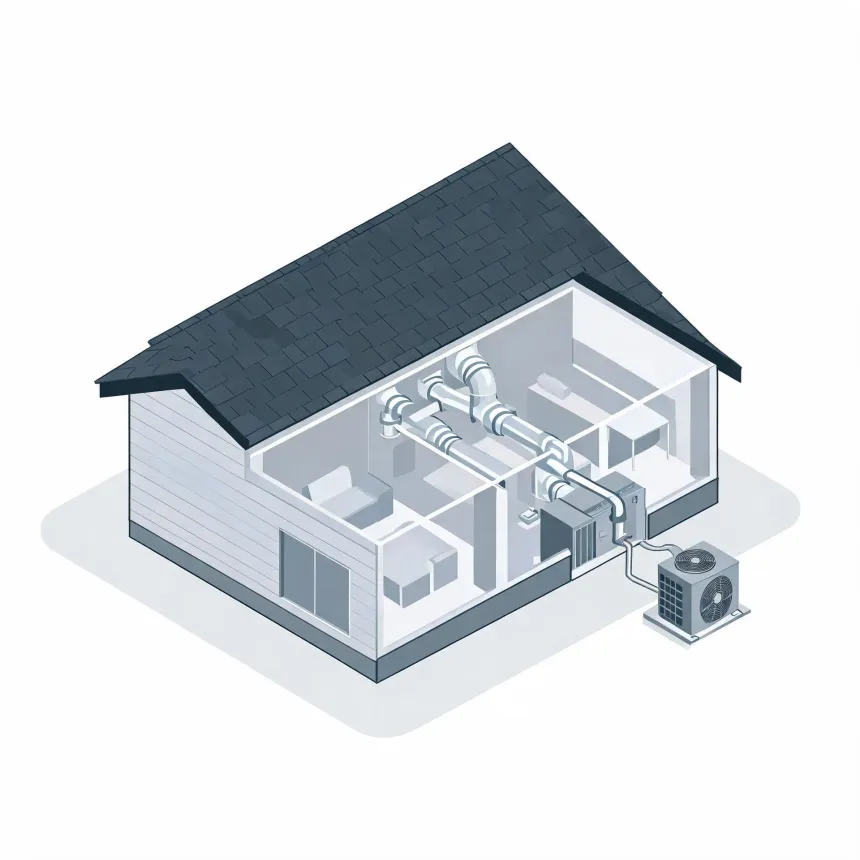
Isometric cutaway illustration of a house with a dark shingled roof, showing interior ductwork connected to an indoor air handler and an outdoor condenser unit beside the building.
Your air conditioner works hardest from June through August.

NOAA nClimDiv, 1991–2020 normals

One tune-up a year is what this system needs, not more.

A technician checks it once, before summer, and that's enough to carry the AC through storm season here.

May is when cooling starts in Oconee County, so April is when it gets checked

Cooling runs May through September
Summer afternoons average 87°F
92 damaging wind events from 2015 to 2024

Half the homes in Oconee County were built in 1990 or later. If yours is one of them, the air conditioner may still be the one it came with, or close to it. A system in that range of its life has years left, and a yearly check is what keeps it there. The technician cleans the coil, checks the refrigerant charge, and tests the capacitor before any of it turns into a breakdown. Skip the check for a few years and the same system wears down faster for no reason other than neglect.

One check before May covers the whole summer

Oconee County runs the AC from May through September, with afternoon highs averaging 87 in June, July and August. That's five months asking the system to keep up. One check before May is what gets it through all of them.

Find a contractor
A man in a cap, gray shirt and brown work pants walks up steps toward a dark green front door, carrying a canvas tool bag beside a potted shrub.
A gray residential air conditioner condenser unit mounted on a concrete pad in an open grass field.

Newer doesn't mean skip the check

A newer system still benefits from being watched every year. Book the check once, and let it run its course through the day into the night like this one. The technician looks at the coil, the charge, and the capacitor each time. That's what keeps a system still well within its life from losing years it didn't have to lose.

A dirty filter keeps going unnoticed

Nothing shuts the system off when the filter clogs. Airflow just drops, the coil behind it starts icing over, and the system keeps running on less air than it needs. By the time the house feels warm, the coil may already be frozen solid.

A small refrigerant leak stays small, then isn't

A system low on refrigerant doesn't fail right away. It just runs longer and the compressor works harder than it should, until the compressor itself wears out from the strain. A check during the year finds the leak while it is still just a leak.

Aerial view of a gray central air conditioning condenser unit on a concrete pad next to a house with vinyl siding.

Book your AC tune-up in April, before homes here start needing cooling in May.

  1. Jan
  2. Feb
  3. Mar
  4. Apr
  5. May
  6. Jun
  7. Jul
  8. Aug
  9. Sep
  10. Oct
  11. Nov
  12. Dec

A tune-up checks the refrigerant charge, cleans the coils, tests the capacitor and tightens the electrical connections.

A tune-up covers more than the coil and the charge. The technician checks the capacitor and contactor, since those are what fail most often, and the first sign is usually the system not starting at all. The condenser fan and blower motor get checked too, since a motor running past its normal effort runs hotter and wears sooner. Electrical connections get tightened, because a loose one builds heat at that spot until it burns. The condensate drain gets checked so it isn't clogged and backing up when the system is pulling moisture out of the air. Each part gets looked at on its own, not just whether the air coming out is cold.