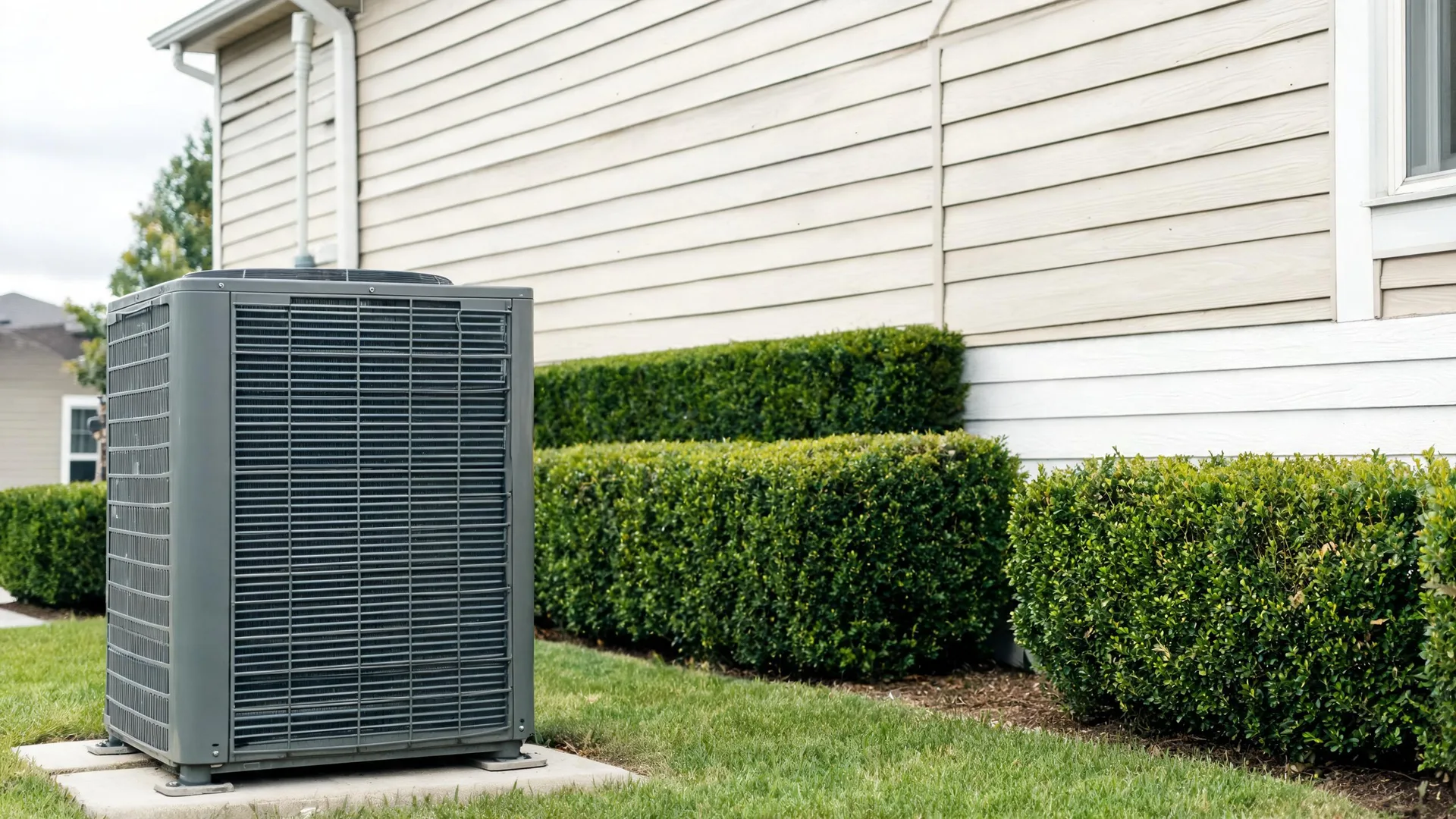
Single-story brick and siding houses with covered porches behind a trimmed hedge and lawn, framed by large oak branches draped with hanging moss under an overcast sky.

AC Maintenance in Summerville, SC

Tell us about the job

Takes about a minute. No obligation.

Tune-up, service, or cleaningCentral ACDorchester County, SC
Step 1 of 2

What ZIP code is the job in?

The coil gets dirty before anyone notices

A dirty condenser coil can't shed heat the way it should, so the system runs longer to reach the same temperature. Nothing shuts off or throws a warning. The compressor just works harder every cycle than it was built to.

A skipped checkup hides a small problem until it's a big one

A weak capacitor or a refrigerant leak starts small and stays small for a while. Caught early, it's a quick fix on its own. Left alone, it drags the compressor down with it, and the compressor is the part that keeps the whole system running.

6 months
May through October, your air conditioner is on duty
91°F
the average summer afternoon it cools against
44 hail events
in ten years, and hail bends the fins on outdoor coils
227 wind events
in ten years, and wind drives debris into outdoor units
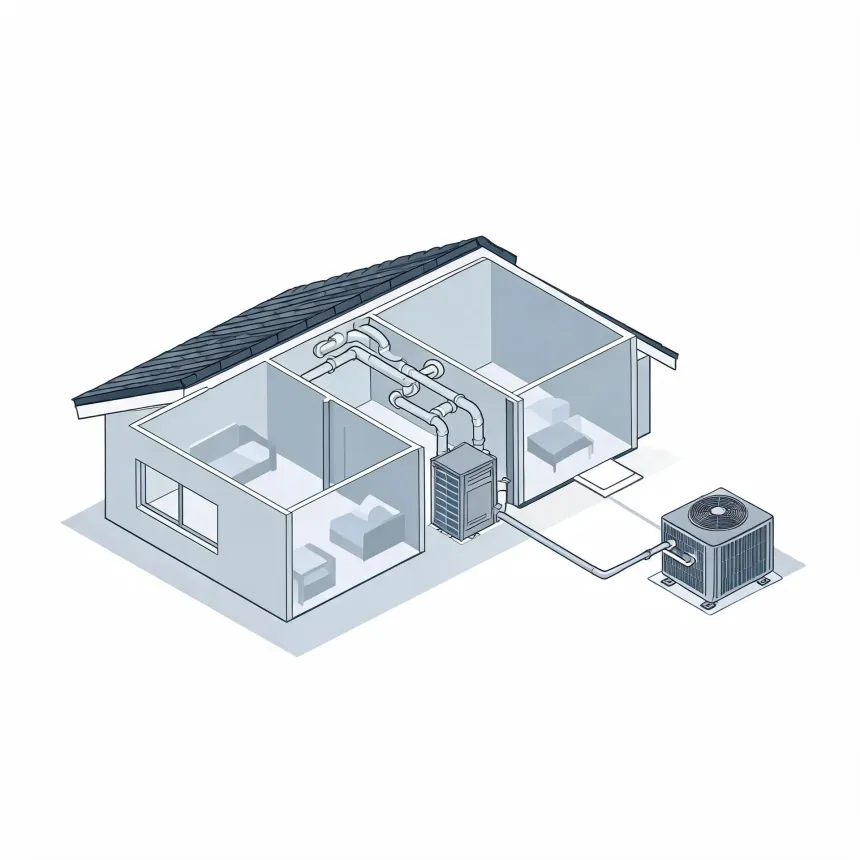
Isometric line illustration of a cutaway single-story house showing interior rooms, ductwork, an indoor air handler or furnace, and a refrigerant line running to an outdoor condenser unit on a pad.
Your air conditioner works hardest from June through September.

NOAA nClimDiv, 1991–2020 normals

Electricity in South Carolina runs 14.23 cents per kilowatthour.

A dirty coil or a weak capacitor makes the system run longer to do the same job, and every extra hour costs more here than it would somewhere cheaper.

May is month one. The checkup belongs in April.

Cooling runs May through October
Climate zone 3A
Power costs 14.23 cents a kWh statewide
Six months of cooling, 91 degrees to beatSummerville runs AC May through October, with afternoon highs averaging 91°F in June, July and August.

Between visits, the filter is the one thing worth checking. Pull it and hold it to a light. If you can't see light through it, it's blocking airflow across the coil, and that's the same strain as a dirty coil from the outside. Outside, keep the area around the condenser clear. Grass clippings, leaves and shrubs growing in close all block the airflow it needs to shed heat. A hose can rinse dust off the fins if you're gentle about it, but don't bend them, and stay away from the refrigerant lines and electrical connections. Inside, keep an ear out for anything new, a rattle, a hum that wasn't there before, ice on a line. Those are things to mention at the next checkup, not to chase down yourself.

A tune-up pays for itself here

A neglected system uses more power, and power costs more here. A tune-up pays for itself.

Find a contractor
A man in a cap, gray long-sleeve shirt and tan pants climbs concrete steps toward a dark green front door, carrying a worn canvas tool bag.
A gray residential air conditioning condenser unit mounted on a concrete pad outdoors, surrounded by green grass under a partly cloudy blue sky.

The filter, the coil and the drain aren't separate problems

The filter is the first line of defense, but it's not the only one. Air crosses the filter, crosses the indoor coil, and whatever moisture collects there has to go somewhere. That's the drain line. When it's clear, condensation drips into the pan and out the line, and nobody thinks about it. When it clogs with algae or dirt, water backs up into the pan and either trips a float switch that shuts the system down or overflows onto the floor beneath it. The coil works both sides of the system. Dirty on the inside, it can't pull heat out of the air the way it should. Dirty on the outside, at the condenser, it can't release that heat outdoors. Either way the system runs longer to get the same result, and a coil that stays wet and dirty is also where algae growth gets started. A dirty filter loads the coil, a dirty coil keeps the drain pan wetter than it should be, and a clogged drain turns a maintenance issue into a water problem on the floor. Keeping one clean is easy. Letting one go drags the others down with it.

Warm air from the vents means something already slipped

A system blowing air that isn't as cold as it used to be is usually low on refrigerant or losing the fight at the coil. It won't fix itself, and it keeps running that way until someone checks it, using more power to fall further short each week.

Short cycling wears the compressor down faster

A system that shuts off a few minutes after it starts, then kicks back on soon after, isn't completing a normal cycle. That pattern stresses the compressor every time it happens, and it keeps happening until whatever is causing it gets found.

An outdoor air conditioning condenser unit mounted on a concrete pad next to a blue-sided residential house at sunset.

Book your AC tune-up in April, before homes here start needing cooling in May.

  1. Jan
  2. Feb
  3. Mar
  4. Apr
  5. May
  6. Jun
  7. Jul
  8. Aug
  9. Sep
  10. Oct
  11. Nov
  12. Dec

A tune-up checks the refrigerant charge, cleans the coils, tests the capacitor and tightens the electrical connections.

A real tune-up starts with the electrical side. The capacitor gets tested under load, not just looked at, because a weak one can still let the system start and still be on its way out. Contacts get checked for pitting, since a contactor that sticks or arcs will eventually fail to close at all. On the refrigerant side, a tech checks the charge against the manufacturer's numbers, not just a gauge reading that looks fine. Too little refrigerant and the coil can't pull heat out of the air. Too much and the compressor works harder than it should every single cycle. The condensate drain gets flushed so it can't back up later, and the blower wheel gets looked at for the kind of dust buildup that throws airflow off without anyone noticing. None of this is guesswork. Each part gets checked against what it's supposed to read, and whatever doesn't match gets flagged before it turns into a bigger repair.