Aerial view of a gray central air conditioning condenser unit on a concrete pad next to a house with vinyl siding.

AC Maintenance in Sumter, SC

Tell us about the job

Takes about a minute. No obligation.

Tune-up, service, or cleaningCentral ACSumter County, SC
Step 1 of 2

What ZIP code is the job in?

The gauges come out

A thorough tune-up checks the refrigerant charge with gauges and measures the temperature split between the air going into the system and the air coming out. A quick visit skips this and just glances at the outdoor unit. Low charge or a bad split is often the first sign of a coil leak, and it won't show up any other way.

The condensate line gets attention

Your condenser drains water as it runs, and that drain line clogs with algae over time. A tech doing real maintenance flushes the line and checks that it's actually draining. Skip this and the line backs up, the float switch trips, and the system shuts itself off or water backs up where it shouldn't.

5 months
May through September, your air conditioner is on duty
90°F
the average summer afternoon it cools against
24 hail events
in ten years, and hail bends the fins on outdoor coils
182 wind events
in ten years, and wind drives debris into outdoor units
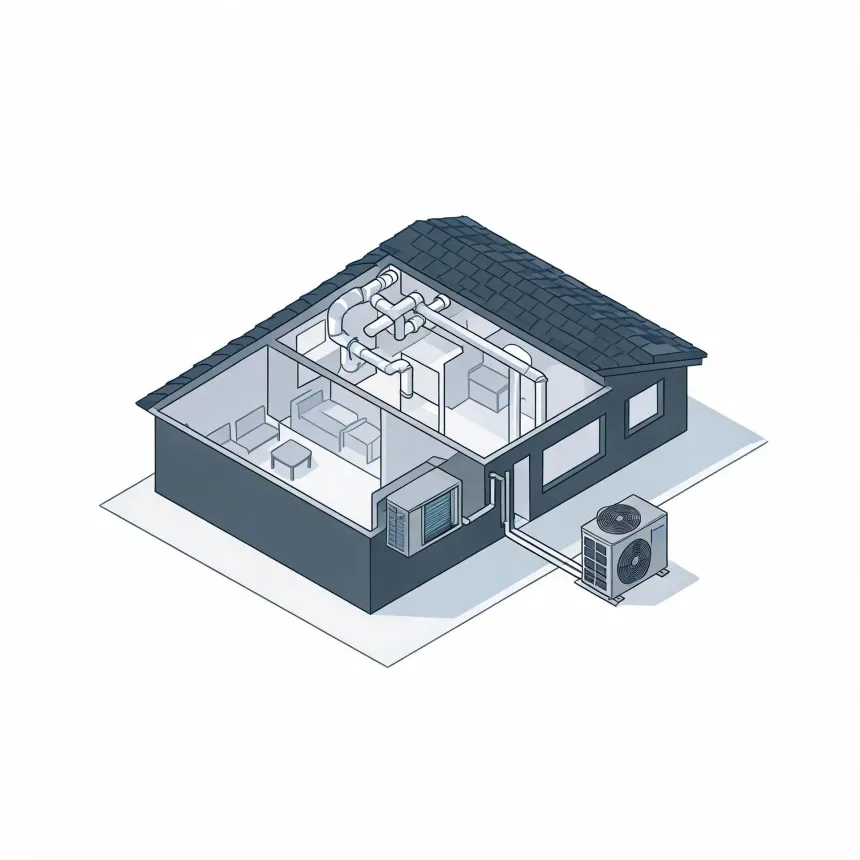
Isometric line illustration of a cutaway single-story house showing interior rooms with furniture, ceiling ductwork, an indoor air handler, and an outdoor condenser unit connected by lines along the exterior wall.
Your air conditioner works hardest from June through September.

NOAA nClimDiv, 1991–2020 normals

A dirty coil or a weak capacitor makes the system run longer to do the same job.

At 14.23 cents a kilowatt-hour, that extra runtime shows up on the bill all summer.

Five months of 90 degree afternoons wear a system down fast here

Cooling runs May through September
Summer afternoons average 90°F
182 damaging wind events from 2015 to 2024
May starts the season hereCooling runs May through September in Sumter County. Book the check in April.

Half the homes in Sumter County were built in 1987 or later. If yours is one of them, there's a decent chance the system is newer too, especially if it's original to the house or been replaced just once. A system like that still has years of working life ahead of it, and a yearly check is what keeps it running the way it did when it went in. Skip those checks for a few summers and small problems, a weak capacitor, a coil losing efficiency, go unnoticed until they shorten the life of the unit. Catching those early is the whole point of a yearly visit on equipment this age.

Storm season is hard on the unit sitting outside your house

Sumter County saw 235 severe weather events between 2015 and 2024, damaging wind most of all. The outdoor unit sits right in the path of that, exposed to wind-blown debris and hail with nothing to protect it. A maintenance visit is when a tech checks the fins and coil for damage before the next storm finds it first.

Find a contractor
A man in a dark long-sleeve shirt, tan pants, cap and work boots carries a canvas tool bag up gray porch steps toward a dark green front door, with a potted shrub beside the entry.
A gray metal air conditioning condenser unit mounted on a concrete pad in a flat grassy field under a partly cloudy sky.

One dirty part drags down the rest

The filter is the only part of this system a homeowner checks without pulling a panel off, and it matters more than it looks like it should. Every bit of air the system moves passes through it before it ever reaches the coil. Let it load up with dust and the system has to pull harder to move the same amount of air, and that starved airflow is what lets the coil run colder than it should. A coil running too cold doesn't just sweat, it starts growing ice. That ice melts all at once eventually, and the drain pan and line end up handling more water than they're built for. None of these are separate problems. A dirty filter starves the coil, a frozen coil overwhelms the drain, and a clogged drain backs water up into the cabinet or wherever that water finds a path. Swapping the filter is the one job here that doesn't need a tech. Checking the coil and clearing the drain line are the parts of a tune-up that catch the rest of the chain before it shows up as standing water or an iced-over unit that's stopped cooling altogether.

The blower wheel gets checked for dust

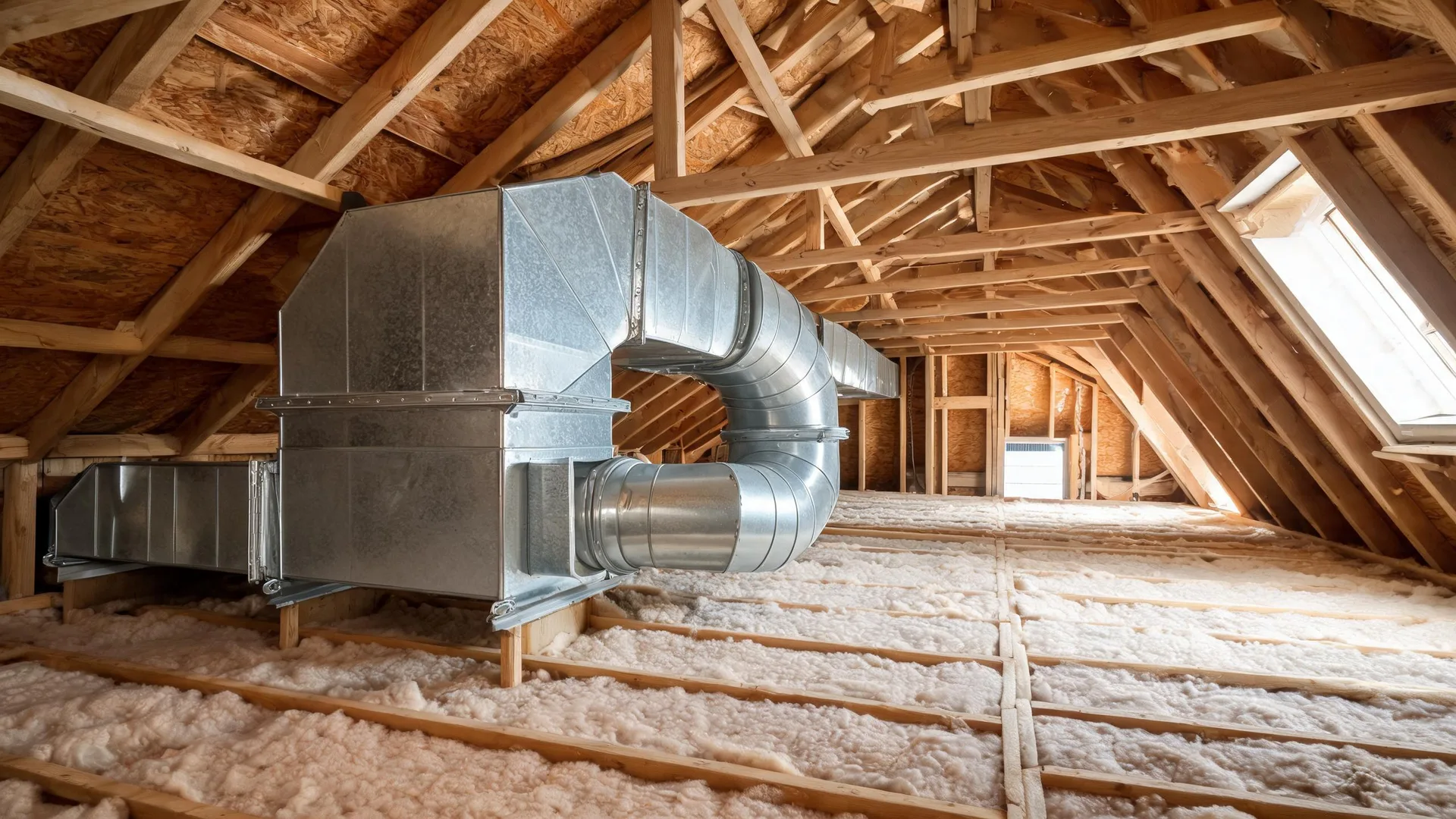
The blower wheel spins fast enough that a coating of dust throws it out of balance and cuts the airflow moving across the evaporator coil. From outside the cabinet there's no way to see it build up. A tech pulls the panel, looks at the wheel, and cleans it before the reduced airflow starts icing the coil.

Electrical connections loosen on their own

Every time the system cycles on and off, the metal in its wiring connections heats and cools, and over seasons that works screws and lugs loose. A loose connection runs hotter at that point and can burn the wire or the terminal it's attached to. Checking and tightening those connections is routine during a tune-up and invisible the rest of the year.

An overhead view of a residential air conditioning condenser unit mounted on a concrete pad next to a house with vinyl siding.

Book your AC tune-up in April, before homes here start needing cooling in May.

  1. Jan
  2. Feb
  3. Mar
  4. Apr
  5. May
  6. Jun
  7. Jul
  8. Aug
  9. Sep
  10. Oct
  11. Nov
  12. Dec

A tune-up checks the refrigerant charge, cleans the coils, tests the capacitor and tightens the electrical connections.

A proper tune-up also means checking refrigerant line insulation and the state of the whole system start to finish, not just the parts that are easy to reach. A tech checks the thermostat calibration against a second thermometer, since a thermostat reading a few degrees off makes the whole system run on bad information. The outdoor fan motor gets tested under load, not just spun by hand, because a motor can turn freely and still be too weak to move air once it's working against real resistance. Ductwork at the air handler gets a look too, since a loose connection there bleeds cooled air into a space nobody's trying to cool. None of this shows up from across the room. It's the difference between a visit that checks a box and one that actually tells you something about the summer ahead.