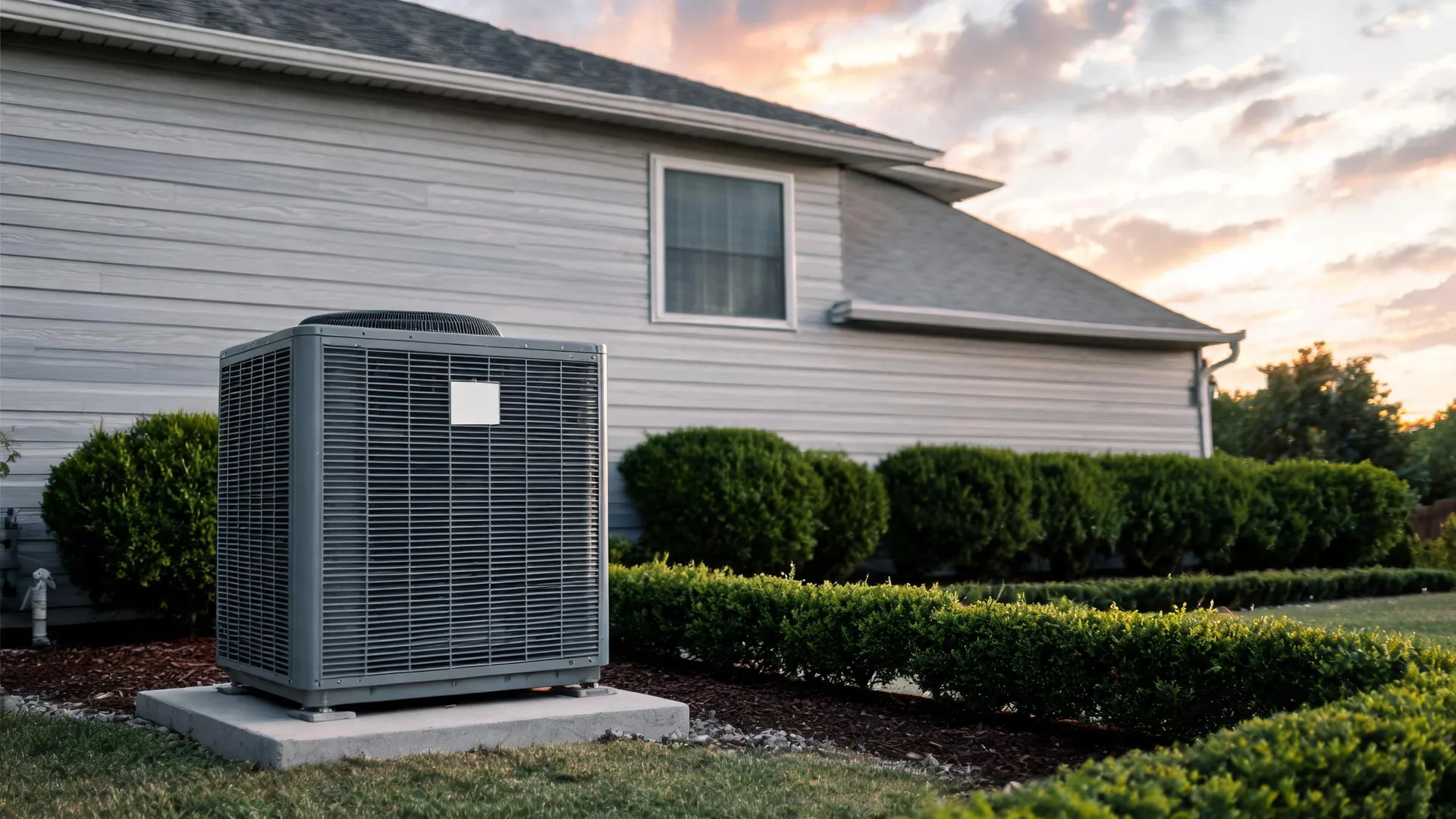
Aerial view of a gray outdoor air conditioning condenser unit mounted on a concrete pad next to a house with vinyl siding.

AC Maintenance in Union, SC

Tell us about the job

Takes about a minute. No obligation.

Tune-up, service, or cleaningCentral ACUnion County, SC
Step 1 of 2

What ZIP code is the job in?

Electricity here runs 14.23 cents per kilowatthour

South Carolina's electricity rate ran 14.23 cents per kilowatthour in 2024. A dirty coil or a low charge makes the compressor work harder for the same cooling, and that extra work shows up on the meter all summer long.


A tune-up catches that waste early

A technician checking the refrigerant charge and cleaning the coils finds the kind of wear that makes a system pull more power without cooling any better. Catching it before the system runs flat out all summer keeps that extra draw from piling up.

5 months
May through September, your air conditioner is on duty
90°F
the average summer afternoon it cools against
11 hail events
in ten years, and hail bends the fins on outdoor coils
52 wind events
in ten years, and wind drives debris into outdoor units
Isometric cutaway illustration of a house interior showing ducted HVAC piping, an indoor air handler unit, and an outdoor condenser with fan connected by a line, rendered in grey tones on a white background.
Your air conditioner works hardest from June through September.

NOAA nClimDiv, 1991–2020 normals

May is when cooling starts here.

April is when a tune-up still fits on the schedule.

Union County sees 73 severe weather events a decade. Outdoor units take the hit.

73 severe weather events from 2015 to 2024
45% of homes statewide lost power a day or more in 2024
52 damaging wind events from 2015 to 2024

Cooling runs five months here, May through September, and the afternoon high averages 90 degrees across June, July and August. That's the stretch your AC has to hold steady, with no real break between hot mornings and hotter afternoons. A system that cooled the house fine last summer can show its age fast once it's back to pulling that kind of duty. Weak parts don't wait for a convenient time to fail. They show up in the first real heat, right when you need the system most.

In a county this old, get your AC checked before summer finds the weak part for you

Half the homes in Union County were built in 1972 or earlier. A system in a house that age has usually had more than one repair already, and the parts around it have had decades to loosen, corrode or wear thin. A yearly check is how a tech catches a weak capacitor or a coil going bad before the summer heat finds it first.

Find a contractor
A gray metal air conditioning condenser unit mounted on a concrete pad in a flat grassy field under a partly cloudy sky.

Get ahead of it while there's still room on the schedule

A tune-up before May is what catches a weak part while there's still time to get a tech out. Once the heat sets in, that same part can go out on a Saturday afternoon with every other AC in the county calling for the same service. Getting looked at now means getting a slot that works for you instead of whenever one opens up.

Keep the filter clean

A dirty filter chokes the airflow across the coil, and a system starved for air works harder and cools less. Check it every month during the summer and swap or rinse it when it looks gray. This is the one thing worth doing between visits, because it's the one part built for an owner to handle.

Leave the rest to the tech

The refrigerant charge, the capacitor, the contactor, none of that is something to open up on your own. The panel on the outdoor unit carries a capacitor that holds a charge even with the power off. Checking those parts safely means pulling gauges and meters a homeowner doesn't have reason to own. Clear leaves and grass clippings from around the outdoor unit, keep the area open, and let a tune-up handle the rest.

An outdoor air conditioning condenser unit on a concrete pad next to the gray vinyl siding of a residential home.

Book your AC tune-up in April, before homes here start needing cooling in May.

  1. Jan
  2. Feb
  3. Mar
  4. Apr
  5. May
  6. Jun
  7. Jul
  8. Aug
  9. Sep
  10. Oct
  11. Nov
  12. Dec

A tune-up checks the refrigerant charge, cleans the coils, tests the capacitor and tightens the electrical connections.

A system usually tells you before it quits outright. The air comes out warmer than it used to, or it runs longer to reach the same temperature on the thermostat. You might notice it cycling on and off more than it used to, short bursts instead of a steady run, which is often a sign the compressor is struggling to start. A hum from the outdoor unit with no fan turning is a motor or capacitor asking for attention. Ice on the copper line running into the house points to airflow or refrigerant trouble, not something to wait out. None of these mean the system is done. They mean it's time to have someone look before the part that's struggling finishes failing.