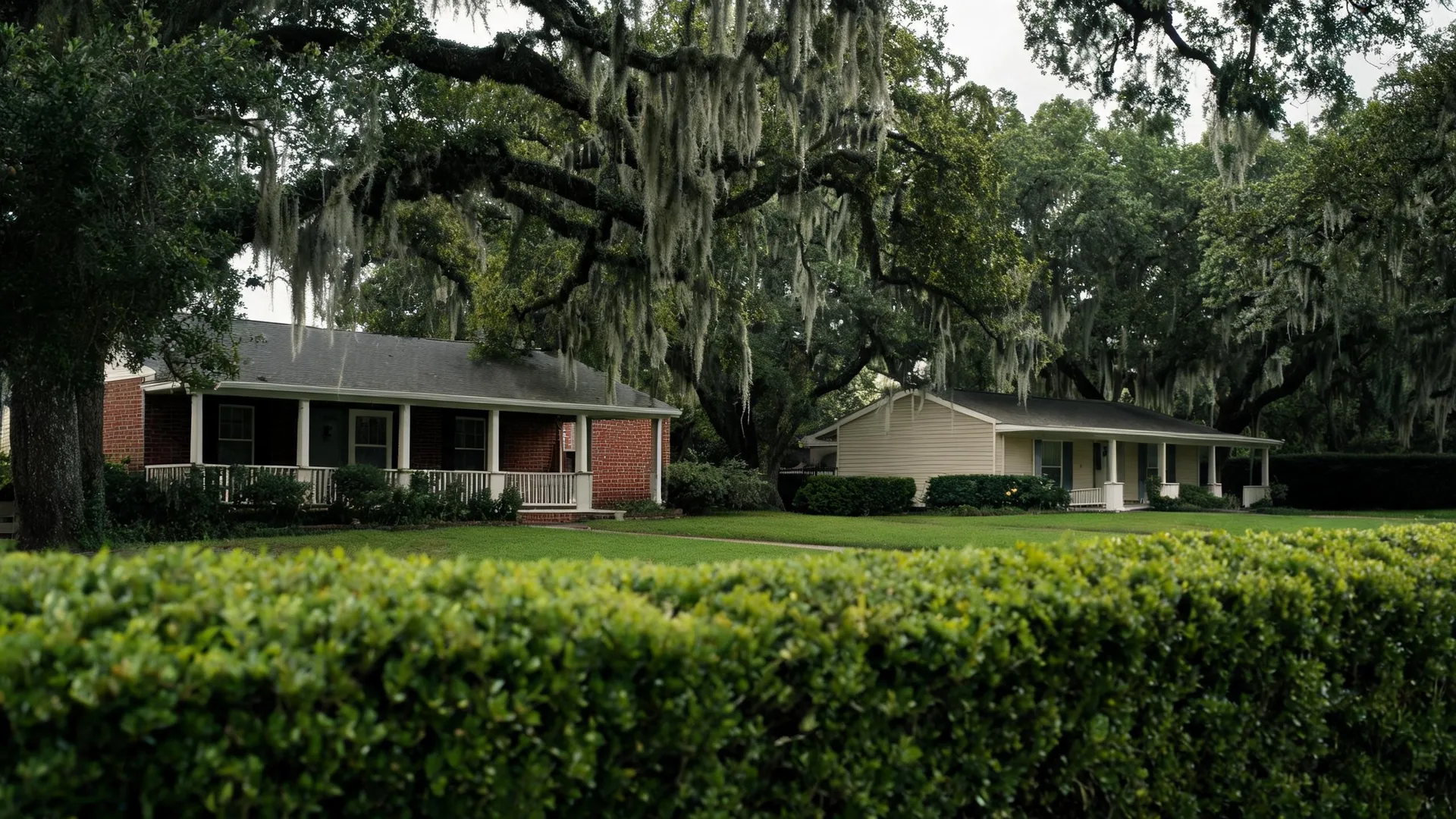






Two single-story houses, one of red brick with a white-columned porch and one with pale siding, sit behind a mown lawn and a trimmed hedge, beneath large moss-draped oak trees.

AC Maintenance in Winnsboro, SC

Tell us about the job

Takes about a minute. No obligation.

Tune-up, service, or cleaningCentral ACFairfield County, SC
Step 1 of 2

What ZIP code is the job in?

Between visits, keep the area around the outdoor unit clear. Grass clippings, mulch, and leaves block airflow through the coil, and a coil that can't breathe makes the whole system work harder. Give it a couple feet of open space on all sides. Inside, check the air filter and swap it when it looks gray or clogged rather than on a fixed schedule. How fast it loads up depends on the filter itself and what's running in the house. A dirty filter starves the system of airflow, and that can ice up the coil even on a hot day. The condensate drain line is worth a glance too. If that line clogs, water backs up and can shut the system down or leak where you don't want it to.

5 months
May through September, your air conditioner is on duty
90°F
the average summer afternoon it cools against
21 hail events
in ten years, and hail bends the fins on outdoor coils
131 wind events
in ten years, and wind drives debris into outdoor units
Isometric illustration of a cutaway house showing interior ductwork, an indoor air handler and furniture, connected by lines to an outdoor condenser unit on a pad.
Your air conditioner works hardest from June through September.

NOAA nClimDiv, 1991–2020 normals

AC here runs May through September.

April is when to get it checked, before it has to run hard.

Five months of 90 degree afternoons wear a system down fast

Cooling runs May through September
Summer afternoons average 90°F
131 damaging wind events from 2015 to 2024
Electricity here costs more, so a neglected system costs more tooSouth Carolina homes paid 14.23 cents per kilowatthour in 2024

A tune-up gets inside the system in ways a homeowner can't from outside. A tech checks the refrigerant charge against what the system calls for. Too little and it loses cooling power and can freeze the coil. Too much and it strains the compressor. They'll also test the capacitor, which gives the compressor and fan motor the jolt they need to start. A capacitor can read weak on a meter well before it fails outright, and a system running on one won't show it yet. The contacts in the contactor get checked too, since they pit and burn with every cycle and eventually stop making good contact. None of this shows up as a symptom until the day it does.

Storm season takes a toll on outdoor units here

Fairfield County logged 166 severe weather events over the past decade, with damaging wind and hail among them. The outdoor unit sits outside through all of it, and hail dents fins while wind drives debris into the coil. Nearly half of South Carolina households lost power for a day or more in 2024, and that matters for a system that has to start back up and run hard once the heat returns. A maintenance visit before summer catches dents and debris you won't see from the kitchen window.

Find a contractor
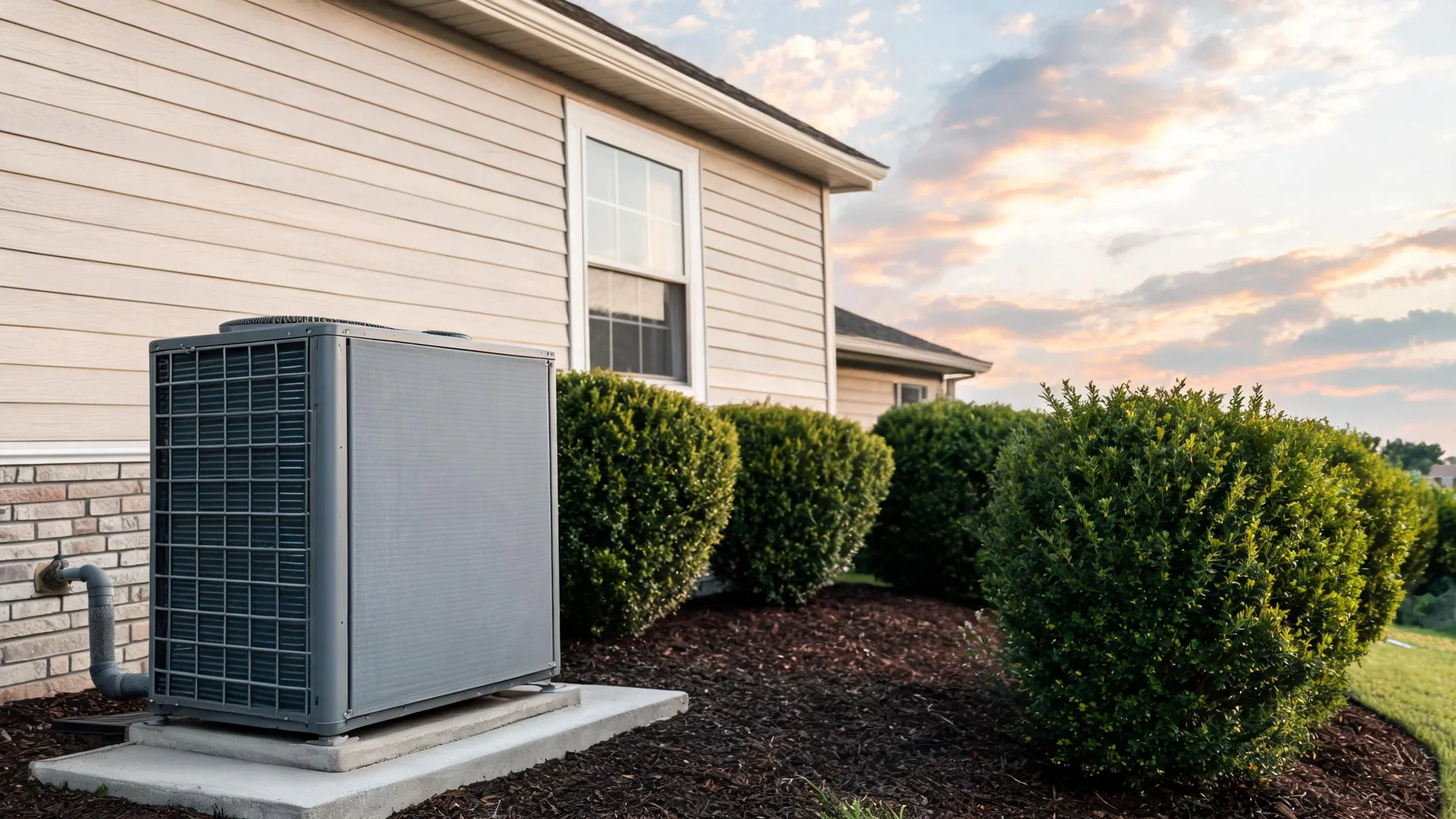
A gray residential air conditioning condenser unit mounted on a concrete pad outdoors, surrounded by green grass under a partly cloudy blue sky.

Get ahead of the season, not behind it

Five months of running hard adds up fast, and it shows first in the parts that start the system. Have a tech check those before the first hot stretch, not after a July afternoon when the compressor won't kick on.

Dirt is an insulator

Dust and pollen settle on the indoor coil whether or not the filter catches them, and nobody cleans that coil without opening the system up. Left alone, that film acts like a blanket, holding heat in the coil instead of letting it transfer to the air moving past. The system still runs. It just moves less heat for the same effort, and nothing about that shows up as a warning light.

Weak parts don't announce themselves

A refrigerant charge that's a little low or a capacitor that's a little weak doesn't shut a system down right away. It just means the system is running on less margin than it was built with. Those small problems don't correct themselves between visits, and a system limping along on more than one tends to quit on the hardest afternoon of the year rather than give fair warning first.

Aerial view of a square outdoor air conditioning condenser unit on a concrete pad beside a house wall with a sliding glass door.

Book your AC tune-up in April, before homes here start needing cooling in May.

  1. Jan
  2. Feb
  3. Mar
  4. Apr
  5. May
  6. Jun
  7. Jul
  8. Aug
  9. Sep
  10. Oct
  11. Nov
  12. Dec

A tune-up checks the refrigerant charge, cleans the coils, tests the capacitor and tightens the electrical connections.

A full tune-up covers more than the parts already mentioned. The tech checks the blower motor and the blower wheel, since a wheel caked with dust moves less air even when the motor runs fine. They check static pressure in the ductwork, which tells them whether the system is fighting to push air through. The condenser fan motor gets tested under load, not just by sight, because a motor can spin freely and still be weak enough to burn out under a full day's work. They'll check the thermostat's calibration against a second thermometer, since a thermostat reading a few degrees off runs the system longer than it needs to. Every connection in the electrical panel gets tightened, since a loose connection generates its own heat and that heat damages whatever it touches next.