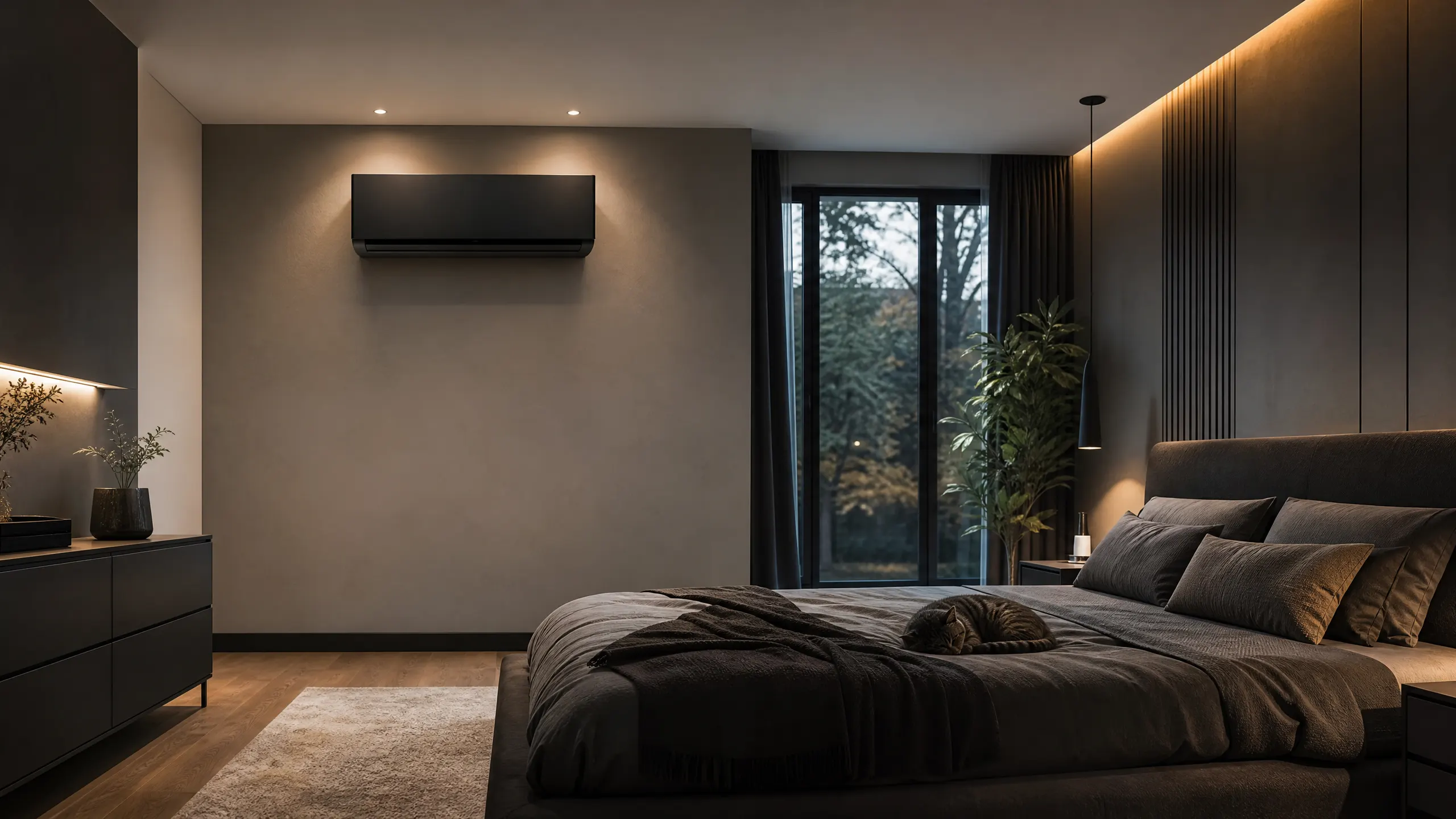





A dark, minimalist bedroom with a king-size bed, wall-mounted air conditioning unit, and large windows, with a cat sleeping on the duvet.

Mini Split Installation in Spartanburg, SC

Tell us about the job

Takes about a minute. No obligation.

New system or replacementMini-splitSpartanburg County, SC
Step 1 of 2

What ZIP code is the job in?

A mini split sized wrong will never work right, no matter how good the installation is. Too big and it cools the room fast, then shuts off before it pulls the moisture out of the air, so the space feels clammy even at the right temperature. Too small and it runs constantly, straining to keep up on the hottest or coldest days without ever getting there. Getting the size right means a contractor looks at the square footage, but also the windows, the insulation, the ceiling height, and which way the room faces. A room with a lot of west-facing glass takes on heat differently than an interior room the same size. That's why a tech measures the space rather than going off a rule of thumb.

7 months
October through April, your system heats
5 months
May through September, it cools
33°F
the average winter night it heats against
88°F
the average summer afternoon it cools against
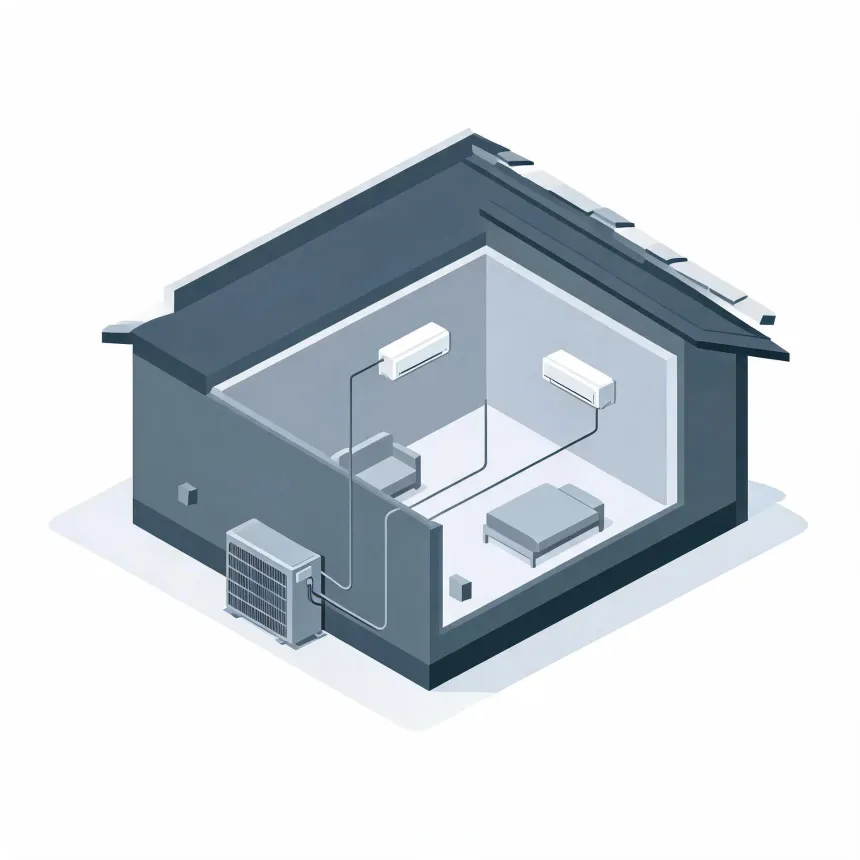
Isometric illustration of a cutaway house interior showing two wall-mounted indoor air conditioning units connected by line sets to an outdoor condenser unit beside the exterior wall.
Your system heats October through April and cools May through September.

NOAA nClimDiv, 1991–2020 normals

Every indoor head needs its own line set run to the outdoor unit.

More heads, more line sets, more labor, and that's before anyone talks about the equipment itself.

At 14.23 cents a kWh, a mini split's efficiency shows up on your bill

Power costs 14.23 cents a kWh statewide
Cooling runs May through September
Summer afternoons average 88°F
Get it in before MayCooling runs May through September here, so April is the month to get this done.

Spartanburg sits in zone 3A, a warm, humid climate with mild winters and summers that run long. Any mini split installed here has to meet the federal minimum for a split-system heat pump, and that rule applies to ductless units the same as any other. Units built from 2023 on need to hit 14.3 SEER2 for cooling and 7.5 HSPF2 for heating. The cooling number carries more weight here, since the system spends more of the year fighting heat and humidity than cold. A unit that meets the minimum is already built for this kind of climate. Going above it is worth asking a contractor about, but it isn't required to get through a Spartanburg summer.

Most Spartanburg homes already run on electric heat

Electricity heats more homes here than every other fuel combined, and a mini split runs on electricity. If your old system also ran on electric heat, going ductless is a straight swap, not a conversion. No gas line to cap, no new fuel to plan around. The work is sizing the unit and running the line set, not reworking how your home is fueled.

Find a contractor
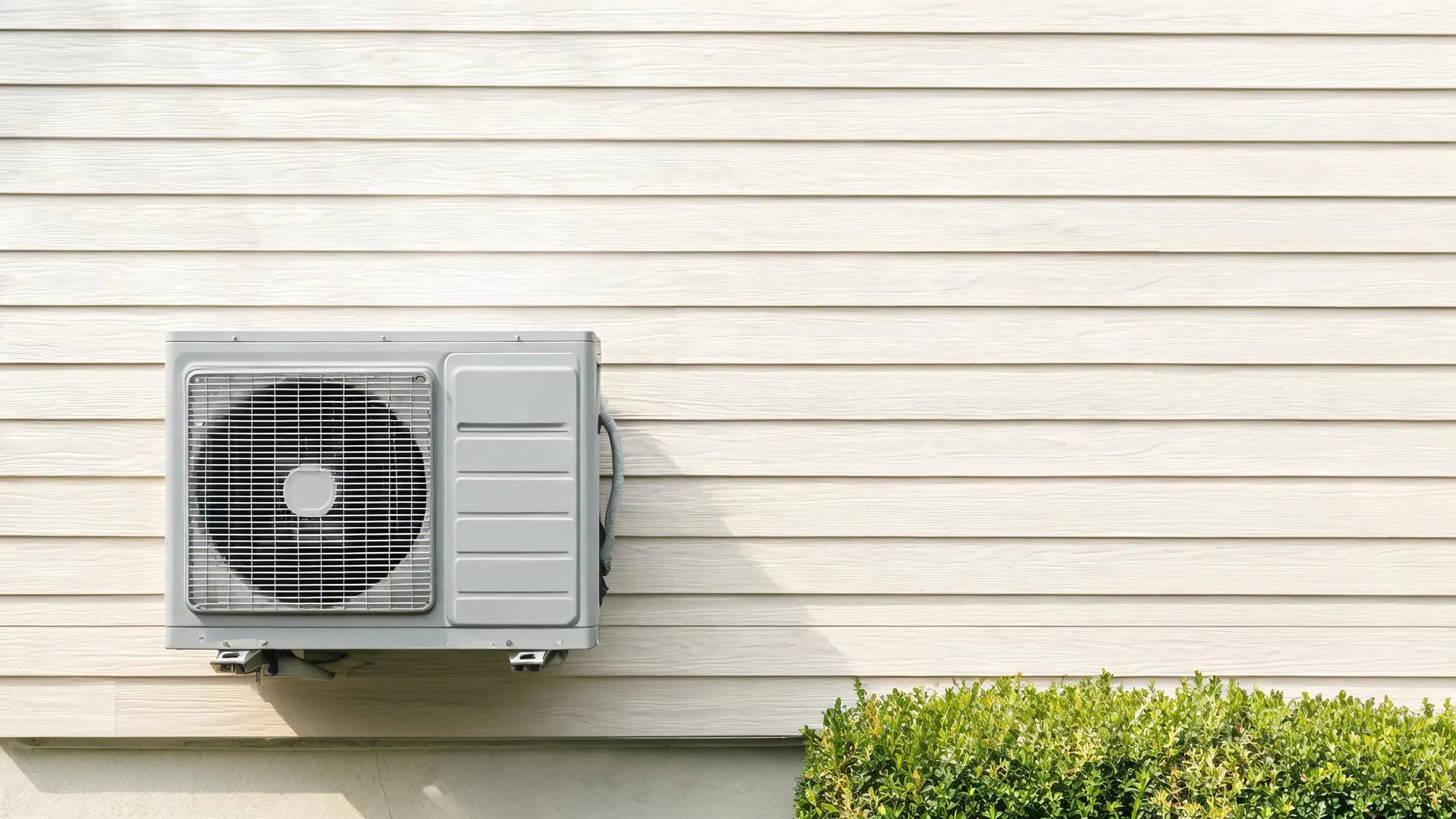
A white mini-split air conditioner outdoor condenser unit mounted on metal brackets against a beige stucco exterior wall, with a blue sky and scattered clouds in the background.

What happens to the system you're replacing

Whatever is coming out, whether it's a window unit, a ducted system, or an older mini split, it's done more cycles than anyone thinks about. Every time it kicks on, the compressor works hardest in the first few minutes, and over enough seasons that wear adds up in ways you can't always see from outside. A unit that still blows cold air can be right at the edge of a failure that shows up as a refrigerant leak or a seized compressor with no warning. If the old equipment is ducted, that ductwork usually stays. The mini split replaces the equipment, not the path air used to take through the house, unless a contractor finds a reason to change it. If the old unit used refrigerant that's been phased out, a contractor handles the recovery and disposal the right way. That's not something to deal with on your own, and it's not something you should need to.

The rating is per head, not per house

A multi-head mini split lists an efficiency rating for the system as matched, compressor to heads. Mix in a head from another line, or size one wrong for its room, and the whole system works harder than the rating promised. The number on the label only holds if the install matches what it was tested as.
The install decides if the unit hits that number

An efficiency rating comes from lab conditions. The refrigerant charge is correct, the line set is the right length, airflow across the coil runs the way the manufacturer built it to run. A line set that's too long or a charge that's off even a little pulls the real-world number below what's on the sticker. The equipment can only hit its rating if the installation gives it the chance to.

When you're comparing quotes, ask what's actually different between them, not just the total. Contractors can quote the same brand and land on different prices because one is running a shorter line set or mounting the outdoor unit somewhere that takes less labor. Ask how many heads the system supports and whether a head can be added later without replacing the outdoor unit. Ask what happens to the warranty if a different company ever services the equipment, since some manufacturers tie full coverage to whoever did the original install. Ask where the outdoor unit goes and why that spot, since airflow around it affects how hard the compressor has to work. A quote that explains these choices is worth more than one that just lists a price.

Spartanburg logs a lot of rough weather. The county has had 194 severe weather events over the past decade, and damaging wind accounts for most of those, the kind that puts tree limbs and debris through an outdoor condenser. None of that means your property has taken a hit, but it's worth asking the installer where the outdoor unit goes and what's around it. A spot with some cover from falling branches is worth more than one that's just convenient from the driveway. Power loss is the other half of this. Statewide, close to half of households went at least a day without power in 2024, and a mini split needs electricity to run, whether it's heating or cooling.