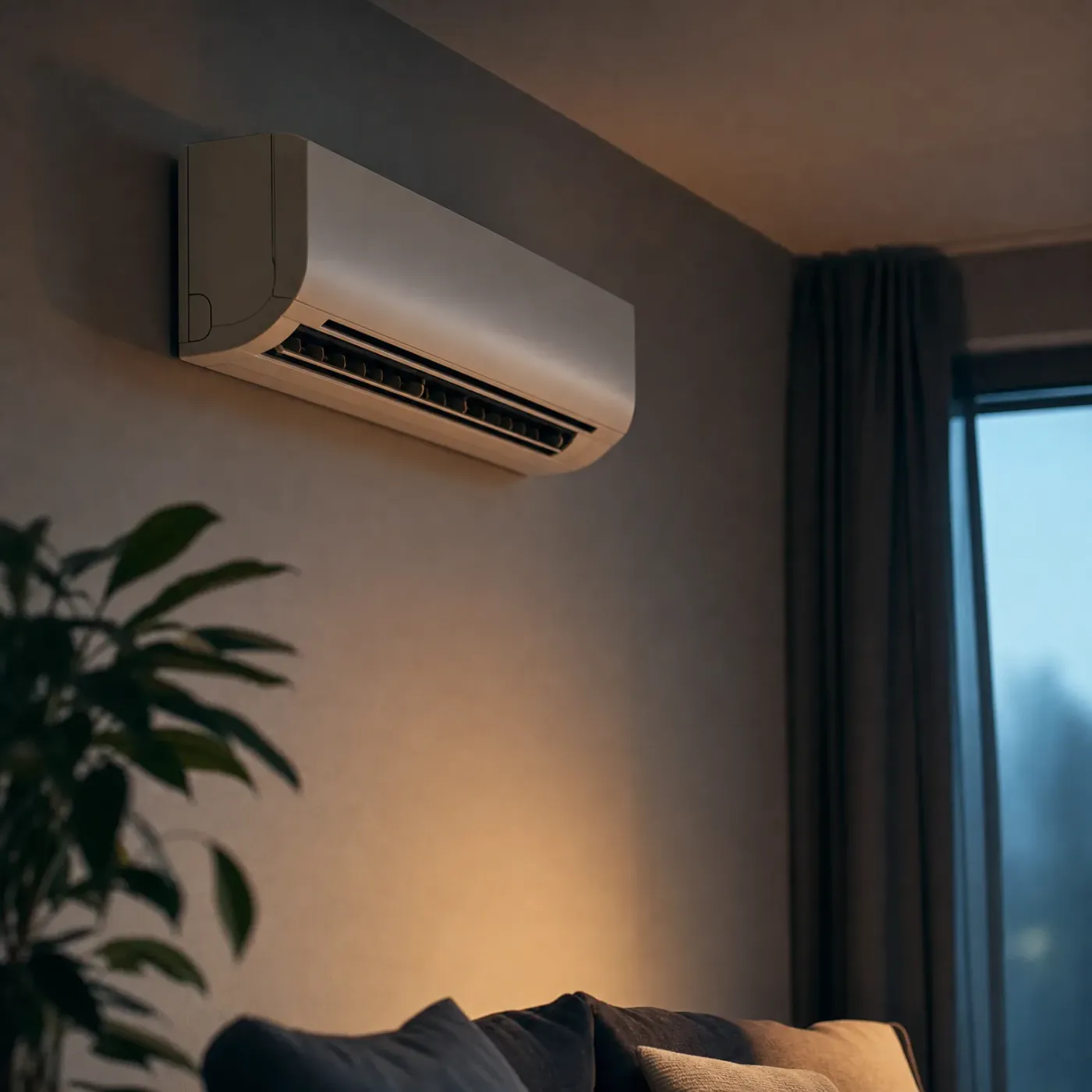
Finding a pro stops being your job
Is a mini split worth it in a South Carolina home
A mini split has to earn its keep against South Carolina summers and an electric heating bill all winter. This page gets into what that actually looks like once one is installed in your home. Send the form and you're done hunting for who can take the job.
Hand off my installationYes, in most South Carolina homes. A mini split cools and heats one room or zone with a lot less electricity than baseboard heat or an older window unit, and in a state where humidity sits heavy from May through September, the dehumidifying it does while it cools matters as much as the temperature drop. Because most homes here heat with electric resistance heat, running a mini split instead through the cooler months costs less for the same warmth, since a heat pump moves heat rather than generating it. The payoff depends on what it's replacing and how the space is used. A mini split cooling a sunroom or a converted garage that had no ductwork before earns its keep fast. One added alongside a working central system earns it slower. Either way, once it's in, you're running a more efficient machine against the same muggy summers and the same all-electric winters.




The outdoor compressor doesn't slam on and off like a window unit. It speeds up and slows down to match what the room needs, which is part of why the electric bill looks different once one's installed. Inside, the head pulls room air across a cold coil. Moisture drops out of that air before it ever reaches you, so a room can feel dry even set a few degrees warmer than you'd expect, which matters in South Carolina humidity. Come winter, the same system runs the refrigerant cycle in reverse and pulls heat out of outside air instead of making it from scratch, and it keeps doing that well below freezing on most units sold now. If your home has more than one zone, each head answers to its own thermostat, so a guest room nobody's in can sit a few degrees off without the rest of the house noticing. And since the outdoor unit connects to the indoor head through a line set carrying refrigerant, not a duct carrying air, there's nothing to leak cooled or heated air along the way before it reaches the room.
How a mini split actually runs
- A mini split's outdoor compressor runs at variable speed, slowing down or speeding up to match the heat load instead of switching fully on and off.
- The indoor head pulls air across a cold coil, which drops out moisture before that air ever reaches the room, which is why humidity falls even at a mild setting.
- In heating mode the system reverses the refrigerant cycle and pulls heat from outside air, a process that keeps working well below freezing on most modern units.
- Each zone has its own thermostat and head, so a room that nobody uses can sit a few degrees off without touching the comfort anywhere else in the house.
- The line set connecting the outdoor unit to the indoor head carries refrigerant, not air, so there's no ductwork losing cooled or heated air along the way.
- Because the compressor rarely shuts off completely, the system spends most of its time running at a lower output rather than cycling hard and shutting down.


Is your mini split actually keeping up this summer?
You'd notice it first in the room itself. If the mini split is sized and installed right, the room feels dry and even, no clammy air near the walls, no damp smell from the closet. If something's off, you'll see the opposite: the unit runs long stretches without the room ever quite feeling cool, or it cools fast but the air still feels sticky. You might notice water pooling near the indoor head, or the outdoor unit icing over on a hot afternoon. A filter you can't remember cleaning will show up as weak airflow and a higher bill than last summer. Left alone, a unit straining like that works harder for less comfort, and that cost shows up every month it keeps running that way.
How it holds up in winter
Most South Carolina homes heat with electricity, and a mini split moves heat instead of generating it the way baseboard or strip heat does. That's why it uses less power to deliver the same warmth. On a cold night it still has to work harder, and the amount of heat it can pull drops as the outdoor temperature does. A unit sized for your space handles that without trouble most winters here see.
What installation gets right
The size of the unit and the room it's going in matter as much as the equipment itself. Too big and it cools fast but leaves the room clammy, shutting off before it pulls out the humidity. Too small and it runs constantly through a July afternoon without catching up. Where the indoor head sits, how the line set is run, and how the outdoor unit drains all affect whether it performs the way it's rated to.
Why does my mini split have a drain line and where does the water go?
Why does my mini split have a drain line and where does the water go?
It carries off the moisture the indoor coil pulls out of the air
The indoor head is cooling the air and wringing the humidity out of it at the same time. That water collects in a pan under the coil and has to go somewhere, so a condensate line carries it out of the house, usually running alongside the refrigerant lines through the wall sleeve to a drain point outside or into a household drain. In a South Carolina summer, with humidity sitting heavy for months, that line is doing steady work. If it gets clogged with algae or dust, the water backs up into the pan and can leak from the indoor unit or trip a safety switch that shuts the system down.


Let someone else find the pro
A mini split only pays off if it's put in right. The size has to match the room, the line set has to be run clean, and the head has to sit where it can actually cover the space, not just where it's easiest to mount. Get any of that wrong and you end up with a unit that short cycles, leaves the air damp, or runs your power bill up trying to keep pace with a Carolina summer. Most homeowners don't know enough to check that work themselves, so the real question isn't whether a mini split is worth it. It's whether the one going into your home is installed by someone who does this kind of work often and does it correctly. Finding that person usually means hours of searching reviews, calling contractors who don't answer, and repeating the same details about your home to every one of them. Send the form instead and that search is no longer something you have to carry.

A dew point is what tells you how heavy the air actually feels, and here it averages 69°F across June, July and August, according to NOAA climate data for South Carolina. At that level the air carries enough moisture that your mini split spends real time just pulling water out of it before the room even starts to feel cool. You'd notice the compressor running longer stretches than a dry-climate system would, and the indoor coil working through a steady drip rather than short bursts. A unit sized for that kind of load keeps the room comfortable through it. One sized too small struggles to ever catch up once the air outside sits this wet for three straight months.
NASA POWER T2MDEW county cells weighted by homes
Mini Split or Whole-House System
Mini split alone
- One head covers the room it's mounted in, so a bedroom addition or a sunroom gets even cooling without opening up ductwork.
- Winter heat comes from moving warmth instead of generating it, which costs less to run than baseboard or strip heat in that same room.
- It keeps dehumidifying on its own schedule, so a closed-off room doesn't get the clammy, damp feel the rest of the house might in July and August.
- A single outdoor compressor and one indoor head is less to maintain than extending a whole-house system into a new space.
- It only conditions where the head is, so a room on the far end of the house still depends on whatever's already heating and cooling it.
Whole-house system
- One thermostat and one set of ducts cover every room, so you're not managing comfort zone by zone.
- A room far from any mini split head still gets heated and cooled the same as the rest of the house.
- Ducted systems can struggle to pull moisture out of a room that gets more sun or more people traffic than the rest of the house.
- Adding capacity usually means replacing or upsizing the whole unit, not just adding a head where you need it.
- Electric heat through a central system costs more to run for that same stretch of room than a mini split would.

Thermostat or remote sends the target temperature to the indoor head
Indoor head signals the outdoor compressor to start moving refrigerant
Compressor adjusts speed up or down to match the room's heat load
Refrigerant carries heat from inside to the outdoor unit, or reverses in winter
Power costs 15.12 cents per kilowatt-hour statewide
At 15.12 cents a kilowatt-hour, you're paying a typical rate, so what decides your bill is how little power the mini split needs to move heat or pull moisture compared to baseboard or an old window unit. Running it at a steady setting rather than cycling hard keeps that rate working in your favor.
EIA-861 2025 statewide residential average
Where this leaves you
- A mini split costs less to run than baseboard or an old window unit, in both your summer humidity and your winter heating.
- Sizing and installation decide whether it keeps up with South Carolina summers or ends up running constantly without relieving the humidity.
- The drain line, the variable-speed compressor and the coil all work together, and each one has to be set up correctly to deliver the savings.
- At a dew point averaging 69°F through June, July and August, the dehumidifying job alone makes a mini split worth having.
- Power here runs about 15.12 cents a kilowatt-hour, so what you save comes from how efficiently the unit moves heat, not from a special utility rate.
- Installed right, a mini split holds steady through a South Carolina summer and still pulls its weight on a cold winter night.
A mini split earns its place in a South Carolina home, but only the one that's sized and installed right. The unit itself moves heat instead of generating it, which is why it costs less to run than baseboard heat through the winter and less than an old window unit through the summer. None of that shows up on its own. The compressor has to be matched to the room, the line set run clean, the drain line pitched so it actually clears the moisture the coil pulls out of the air. Skip any of that and you get a unit that runs all the time without ever catching up to a South Carolina summer, humidity and all. Get it right and the opposite happens: the room holds steady, the compressor settles into a slow, even pace instead of straining, and the power bill reflects a machine doing its job efficiently rather than fighting a losing one. The dew point alone, sitting near 69°F for three months straight, is reason enough to want a unit that dehumidifies well. The rate you pay for power isn't unusual, so the savings or the lack of them come down entirely to how well the equipment was put in. That's the whole answer. A mini split is worth it here, and whether yours is depends on the installation behind it, not the brand on the box or the number on the spec sheet.


Mini Split Installation
One request and it's handed off
Describe the project once instead of to every installer.
