
A unit that runs all day and cools nothing
The compressor keeps cycling, the outdoor fan keeps turning, and your power bill reflects all of it. Meanwhile the room you're sitting in stays the same temperature it was an hour ago.
A mini split that won't cool through a Columbia summer is not something to leave alone. Muggy air sits in the house, the unit keeps running, and the power bill climbs while the room stays warm. You don't need to spend your evening calling around Richland County to find someone who works on these systems. Send the request and the search is off your plate. It goes to a licensed local contractor who handles mini splits all season here and has a good sense of what usually causes this before they even walk in. Just one contractor gets your request, so you're not fielding calls from a handful of companies trying to win the job. You get a straight answer and a path to getting your cooling back, without the legwork.
You turn the mini split on, it blows air, but the room never gets cold. In Columbia's summer heat, that's not a small thing. You want to know whether this is something simple, like a dirty filter or a blocked outdoor unit, or something that needs a technician before the heat and humidity take over the house.
Most of the time it's one of two things. Either the indoor filter or coil is blocked and the unit can't pull in enough air to cool, or the system is low on refrigerant and can't absorb heat from the room the way it should. A low charge usually means a leak somewhere in the line set, and it won't fix itself by adding more refrigerant without finding where it's escaping. The outdoor unit matters too. If it's crowded by plants or sitting in direct sun against a wall, it has a harder time dumping heat outside, and the indoor side struggles to keep up. In Columbia's humidity, a struggling unit also leaves the air feeling damp even when the temperature seems close to right.
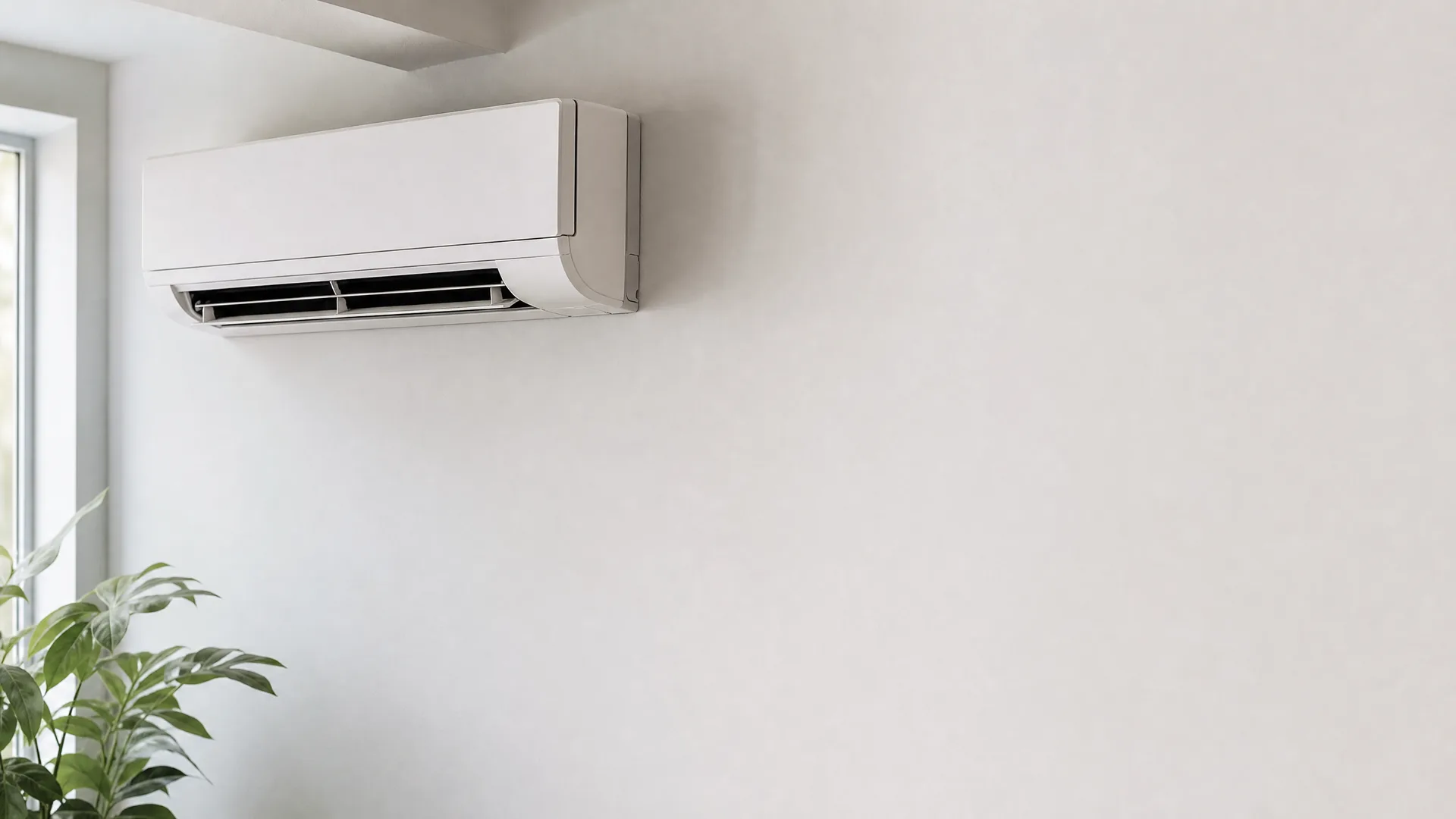
A mini split pulls room air across its indoor coil before pushing it back out cooled. When the filter clogs with dust, less air gets through, and the coil behind it can ice over. Once that happens, the air coming out feels weak or barely cool, even though the unit runs constantly. This is one of the few things you can check yourself before calling anyone, by sliding the filter out and holding it up to a light.
The outdoor unit is where the heat actually leaves the system. It needs open air around it to do that. Leaves, pollen, or a fence built too close can block that airflow, and in Richland County's long growing season, that buildup happens faster than most people expect. If the outdoor coil is caked with debris, the indoor half can blow air all day without ever cooling the room down.
Cooling runs May through September
Cooling runs May through September here. That's five months of your mini split working daily, with no break for the coil, filter, or compressor to coast through.
Heat runs November through March
Heat runs November through March. The same unit that cools your home all summer carries the heat load too, so a weak part shows up twice as often.
Power here costs 16.47 cents per kilowatt-hour
Power here costs 16.47 cents per kilowatt-hour. A mini split that's not cooling right still draws power while it struggles, and that shows up on the bill fast.
NOAA nClimDiv 1991-2020 · EIA-861 2025
A mini split low on refrigerant will still blow air and still run, but it won't pull the heat out of the room. If your unit is short years out from installation, a slow leak at a fitting is worth ruling out before anything else gets replaced.
A mini split with a failing compressor also blows air and still runs, and it can look the same from the living room. The difference shows up at the outdoor unit, where a tech checks pressures and amp draw to see which one you actually have.




Inside, a blower pulls room air across a coil, and that coil needs a full charge of refrigerant to pull the heat out before the air goes back into the room. Outside, the compressor is doing the real work, pushing refrigerant through the line set. If it's failing, the outdoor fan can keep spinning like nothing's wrong while the system quietly stops cooling. Water plays a part too. Condensate has to drain out, and if the line clogs, a float switch inside the indoor unit shuts the whole thing down rather than let water back up into the house. Airflow matters on both ends. The outdoor coil needs open space around it, so pine straw piled against it or a fence built too close makes the compressor work harder for less result. The line set itself has a length and height limit between indoor and outdoor units, and running past that cuts into performance. Even the thermostat sensor can be the problem. If it's reading the room wrong, the compressor may never get the signal to turn on at all.


The compressor keeps cycling, the outdoor fan keeps turning, and your power bill reflects all of it. Meanwhile the room you're sitting in stays the same temperature it was an hour ago.
A slow refrigerant leak doesn't fix itself, and a frozen coil left running can push liquid refrigerant back into the compressor. Waiting usually means a bigger repair, not a smaller one.


A licensed pro who works in Richland County gets your request.
After you send the request, you're done searching.
You're not committing to anything by asking.



It's past three on a July afternoon and the home office is warm the way it's been all week. The mini split on the wall is running, you can hear it, but the air coming off it is just room temperature. You get up to check the thermostat and notice the wall underneath the indoor unit first: a wet streak running down from the bottom edge, dark against the paint. A towel is already on the floor from last night. You press a hand to the wall. Still damp. Outside, Columbia's heat presses against the windows, and the one thing in the house built to handle it is leaking down the drywall instead.
A tech checks the filter and indoor coil for airflow blockage first.
Next, the refrigerant charge gets checked with gauges at the outdoor unit.
The line set gets inspected for oil residue, a sign of a leak.
Electrical components, like the capacitor and contactor, get tested under load.
Five months is most of the year your mini split has to actually perform, not just sit on the wall. There's little room for it to limp along on a dirty filter or a slow leak before you notice. In Columbia, a unit that's not pulling heat out of the room shows itself fast.
NOAA nClimDiv 1991-2020
A mini split that runs without cooling almost always comes down to one of three things: a blocked filter starving the coil of air, a refrigerant charge that's slipped low through a leak, or a compressor that's started to fail. None of these get better by waiting. A dirty filter keeps icing the coil. A slow leak keeps draining the charge. A compressor under strain keeps wearing toward a harder failure. Figuring out which one you've got takes gauges on the outdoor unit and a look at the line set, not guesswork from the thermostat.
This is where it helps to have someone who does this work in Columbia every summer, not just whenever a call comes in. Someone who's checked filters and charge levels on these units all season knows the order to check them in, and knows what a slow leak at a fitting looks like versus a coil that's just dirty. That's the kind of judgment that saves you from replacing a part that was never the problem.
You'll be matched with one licensed local contractor, not a handful of companies competing for your callback. One visit, one diagnosis, one fix. Whether that fix is a cleaning, a recharge, or a part swap depends on what the tech finds, but in most cases it's one of those three and not a full system replacement. The room gets cold again, the compressor stops working overtime, and the bill stops climbing for nothing.
Stop chasing a mini split pro