


A gray outdoor heat pump unit on a concrete pad beside a dark horizontal-siding wall, with a small electrical box on the wall, shrubs and a concrete walkway to the right at dusk.

Get matched with a heat pump pro in Greenville County

When to replace a heat pump in Greenville, SC

Your heat pump runs almost year round here, cooling you from one direction and heating you from the other, so when it starts slipping there's no season where it gets a break. This page walks through the signs that mean repair won't hold much longer and when replacing it is the better move. A local contractor who works on these systems every season can look at yours and tell you where it stands.

Get a heat pump pro

A heat pump worth replacing is usually one that's working harder each year to do less. If yours is past 10 or 12 years old and the repair bills keep coming back, that's your answer: the compressor and coils have put in a lot of cycles keeping you cool through a long muggy summer and warm through a cold winter, and parts wear with that kind of steady use. Watch for rooms that won't hold a set temperature, ice building up on the outdoor unit in winter, or a system that runs long stretches without shutting off. A contractor can often repair a single failed part, but once several things are going at once, or the refrigerant is an older type that's getting hard to source, replacing the unit tends to make more sense than chasing one repair after another. Most homes in the Greenville area heat with electricity, so an aging, inefficient heat pump shows up directly on your power bill, not just in comfort.

How much does your heat pump actually work here?

  • Winter nights average 34°F

    Winter nights here average 34°F, so the heat pump spends those months pulling warmth from cold outside air rather than coasting.

  • Heat runs October through April

    Seven months of heating means an aging compressor gets little downtime between October and April to recover from the strain.

  • Cooling runs May through September

    Five months of cooling on top of that leaves only a short stretch each year when the system isn't running at all.

NOAA nClimDiv 1991-2020

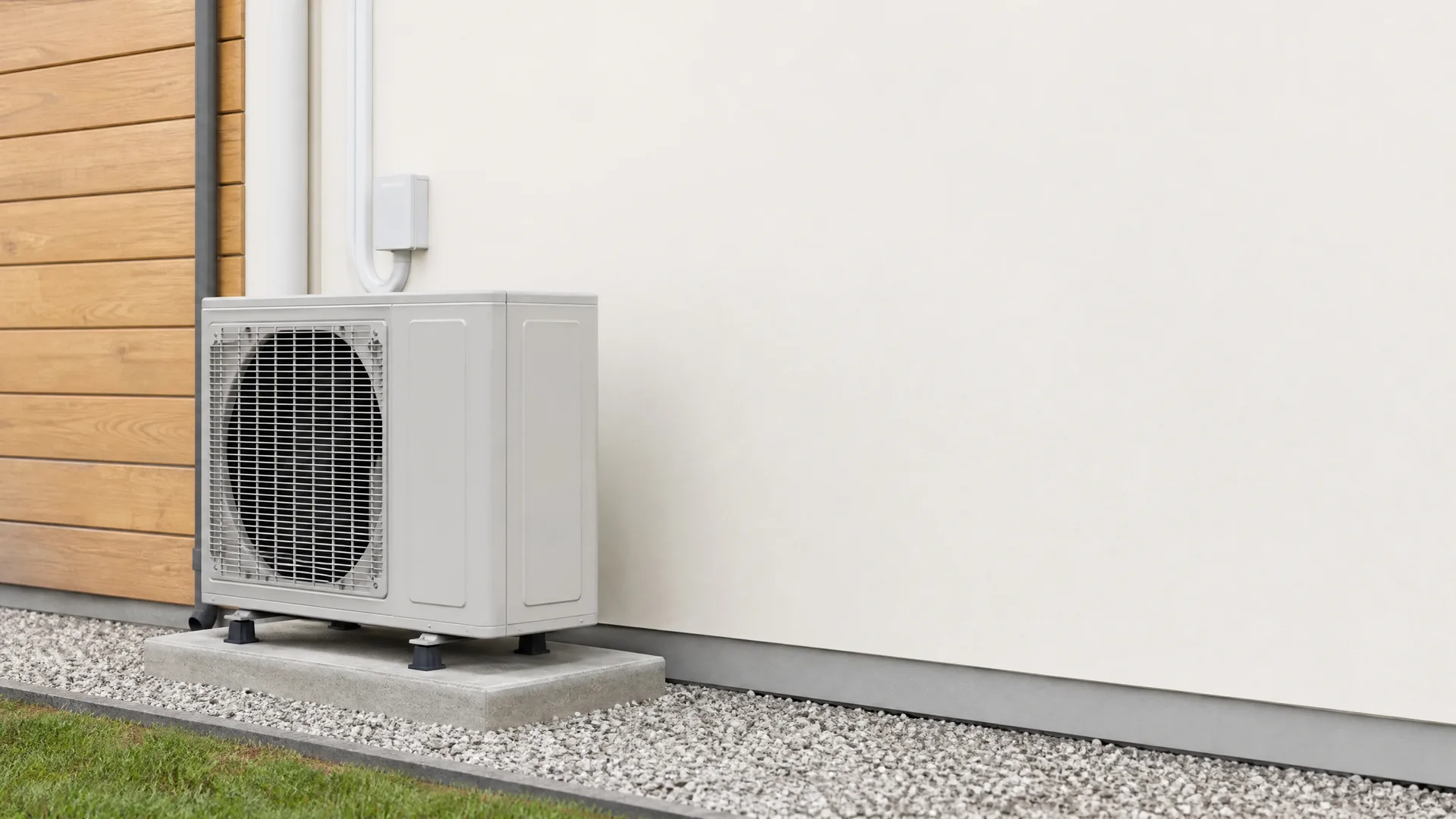
An outdoor heat pump unit on a concrete pad set in gravel beside a cream rendered wall with a wood-clad section at left and grass in the lower left corner.

When repair still makes sense

A heat pump under 10 years old that trips on one bad part, a failed capacitor, a stuck reversing valve, a low charge from a small leak, is usually worth fixing. One repair on a system that's otherwise kept up with you is a normal cost of owning it, not a warning sign. If this is the first time you've called anyone out in a couple of years, the rest of the unit has probably been running fine through both the winter pulls and the long summer stretch.

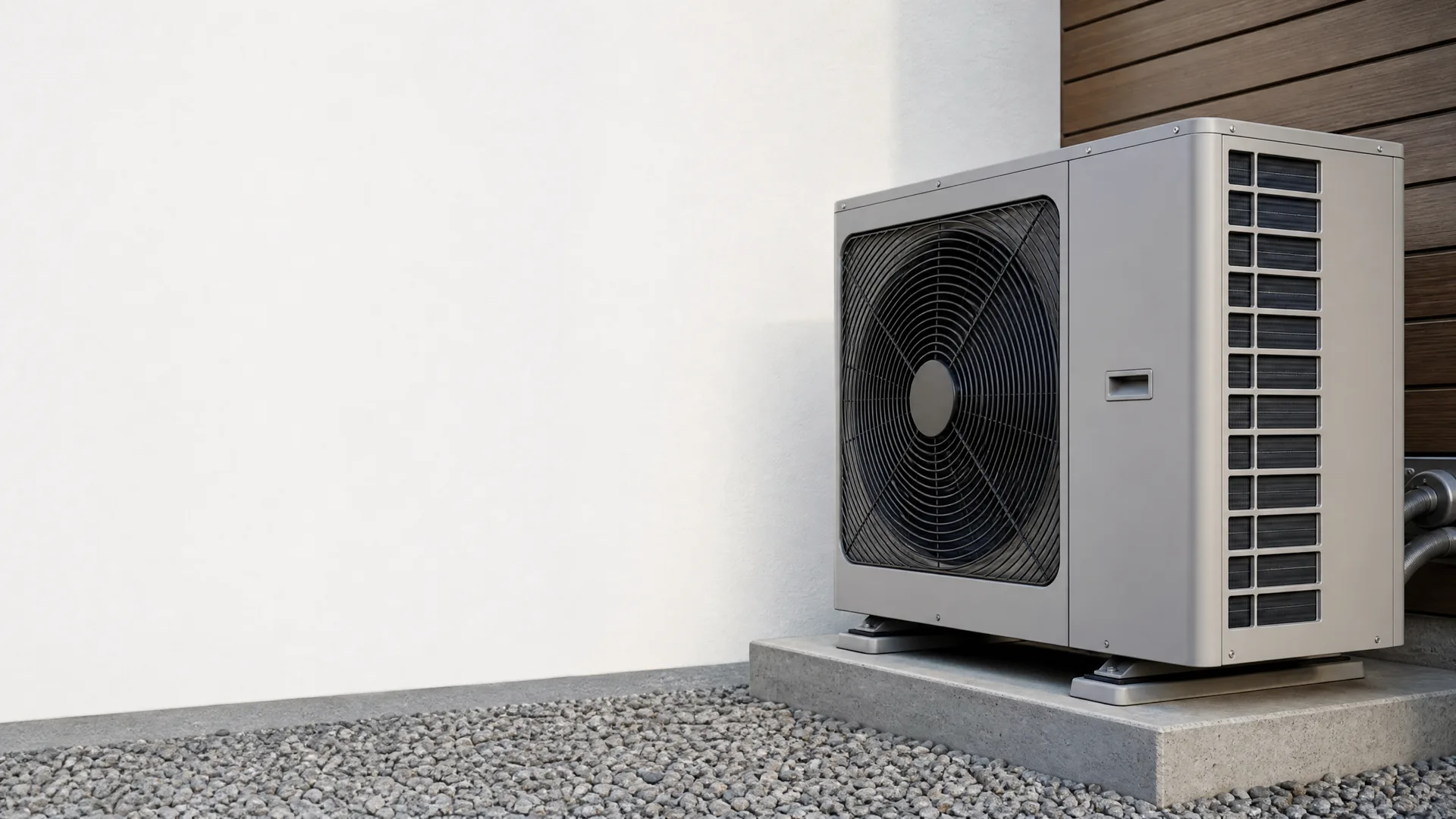
A gray outdoor air-source heat pump unit with a large circular fan grille, mounted on a concrete pad beside a white wall and wood-clad facade, with gravel in the foreground.

When it's time to replace

If the compressor itself is failing, that's the heart of the system, and replacing it usually costs close to a new unit anyway. Same if you're calling someone out every year now instead of every few years. A unit that's lost efficiency also costs you twice: once in the repair, again in every month it keeps running worse than it should through a Greenville winter or summer.

A man in a dark blue shirt stands in an open front doorway of a stucco and wood-clad house, facing a blond woman seen from behind in the foreground on a stone walkway.

What an aging heat pump costs you here

When a heat pump starts to fail in Greenville, you feel it on both ends of the year. A unit that's lost efficiency runs longer to hold 72 degrees in July, then runs longer again pulling heat out of 34 degree air in January. Your power bill reflects both of those months, not just one. If you've noticed it creeping up season after season without a change in how you live in the house, that's usually the equipment, not the rate.

There's also the part you don't see until it fails outright. A compressor that's been struggling for a year or two doesn't usually give much warning before it quits for good, often on the coldest night or the hottest week, which is exactly when you need it most. A local contractor who services heat pumps through both extremes here can tell you, from the age and the pattern of repairs, whether yours is near that point or still has real years left.

A gray upholstered sofa with a textured cushion sits beside a dark round side table holding a vase of green foliage, with a table lamp and sheer-curtained window behind.
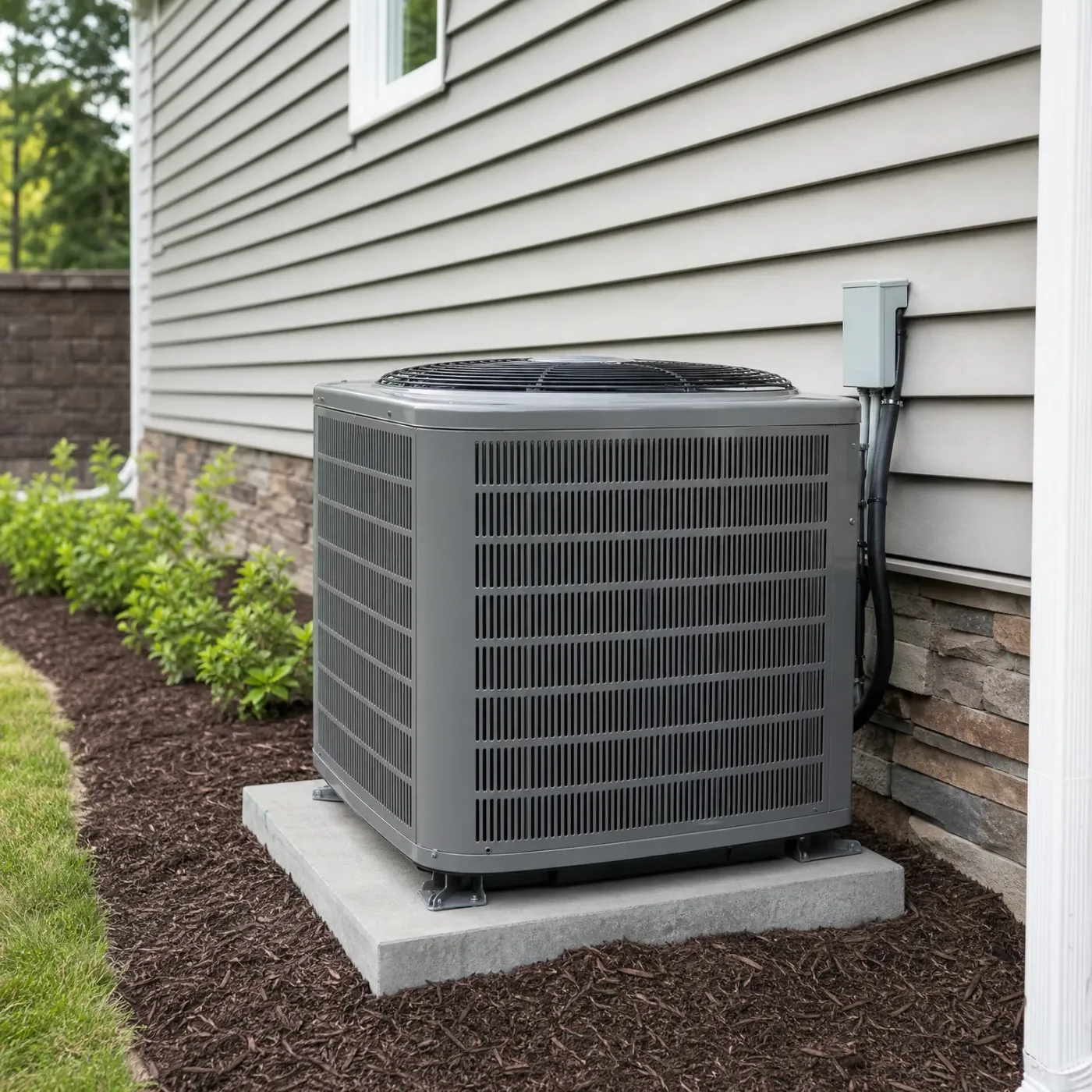
A gray outdoor condenser unit sits on a concrete pad against a house wall with horizontal siding above a stone veneer base, with an electrical disconnect box and conduit on the wall and a leafy shrub in mulch to the left.

Running the way it should

A heat pump that cycles on, holds its temperature, and shuts off without a fight is doing its job. The pad is clear, the disconnect box is intact, and there's nothing pooling underneath it. Leave it alone and keep up with the filter.


An outdoor air conditioner condenser unit on a concrete pad beside a house with beige horizontal siding, with conduit running from an electrical box on the wall.

Showing its age

A unit that short cycles, runs constantly, or trips its breaker is telling you something. So is ice on the lines in July or a compressor that hums but won't start. If the conduit or disconnect has been patched more than once, a contractor can tell you whether it's worth fixing again.

A gray-haired bearded man in a dark snow-dusted coat and scarf stands inside a dimly lit home entryway, with a hallway, framed picture, lit table lamp and staircase behind him.
An older man with gray hair and a beard, wearing a dark snow-dusted coat, stands in a warmly lit home entryway with a hallway, console table with lamp, patterned rug, and living room visible behind him.
An older man with gray hair and a beard, wearing a dark coat dusted with snow and a blue plaid scarf, stands smiling in a dimly lit entryway with a window, framed picture, table lamp and staircase behind him.
A gray-haired man in a dark coat dusted with snow stands in a warmly lit home entryway, with a lamp, sofa, window and white staircase banister behind him.
A gray outdoor condenser unit on a concrete pad beside a house with horizontal siding and stone veneer, with a disconnect box and refrigerant lines on the wall, surrounded by mulch, shrubs, and lawn.

A pro who works on heat pumps

A licensed installer who works in Greenville County gets your project.

Your new heat pump project goes to an installer who works in Greenville County.

Connect with a pro

Sending the form costs nothing.

Is your heat pump telling you something right now

Walk past the outdoor unit and listen. A healthy heat pump cycles on, runs steady, and shuts off clean. One that's failing hums or clicks without starting, or it starts and stops over and over trying to hold a setting. Inside, you'll notice rooms that used to feel even now have a cold corner in January or a warm one in July. Your hand on a supply vent tells you something too, air that should feel warm in winter and cool in summer but feels closer to room temperature means it's struggling. Ice on the outdoor coil in cold weather, a burning smell on startup, or a breaker that trips more than once are signs worth paying attention to, since a unit pushed past its limit can fail outright on the coldest or hottest day of the year.

A gray outdoor condenser unit sits on a concrete pad beside a house with horizontal lap siding, with a wall-mounted disconnect box and refrigerant lines, mulched beds and a shrub nearby, and a concrete walkway in the foreground.
A unit set on a clear pad with the conduit intact is still getting a fair shot at lasting through another Greenville summer.
An outdoor air conditioner condenser unit on a concrete pad beside a house with horizontal vinyl siding, with refrigerant lines and an electrical disconnect box on the wall and dry leaves on the ground.
Dirty coil fins and leaves piled against the cabinet make a heat pump pull harder in July and January both.

Where your heat pump stands

  • A heat pump past 10 or 12 years old that keeps coming back for repairs is telling you it's done.
  • One bad part on a unit under 10 years old, a capacitor or a reversing valve, is worth fixing rather than replacing.
  • A system that cycles on, holds 72 degrees, and shuts off clean is doing its job and doesn't need anything from you but a clean filter.
  • Humming, clicking, or short cycling without reaching temperature means the compressor is struggling through both the heat and the cold here.
  • Winter nights near 34 degrees and long summers near 7 months of cooling put more hours on an aging unit than it was built to carry.
  • The outdoor unit itself, a clear pad, an intact disconnect box, clean coil fins, tells you a lot about what shape the system is in.

The question comes down to age and what's breaking. A unit past 10 or 12 years old that keeps needing repairs has done its job and is telling you it's time for the next one. A unit under 10 years old with one bad part, a capacitor, a reversing valve, a low charge, is usually worth fixing rather than walking away from. Age alone isn't the whole story either. Listen to how the system runs. One that cycles on, holds 72 degrees in July, and shuts off clean is doing exactly what it should, and all it needs from you is a clean filter. One that hums or clicks without starting, or short cycles without ever reaching temperature, is a compressor struggling to keep up, and in Greenville that compressor doesn't get a break. Winter nights averaging 34 degrees and summers that stretch cooling out close to seven months mean more hours of work than this equipment sees in milder places, so wear shows up sooner here than the number on the install sticker might suggest. The outdoor unit will tell you some of this on its own. A clear pad, an intact disconnect box, clean coil fins, these point to a system still getting a fair shot. Dirt, rust, a cracked pad, point the other way. Put the age, the repair history, and the way the unit sounds and runs together, and you'll know which side of the line yours is on.

A woman wrapped in a dark knitted blanket sits in an armchair with an open book in her lap, beside a lit table lamp and a frosted window.
A man with graying hair and a beard in a plaid flannel shirt looks out a frosted window, with a steaming ceramic mug on the wooden sill and shelves behind him.

Heat Pump Installation

Get your heat pump to the right pro

One installer gets your project, so there's no bidding war over it.

A black-framed smartphone standing upright against a plain light gray background, its screen filled with solid green.
New system or replacementHeat PumpGreenville County, SC
Step 1 of 2

What ZIP code is the job in?