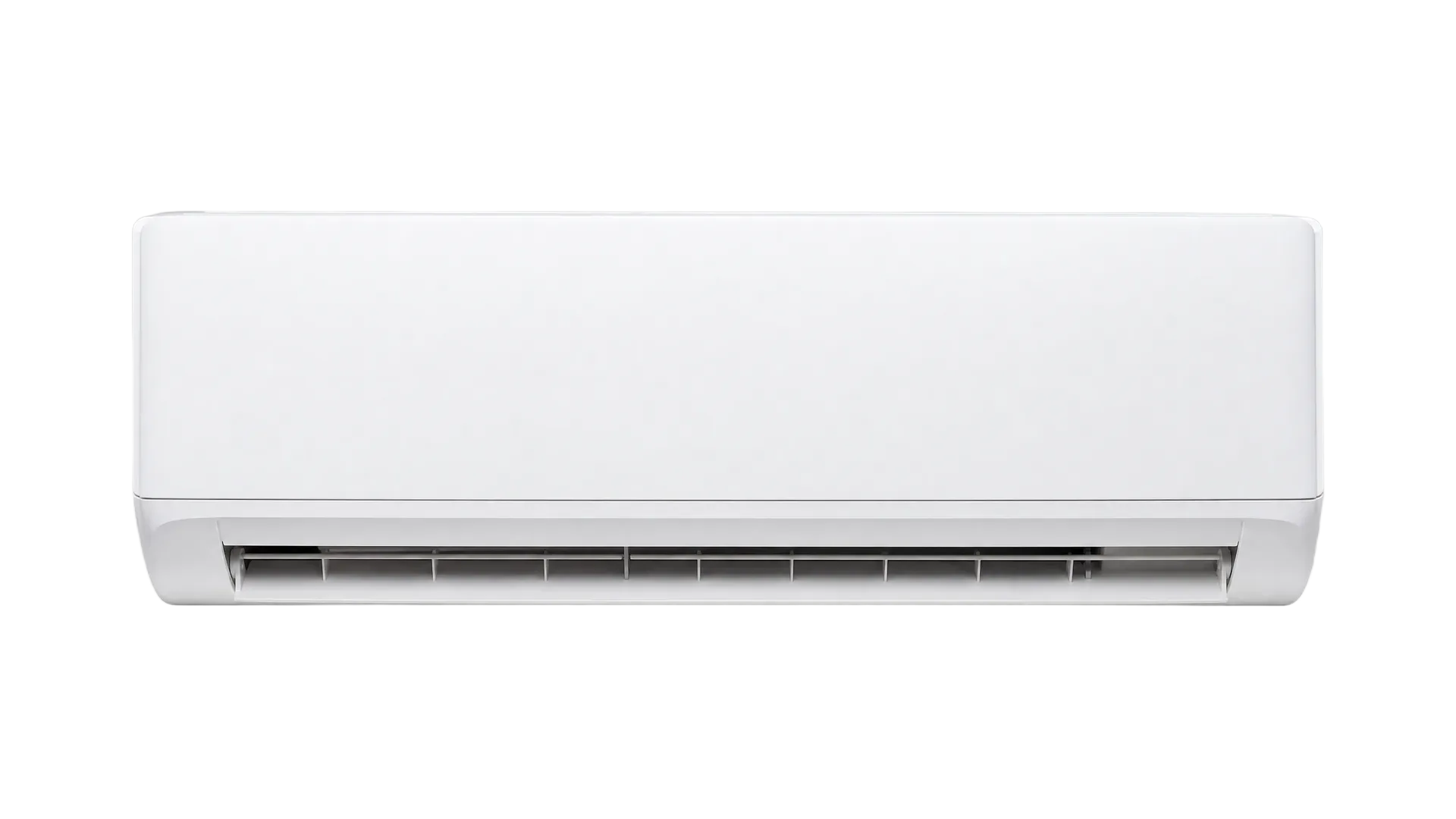
One coil, two jobs
The same coil cools your air and collects the moisture pulled out of it. Cleaning it removes the surface mold feeds on, not just the smell.
That musty smell is mold or mildew growing on the evaporator coil and the drain pan inside the indoor unit. South Carolina summers stay muggy for months, and a mini split pulls a steady stream of moisture out of that air all season. The coil stays wet for hours after the unit cycles off, and in a humid house that water never fully dries. Dust and skin cells settle onto the damp coil and give mold something to feed on, and the smell rides the air right back into the room every time the fan kicks on. A clogged or slow-draining condensate line makes it worse, since standing water sits longer and breeds more. The filter traps some of what feeds the growth, but it does not touch the coil or the pan behind it. Left alone, the smell usually gets stronger as summer goes on, not weaker, because the moisture keeps coming back faster than it can dry out.


The coil sits right behind the blower, so once mold gets going there, the fan is what carries the smell into the room. It doesn't take a flooded pan to start this. A blower wheel caked with dust holds moisture long after the coil dries, which is why the smell can show up even when the unit seems fine. The drain line matters just as much as the coil. It runs outside, and algae builds up inside it the same way it would in any small, wet tube that sits untouched for months. Once that line clogs, water has nowhere to go but back into the pan, where it sits and turns stagnant within days. A dirty filter adds to the problem rather than catching it, since a filter packed with buildup lets dust pass through to settle on the wet coil instead of blocking it. Mini splits cycle on and off more than a central system, so that coil is going through this wet and dry swing several times a day, all summer.




The same coil cools your air and collects the moisture pulled out of it. Cleaning it removes the surface mold feeds on, not just the smell.
Condensate sits there between cycles. Left uncleaned, it grows the same mold that spreads onto the coil and into the air you breathe.
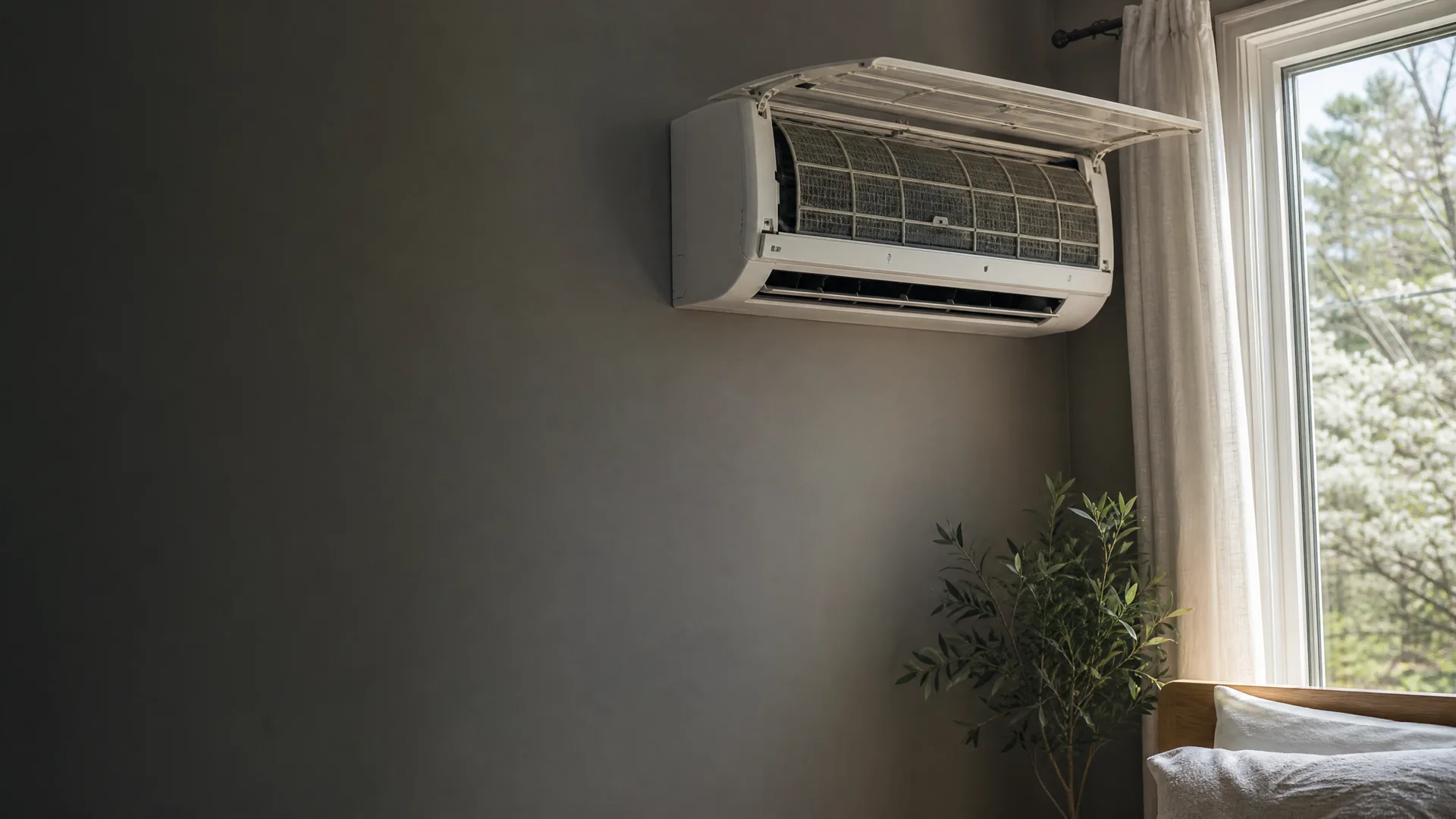
You open your eyes a little before the alarm, light already coming in flat and early through the blinds. The mini split clicks on for the morning, and that smell reaches you before the cool air does, a damp, closed-up smell like a towel left too long in the washer. You get up and pop the front cover on the indoor unit. The filter screen behind it is grey with dust, matted enough that you can see it's been holding onto more than air. You slide it out and hold it up to the window light, turning it over, wondering how long it's been since anyone looked at it.
Only one pro gets your request, so you hear from one company.
It costs nothing to send, and you don't have to hire anyone.

A dew point of 69°F is what you're breathing out there most summer days, averaged across June, July and August over South Carolina. That's thick air, the kind that sits on your skin instead of passing by. For your mini split, it means the coil pulls more water out of the air on an average day than it would in a drier state, and it keeps pulling all summer long without much of a break. The coil and drain pan stay wet longer between cycles, which is exactly what mold needs. You notice it most first thing in the morning or after the unit's been off for a few hours, when that musty smell hits before the cool air does. Source: NOAA climate normals.
NASA POWER T2MDEW county cells weighted by homes


The technician pulls the cover and checks the blower wheel for mold buildup.
The coil gets sprayed with a cleaner that breaks down mold and mildew.
The drain pan and drain line get cleared so water flows out freely.
The blower wheel gets wiped down so spores stop circulating.
You'd notice it most in the bedroom or wherever the indoor unit runs longest. The smell hits right when the system starts a cycle, fades some once the room cools, then comes back at the next cycle. You might see a faint film on the vent fins or a dark spot near the drain where it drips. Clothes stored near the unit can pick up the smell even when the system is off. Left alone through another South Carolina summer, the mold doesn't stay confined to the coil. It spreads to the blower wheel and the air it pushes into the room, which matters if anyone in the house has allergies or breathing trouble.

This is a coil and drain pan with nothing growing on them. Air passes through dry metal and a clear pan, so the unit cycles on and off without any smell at all. The casing stays white, not dusty or yellowed.

The casing here is dusty and discolored, a sign of what's built up on the coil behind it. Open vents like these are pushing that air, and whatever is growing past the coil, straight into the room every time the unit cycles on.
At 15.12 cents a kilowatt-hour, running your mini split through a muggy South Carolina summer isn't cheap to begin with. A dirty coil has to work harder to pull the same moisture out of the air, so it draws more power to do it. Keeping it clean keeps that cost where it should be.
EIA-861 2025 statewide residential average
You could leave it alone and run the system as is. The smell may ease up some on dry days when the coil has a chance to dry out between cycles. But most of a South Carolina summer isn't dry, so the coil stays wet more often than not, and mold keeps finding the surface it needs. Dust and lint from the room keep landing on that wet coil and feeding the growth further. Nothing about the unit gets worse on its own schedule. It just keeps running the way it has been, pulling moisture out of muggy air and giving mold exactly what it needs to keep going, cycle after cycle, through August and into September.
A technician who works on mini splits all summer knows where this smell starts and checks the coil, the drain pan, and the blower wheel in one visit. Clearing the mold off the coil and flushing the drain line gets rid of what's actually causing the smell, not just the symptom. The unit goes back to cycling quietly, air passing over clean metal instead of a wet, moldy surface. Since it's one contractor handling the call, you're not fielding quotes from three different companies, just someone local who knows this equipment and has likely seen this exact smell in a dozen other homes this season.


The smell has a cause, and it's one a technician can find in the same visit: mold on the coil, water sitting in the drain pan, a blower wheel holding onto both. None of that means the unit is failing. It means the inside of it has stayed wet longer than it should through a South Carolina summer, and nothing has cleared that moisture out.
Clearing it is the job. The coil gets cleaned so there's nothing left for mold to grow back on. The drain pan and line get cleared so water moves through instead of sitting. The blower wheel gets washed so it stops holding spores and pushing them into the room every time the system cycles on.
Someone who works on mini splits all summer here has seen this exact pattern often enough to know where to look first. The blower wheel and the drain line are usually where it sits, and checking those first instead of guessing is what a season of doing this work gets you. Your request goes to one contractor, licensed and local, so you're dealing with one call back, not several companies competing for the job.
Once that service is done, the system goes back to doing what it's supposed to do. Cool air moves across a dry coil. Water drains the way it's meant to. The smell that used to hit you at the start of every cycle has nothing left to come from, through whatever's left of summer and the one after it.
One request and it's handed off