






Overhead view of a gray residential air conditioning condenser unit mounted on a concrete pad beside a house with asphalt shingle roofing.

AC Installation in Anderson, SC

Tell us about the job

Takes about a minute. No obligation.

New system or replacementCentral ACAnderson County, SC
Step 1 of 2

What ZIP code is the job in?

The efficiency rating on a new AC tells you how much cooling it gets out of the power it draws. A higher rated system does the same job on less power than a lower rated one. That number comes from lab testing under fixed conditions, so it marks a ceiling more than a promise of what you'll see running day to day. What the unit actually uses once it's installed depends on the ductwork it's tied into, whether the coil matches the condenser, and whether the whole system was sized for the space it's cooling. A high efficiency condenser hooked to a leaky duct run or an undersized coil won't deliver what its rating suggests. The rating describes the equipment itself, not how it's run, so the same unit can use more or less power from one home to the next depending on how it's set up and maintained.

5 months
May through September, your air conditioner is on duty
89°F
the average summer afternoon it cools against
33 hail events
in ten years, and hail bends the fins on outdoor coils
13.4 SEER2
the federal minimum any new unit must meet
Isometric line illustration of a cutaway single-story building showing interior rooms, ceiling ductwork, an indoor air handler, and an outdoor condenser unit connected by a line set.
Your air conditioner works hardest from June through September.

NOAA nClimDiv, 1991–2020 normals

Electricity in South Carolina ran 14.23 cents per kilowatthour in 2024.

An AC system rated higher on efficiency draws less of that power to do the same job in Anderson.

Most of Anderson runs on electricity, and that's what a new AC ties into

64.4% of homes heat with electricity
Cooling runs May through September
Summer afternoons average 89°F

Anderson County is zone 3A, warm and humid with summer running long. Any new split-system AC installed here has to meet at least 14.3 SEER2, higher than the 13.4 SEER2 floor manufacturers meet for the rest of the country. That's the regional standard set for the Southeast, not just a national minimum. A unit built to satisfy a milder climate zone may not clear that bar. So what's allowed to go into your home is narrower than what's on the market as a whole.

Cooling starts in May. Install before then.

Anderson County homes run cooling from May through September. Put a new system in during April or earlier and it's set up and tested before that first hot stretch, not scrambled together once you're already running it every day.

Find a contractor
A man in a cap, dark jacket and tan work pants, seen from behind, carries a canvas tool bag up concrete steps toward a dark green front door of a gray clapboard house with a potted shrub beside it.
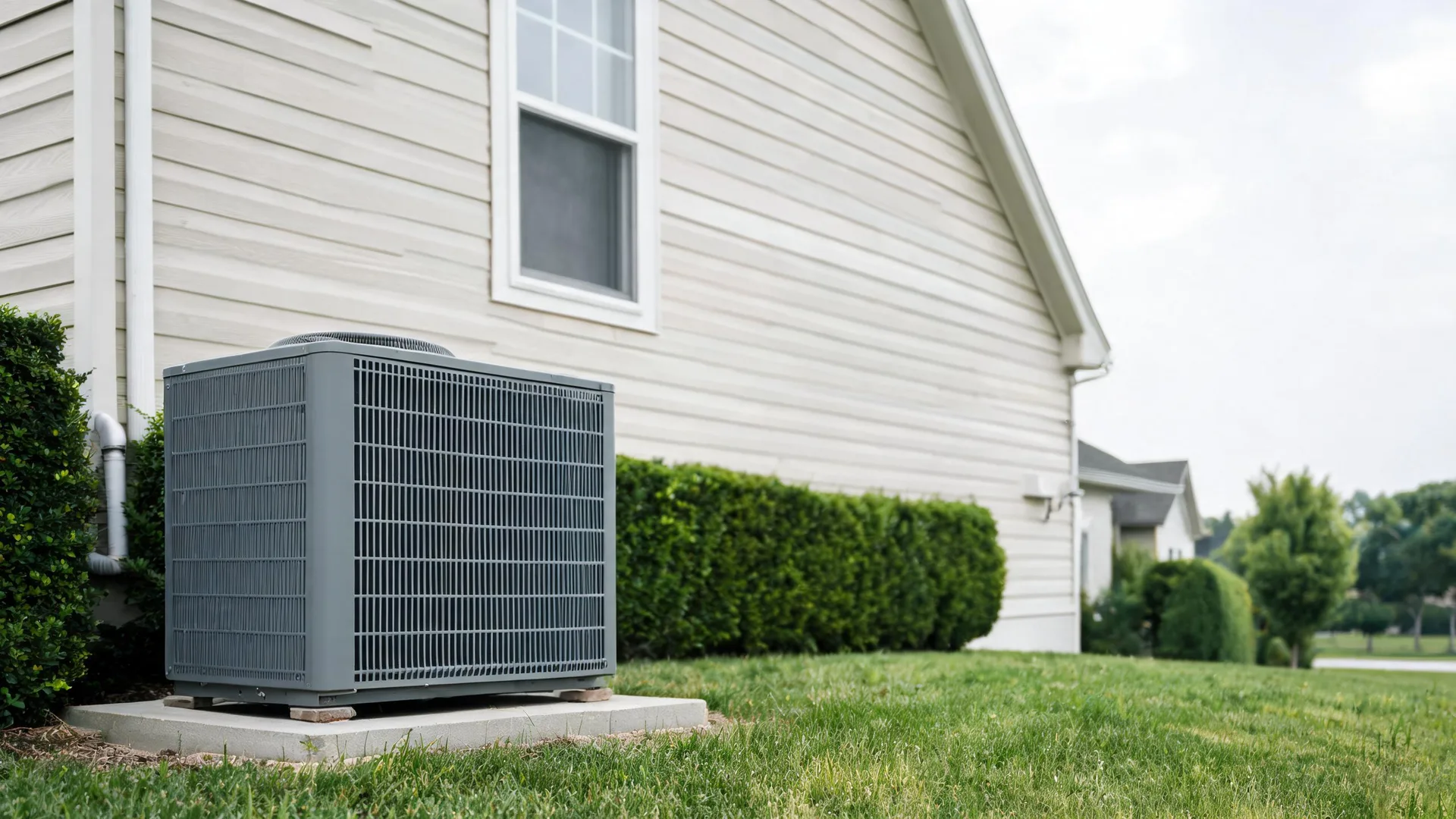
A gray metal air conditioning condenser unit mounted on a concrete pad in a flat grassy field under a partly cloudy sky.

Five months of 89 degree afternoons, every year

Cooling here runs five months a year, May through September, with afternoon highs averaging 89°F across June, July and August. That's a long season of full afternoon sun pushing the unit to hold a house at temperature, day after day. A system sized wrong for the space runs longer than it should to make up the difference, and that extra runtime is what wears a compressor down early. Size it to the house.

The old unit gets disconnected and hauled off

Before the new condenser goes in, the old one gets its refrigerant recovered. It's against the law to just vent it into the air, so a contractor pulls it into a tank with a recovery machine. After that the old condenser, coil and any line set being replaced get disconnected and hauled off. None of that gets left behind for you to deal with.

The refrigerant lines usually get replaced too

If your new system runs on a different refrigerant than the old one, which is common when replacing an older unit, the old line set can't carry it. Residue and oil from the old refrigerant left in those lines will contaminate the new system and cause problems down the road. So the copper lines running between the indoor coil and outdoor unit typically get swapped out along with the equipment, not just reused.

Aerial view of a gray central air conditioning condenser unit on a concrete pad next to a house with vinyl siding.

Going above the federal minimum saves little here, about $20 a year.

  • A higher-efficiency unit$310 a year
  • A new unit at the federal minimum, 14.3 SEER2$330 a year

Estimates for a typical Anderson County home, from EIA household energy data, South Carolina fuel prices and NOAA climate normals. Your home will differ.

A crew shows up with the new condenser and coil already matched, not picked out on site. The old equipment comes out first, lines recovered and disconnected, before anything new gets set. Setting the condenser means leveling a pad outside and making sure there's clearance on all sides for airflow, since a unit crowded against a wall or fence won't breathe right. Indoors, the coil goes in above or beside the furnace or air handler, wherever the old one sat. Once both ends are in place, new lines get run, connected, and pressure tested for leaks before any refrigerant goes in. The system then gets charged to the manufacturer's spec, not just topped off by feel, and run through a cycle to check airflow, temperature split, and that the thermostat is actually talking to the equipment. A startup done right ends with numbers checked, not just a unit that turns on.