104°F
Columbia hits the low hundreds most summers. A system low on refrigerant or short on airflow can't keep up once it's that hot outside.
Matched to your air conditioner job
Warm air coming out of the vents when it should be cold usually means one of a few things: the thermostat, the airflow, the refrigerant charge, or the outside unit itself. This page walks through how to narrow that down before anyone comes out. When you're ready, it can connect you with a contractor near Columbia who takes it from there, instead of you calling around and explaining the problem over and over.
Get my matchWhen your AC is running but the air coming out is warm or barely cool, the problem is usually one of a few things. The thermostat could be set wrong or miscommunicating with the system. Airflow might be blocked by a dirty filter or a frozen evaporator coil, which stops cold air from moving through the ducts. Low refrigerant from a leak means the system can't pull enough heat out of the air no matter how long it runs. Or the outside condenser unit itself has a failed capacitor, a bad fan motor, or a compressor that won't start. With Columbia's long, muggy summers, a system that can't cool properly doesn't just mean discomfort. It means it runs constantly trying to keep up, which strains parts that are already working harder than they would almost anywhere else, and the problem tends to get worse the longer it sits.


Your AC moves heat out of your house, it doesn't make cold air from nothing. Refrigerant runs through a closed loop between the indoor coil and the outdoor unit, picking up heat inside and dropping it off outside. The evaporator coil inside is where that heat gets pulled out of the air, along with the moisture, which is why a working system leaves the air feeling dry as well as cool. That air then moves through your ducts because the blower pushes it there. Outside, the condenser fan blows air across the hot coil so the heat the refrigerant is carrying can escape into the yard instead of staying trapped in the unit. The compressor is what keeps refrigerant moving through both coils, and it depends on a run capacitor to start and keep running. When that capacitor weakens, you can hear the fan outside running fine while the compressor never kicks on, and no cooling happens at all. If refrigerant has leaked out, the system can't carry enough heat outside, and the indoor coil can actually ice over even when it's pushing 95 degrees outside. If the outdoor coil is caked with dirt and leaves, heat has nowhere to go, and some systems will shut themselves off on high pressure rather than keep pushing against it. And sometimes nothing is broken at all. A thermostat fan switch left on "on" instead of "auto" keeps air moving through the vents around the clock, which can feel like warm air blowing even though the cooling cycle itself is working the way it should.




Columbia hits the low hundreds most summers. A system low on refrigerant or short on airflow can't keep up once it's that hot outside.
A frozen evaporator coil often means warm air at the vents even though the system runs nonstop. Airflow or refrigerant is usually the cause.
You set the thermostat to 72 and it never gets there. The vents still blow, but what comes out is lukewarm at best, and by mid-afternoon the rooms upstairs feel worse than the ones downstairs. The outside unit might run longer than it used to, cycling on and off more through the day, and the electric bill reflects it. If the coil has iced over, you may notice water pooling near the indoor unit as it melts overnight. Left alone through a Columbia summer, a system working this hard can wear down the compressor faster than it should, which turns a repair into a much bigger job.
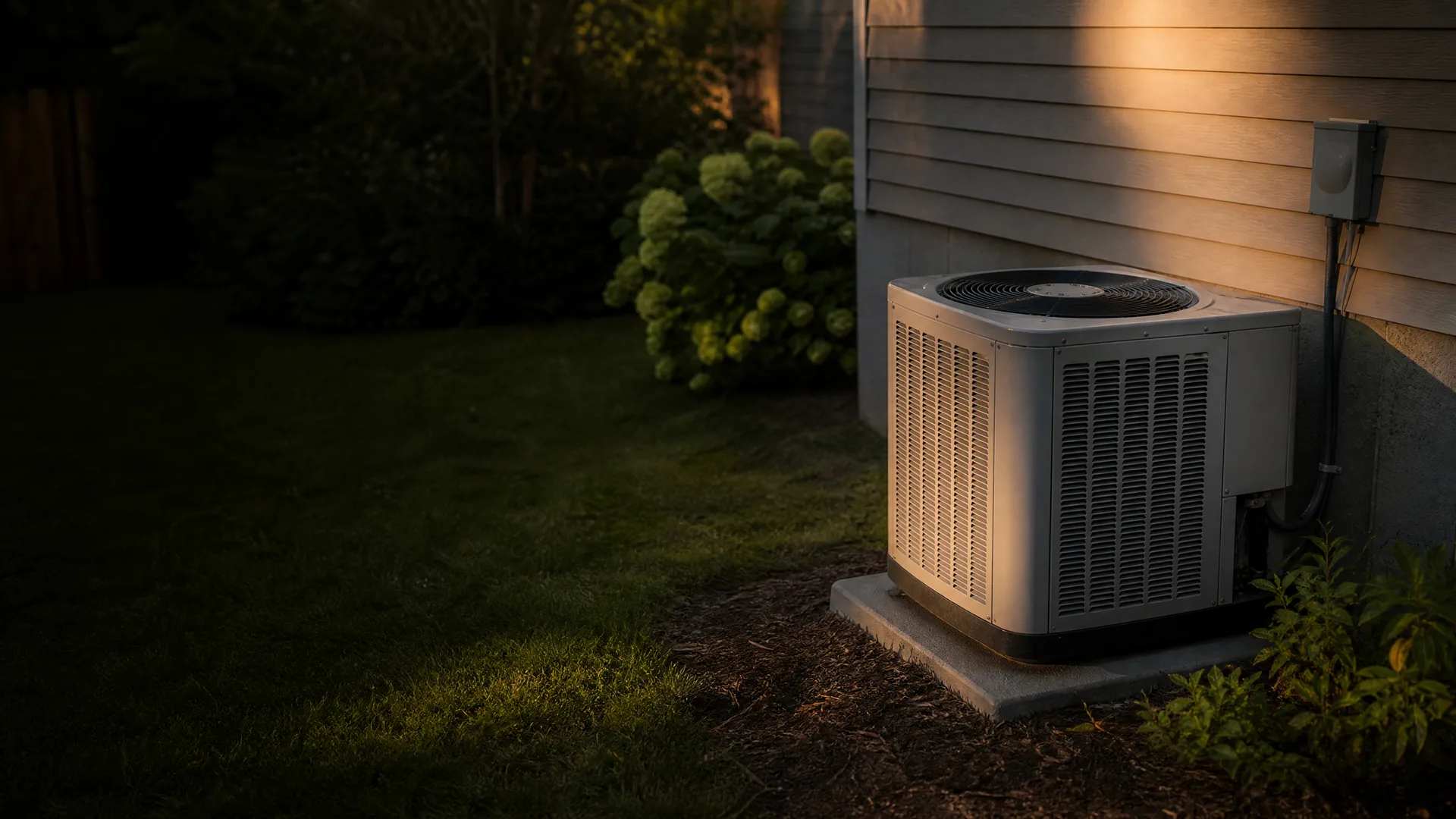
You're out back around seven, grass still warm under your feet, the light going gold over the fence line. The condenser should be humming, that low rattle you stopped noticing years ago. Tonight it's quiet. You crouch down and look through the grille and the fan blades aren't moving at all, though you can hear a faint electrical hum from inside the unit. Inside, your wife has the thermostat down at 70 and nothing's catching up. You press a hand to the side panel. It's warm, not hot. A couple of houses down, someone's unit is running fine, you can hear it. Yours just sits there in the last of the light, and the kitchen window behind you is still wide open.
Skip calling shops to ask who repairs air conditioners in Richland County.
It costs nothing to send, and you don't have to hire anyone.
Richland County averages a summer dew point of 68°F across June, July and August, NOAA's records show. That's heavy, sticky air, the kind that makes your AC do two jobs at once: pull heat out and pull moisture out. The moisture part is what wears on it. A system already low on refrigerant or short on airflow has a harder time stripping that water out of the air, and you'll feel it as a house that's cold enough by the thermostat but still clammy, with air that never quite feels crisp coming out of the vents.
NASA POWER T2MDEW

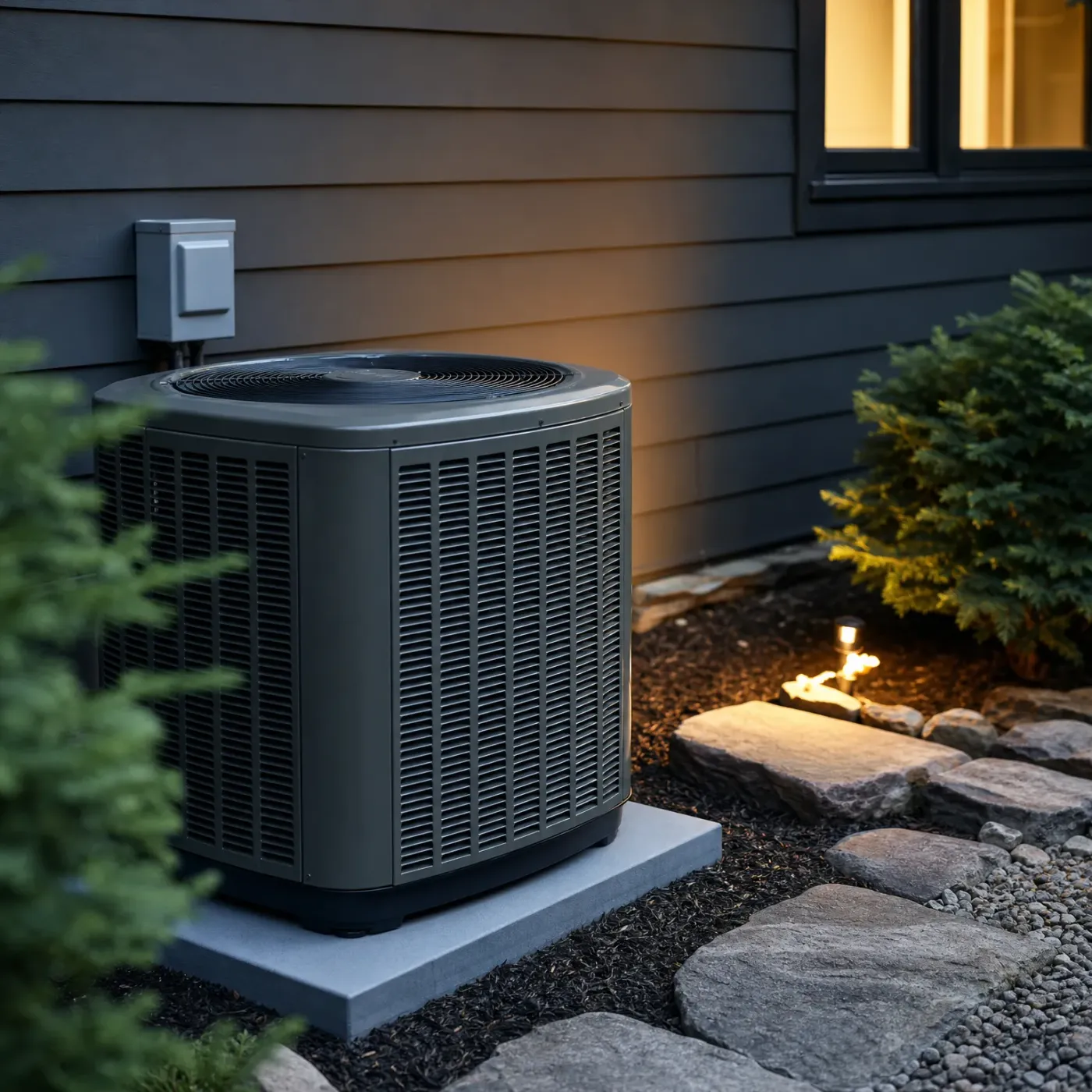
The pad is clean, the disconnect box is wired tight, and the fan grille sits clear on top. Air moves through the louvered vents without strain. A unit set up like this can handle a Columbia afternoon in the upper 90s without falling behind.

Weeds have grown in around the gravel bed, and the housing shows its age. A unit sitting like this, boxed in and neglected, has to work harder to push heat off the coil, and on the hottest days it starts losing that fight.
You go out back to check on the unit and the fan isn't spinning, there's no hum, nothing. The thermostat still shows the house is above your set temperature, so the system should be calling for cooling. Inside, the blower might even still be running air through the vents, just not cold. When the outside unit sits dead like that, it usually comes down to power not reaching it or a safety switch keeping it off.
Your outside unit runs on its own breaker in the electrical panel, separate from the rest of the house, and that breaker can trip without anything else in the house losing power. There's also a disconnect box mounted on the wall right next to the unit, usually gray metal, with a pull-out block inside that has to be seated all the way in. If either of those got bumped or tripped, the unit gets no power and won't turn on no matter what the thermostat says. If both check out and it's still dead, the problem is likely inside the unit itself, a failed capacitor or contactor, and that's a job for a technician.


Your AC in Richland County only has to earn its keep from May through September, but those five months carry the whole load. When it quits on you in July, there's no mild stretch coming to bail it out, just more heat until it's fixed.
NOAA nClimDiv 1991-2020

The disconnect box is wired tight against the siding and the conduit runs straight down to the unit. Mulch and trimmed shrubs sit clear of the cabinet. Nothing blocks the airflow the condenser needs to push heat outside, so the fan can do its job.

The unit sits tight against the vinyl siding with a retaining wall and a shrub crowding the side. The conduit still runs to the disconnect fine, but a condenser crowded like this can struggle to shed heat, and that shows up as warm air inside.

Warm air at the vents comes down to the thermostat, the airflow, the refrigerant, or the condenser outside. Nothing about that list changes because it's Columbia, but the heat here means you find out fast which one it is. A system limping along on low refrigerant or a dirty coil might get through a mild week. It won't get through a run of afternoons near 100.
You don't need to figure out which of those four it is yourself, and you don't need to call around Richland County getting someone out to look. A contractor who works on these systems can walk through the unit, tell you straight what's wrong, and get it back to cooling the house the way it did before. That's the part that's left once you know what's going on: getting the right person out to fix it, without the runaround of explaining the problem three times to three different companies.



A local pro for your air conditioner repair
Answer a few questions instead of calling shop after shop.