Where to put a mini split in a South Carolina home

A white wall-mounted mini-split air conditioner indoor unit with a horizontal louvered air outlet, shown against a plain light gray background.
I'm done searching

The indoor unit goes on an interior wall, high enough to spread air across the room, away from doorways and direct sun through a window. The outdoor unit goes on the side or back of the house, on a pad or wall bracket, with open space in front of it so air moves through the coil freely. In South Carolina, shade matters more than it does in most places. Summers here are muggy and the compressor works hardest in July and August, so an outdoor unit set in full afternoon sun runs harder than one tucked under an eave or on the north side of the house. Keep it clear of dryer vents and gutter runoff too. Inside, placement decides whether a room actually cools and dries out evenly or stays sticky in the corners. Since most homes here heat with electricity, the same unit is doing the work all winter as well, so the spot you pick has to serve both seasons, not just one.

A dusty white wall-mounted mini-split air conditioner installed high on a beige interior wall below a molded ceiling trim.
Before you get your mini split installation
A white wall-mounted mini-split air conditioner unit installed high on a light gray interior wall near the ceiling, with a white-framed window and green foliage visible at the left edge.
After you get your mini split installation

A mini split only works right if both units can talk to each other through a short, direct path. The line set that connects them carries refrigerant, electrical wiring and the condensate drain, all through one hole in the wall, so wherever that hole goes has to make sense on both sides. Indoors, the unit needs enough drop toward the outside wall for the condensate to drain by gravity. In South Carolina's humidity, that unit is pulling water out of the air most of the summer, and a line that doesn't run downhill the whole way will back up. Outdoors, the unit needs clearance on every side so it isn't breathing its own exhaust, and shade matters too. A compressor sitting in full sun on a south or west wall all afternoon has to work harder to dump heat than one with some relief. None of this is guesswork. A contractor who installs these every season in homes around here knows which walls tend to cause problems before the first hole gets drilled.

Why placement is not random

  • The indoor unit needs a clear path to the outdoor unit for the refrigerant line, so the wall it sits on usually backs up to an exterior wall.
  • A mini split pulls moisture out of the air as it cools, and that condensate line has to run downhill the whole way to drain properly.
  • The outdoor unit needs room to breathe on all sides, and a few feet of clearance keeps it from short cycling warm air back into itself.
  • Mounting the indoor unit too close to the ceiling traps the coldest air up high and leaves the room feeling warmer than the thermostat shows.
  • The line set between the two units runs through a single hole in the wall, so the spot picked has to work for both units at once.
  • A south or west facing wall puts the outdoor unit in direct sun most of the day, which makes it work harder to shed heat in summer.
A man in a gray sweater reclines in a brown leather armchair with his eyes closed, beside a wooden side table holding a mug, a folded newspaper and a potted plant, with a bookshelf and sunlit window behind him.
A man with greying hair and a dark sweater leans back on an armchair with his eyes closed and a slight smile, in a living room with a bookshelf, plant, folded newspaper and mug on a wooden table.
A man in a gray fleece jacket sits reclined in a leather chair with his eyes closed, in a room with bookshelves, a table lamp, a window, and a desk holding a folded newspaper and a dark mug.
A bearded man in a gray fleece pullover sits with eyes closed in a brown leather armchair in a living room, with a floor lamp, bookshelf, potted plants, a side table holding newspapers and a dark mug, and a bright window behind him.
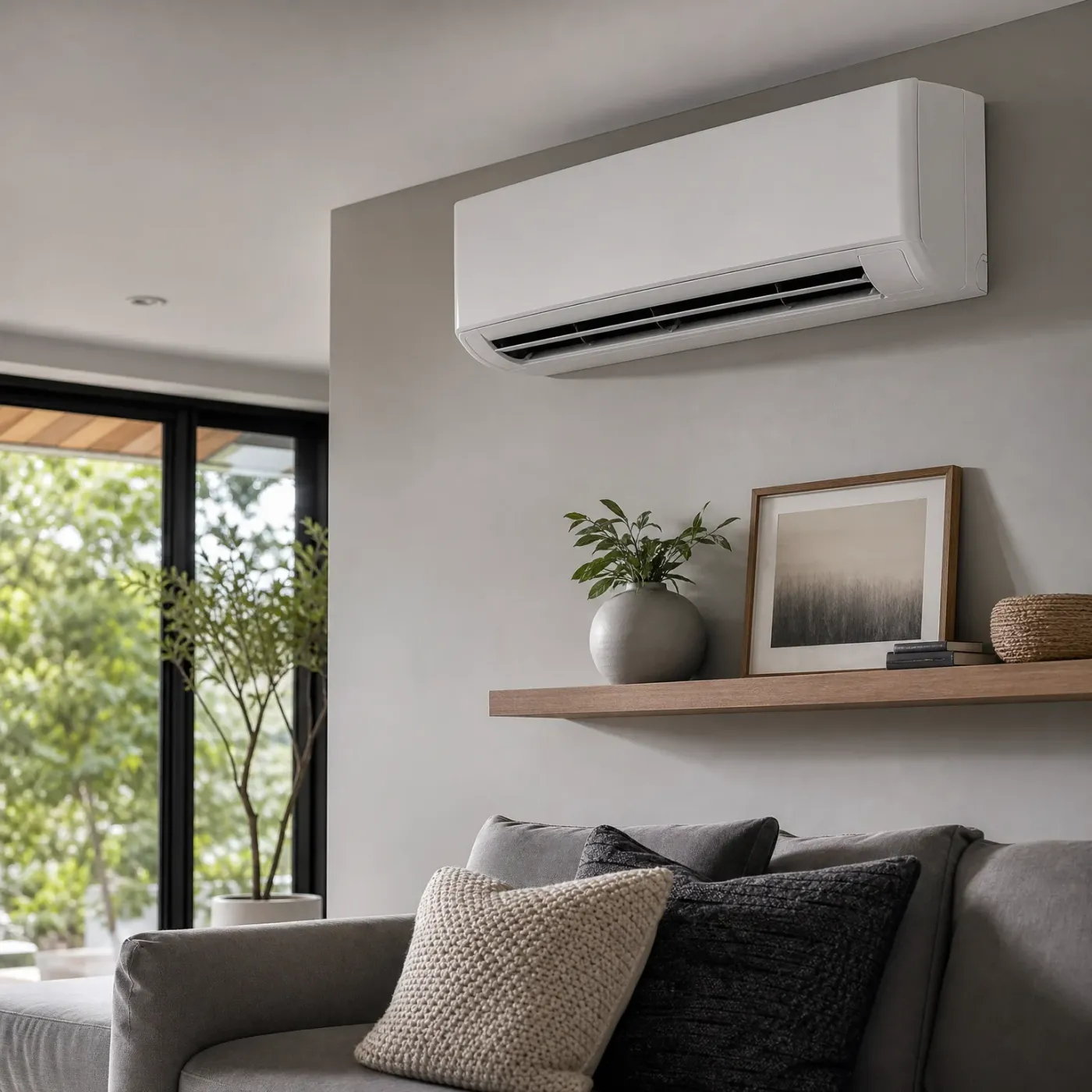
A white wall-mounted mini-split air conditioner near the ceiling of a living room with a gray sofa, knit cushions, a wooden floating shelf holding a plant in a round vase, a framed print and a woven basket, and a large window showing green trees.

Finding a pro stops being your job

One installer gets your project, so there's no bidding war over it.

One request ends the search for a mini split installer.

Find a local pro

Sending the form costs nothing.

Power costs 15.12 cents per kilowatt-hour statewide

That 15.12 cents a kilowatt-hour is about average for the country, so a mini split here isn't fighting the power bill the way it would in places paying more. Since most homes in South Carolina heat with electricity, running one through the winter alongside summer costs less than you'd expect.

EIA-861 2025 statewide residential average

A white wall-mounted mini-split air conditioner installed near the ceiling on a light-colored interior wall, with a window and green foliage visible at the left edge.

Placed right and left alone

Mounted high on an interior wall, clear of the window and out of the sun's path, the indoor unit can move air across the whole room without strain. Nothing blocks the intake, so it pulls air in clean and sends it back out just as easily.

A dusty white wall-mounted mini-split air conditioner indoor unit installed high on a beige interior wall below a white ceiling and trim.

What a blocked unit looks like

Dust builds on the vents and across the intake grille until the unit has to work through it just to pull air in. A mini split placed where it collects grime like this loses airflow long before anyone thinks to check why the room feels off.

A gray-haired man in a blue quarter-zip sweater sits in an armchair with his eyes closed, beside a large window with bare trees outside and a potted plant and lamp nearby.
A woman in a cream knit sweater sits in an armchair indoors, eyes closed and smiling, beside a window showing yellow and orange autumn foliage, with a mug on a wooden side table and shelves holding vases behind her.

Getting Placement Right

  • Good placement comes down to a clear run between indoor and outdoor units and a condensate line that slopes downhill the whole way.
  • Keep the indoor unit high on an interior wall, clear of windows and doorways, and the outdoor unit gets airflow it needs to work through a South Carolina summer.
  • Get the spot right the first time and the unit runs the way it's supposed to for years, through muggy summers and the electric heat months both.
  • A local installer who works on these units all season knows which walls in this area cause condensate problems before the line ever gets cut.
  • Sending one request to a licensed local contractor means one visit, one set of eyes on your walls, not a string of calls to sort through.
  • The placement decisions above are the same ones a local installer checks against your actual walls before anything gets mounted.

The placement rules are simple enough to check yourself. Indoor unit high on an interior wall, clear of the window and the door. Outdoor unit with room to breathe, condensate line sloped downhill from start to finish. Get those right and the unit does its job through a South Carolina summer and through the winter months when it's carrying the heat too, since most homes here run on electricity for that.

What you can't check from across the room is what's inside your walls, and that's where a local installer earns their keep. Someone who works on these systems every season in this area has already seen which walls run into condensate trouble, which rooms fight the airflow, which spots look fine on paper and cause problems a year in. That's not a guess. It's the difference between a unit mounted somewhere convenient and a unit mounted somewhere that works.

One request goes to one licensed contractor local to you. Not a handful of companies competing for the job, not a stack of calls to sort through and compare. One visit, one person looking at your actual walls and your actual layout, making the call on where the line runs and where the indoor unit hangs. The placement questions above are the ones that contractor is going to walk through in person, against the house you actually have.

A single-story stone-clad house with low-voltage path lights along a gravel bed and lawn at dusk, with a tree line and orange sky on the horizon.

Mini Split Installation

Let someone else find the pro

New system or replacementMini-splitSouth Carolina
Step 1 of 2

What ZIP code is the job in?

  • A brown leather and wood armchair with a cream knit throw sits in a corner beside a woven basket holding a dark cushion, under a framed mountain photograph, with a wood-trimmed window showing yellow and green foliage.
    • A local installer who puts in mini splits gets your project.
    • Get in touch with a local installer about a new mini split.
  • A dark wood dresser against a pale wall holds a ceramic vase of eucalyptus branches, a stack of books with a wooden bowl, and a woven basket, with a framed landscape painting above and a woven basket holding a knit blanket on the floor beside a window.
    • Once you send the form, finding a pro is off your list.
    • After you send the request, you're done searching.
  • A window seat with beige linen and brown textured cushions, a chunky knit blanket, and an open book, beside a window showing blurred yellow autumn foliage.
    • Skip the round of in-home estimates for a new mini split.
    • Describe the project once instead of to every installer.
  • A cream upholstered armchair with a rust-colored pillow and knit fringed throw sits beside a window with a ceramic vase of orange-leafed branches on the sill, overlooking autumn trees and leaf-covered ground.
    • Your request goes to one pro, not a list of companies.
    • The pro who reaches out is licensed in South Carolina.