





An outdoor air conditioning condenser unit mounted on a concrete pad next to a blue-sided residential house at sunset.

AC Installation in Barnwell, SC

Tell us about the job

Takes about a minute. No obligation.

New system or replacementCentral ACBarnwell County, SC
Step 1 of 2

What ZIP code is the job in?

South Carolina electricity ran 14.23 cents per kilowatthour in 2024. An AC that's worn down or sized wrong for your house burns through more of those kilowatthours every time it cycles on. The difference shows up on your bill every single month, all summer. A properly sized system matched to your house, with a SEER2 rating suited to how much you run it, costs less to operate for as long as you own it. Worth asking any contractor you talk to what SEER2 rating they recommend and why, for your house specifically, not just what they have on the truck.

5 months
May through September, your air conditioner is on duty
91°F
the average summer afternoon it cools against
3 hail events
in ten years, and hail bends the fins on outdoor coils
13.4 SEER2
the federal minimum any new unit must meet
Isometric line illustration of a cutaway single-story house showing interior rooms, ducted air handler, ceiling ductwork, and an outdoor condenser unit connected by refrigerant lines.
Your air conditioner works hardest from June through September.

NOAA nClimDiv, 1991–2020 normals

A SEER2 number on a brochure doesn't tell you if the unit was sized for your house.

Ask the contractor to walk you through the sizing, not just the rating.

May is close. Get the new system in before it has to work.

Cooling runs May through September
Summer afternoons average 91°F
Power costs 14.23 cents a kWh statewide

Cooling runs May through September here, five months of the year. July afternoons average 91°F, and the unit doesn't get a break overnight the way it might further north. That's five straight months of long run times, not a few hot spells to push through. A system sized wrong for your house, too big or too small, will short cycle or run constantly trying to catch up, and either way it wears faster than it should. Get the sizing right at installation and it runs the way it's supposed to for every one of those months, not just the first summer.

Electric heat runs in most homes here. A heat pump keeps you on it, and cools the house too.

Most houses in Barnwell County heat with electricity already, 75.6% of them. If that's true for yours, a heat pump gives you cooling and heating from one system, and an installer sizing new equipment is working from a setup they already know well here.

Find a contractor
An outdoor residential air conditioning condenser unit mounted on a concrete pad, surrounded by gravel with a blue sky in the background.

Five months of this, every year

Five months of long run times isn't a stretch for a system sized right. It's a stretch for one that isn't. Ask the contractor for a load calculation on your house, not just a quote based on the old unit's size. That's what tells you whether the new system matches your house, not the brochure number.

Square footage alone doesn't size a system

A contractor who sizes your system off square footage alone is skipping steps. The load calculation accounts for your windows, how much shade the house gets, the insulation, the ceiling height, even which way the house faces. Houses that look about the same size on paper can call for different size systems once those factors are counted.

Oversized cools the air, not the house

A system too big for the house cools the air fast and shuts off before it pulls the moisture out. The house feels clammy even at the temperature you set. A system too small never catches up on the hottest afternoons and runs nonstop trying. The right size runs long enough each cycle to do both jobs, temperature and humidity.

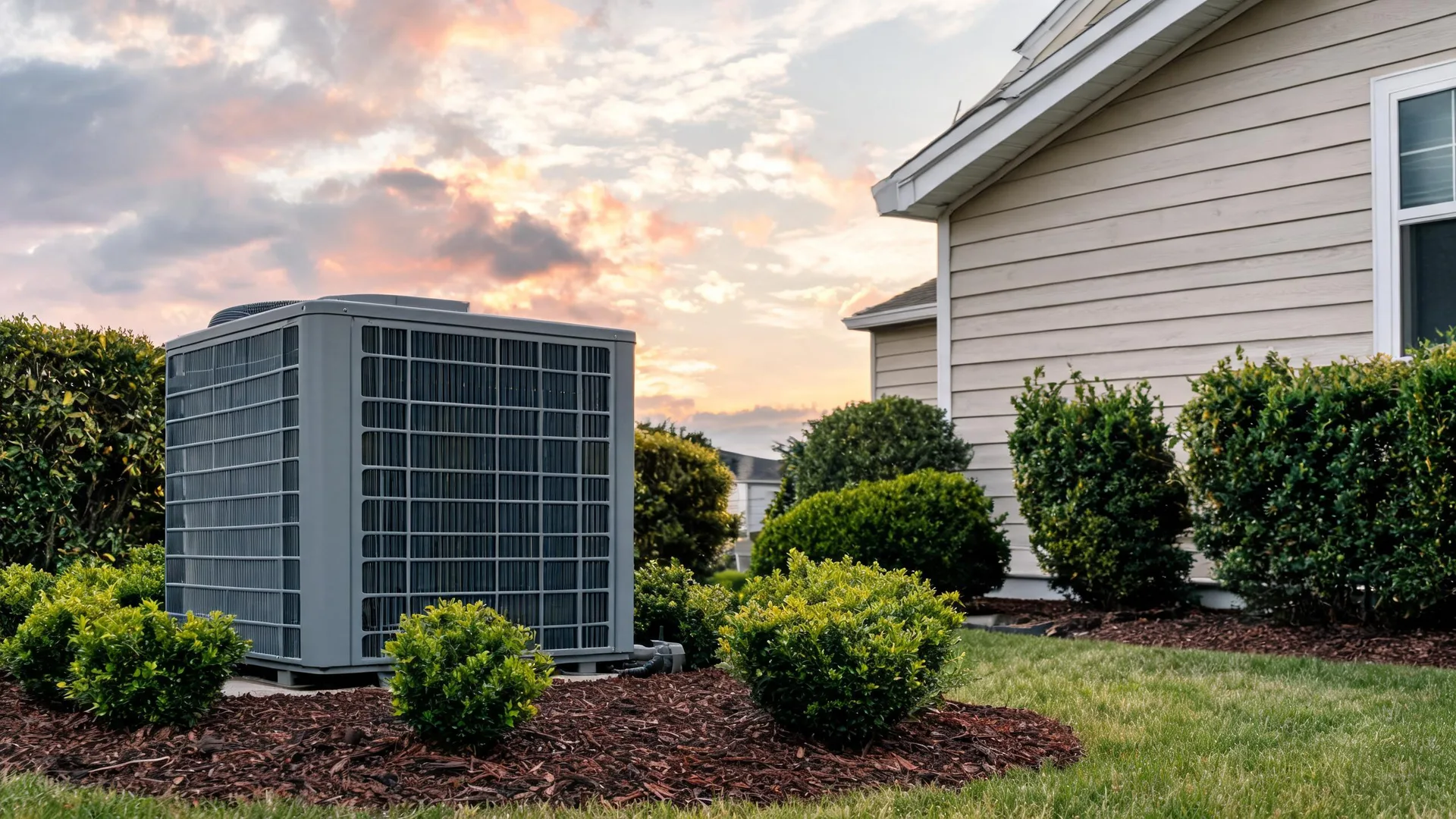
An outdoor air conditioning condenser unit installed beside the exterior wall of a blue vinyl-sided house at sunset.

Going above the federal minimum saves little here, about $20 a year.

  • A higher-efficiency unit$390 a year
  • A new unit at the federal minimum, 14.3 SEER2$410 a year

Estimates for a typical Barnwell County home, from EIA household energy data, South Carolina fuel prices and NOAA climate normals. Your home will differ.

Installation day starts with the old system coming out, the indoor coil, the outdoor unit, and the line set if it isn't being reused. The new outdoor unit goes on a pad and gets leveled, since a unit sitting crooked wears its compressor mounts faster than it should. Line sets get run and connected, then pressure tested before any refrigerant goes in, because a leak caught at that stage is simple and a leak caught after charging means pulling the charge back out to fix it. Once the lines hold pressure, the system gets charged to the manufacturer's spec for that length of line, not just topped off until the air feels cold. A contractor worth hiring checks airflow across the coil and the temperature split at the vents before calling the job done. That check is what tells you the system is actually matched to your ductwork, not just hooked up and running.