





Overhead view of a gray residential air conditioning condenser unit mounted on a concrete pad beside a house with asphalt shingle roofing.

AC Installation in Bennettsville, SC

Tell us about the job

Takes about a minute. No obligation.

New system or replacementCentral ACMarlboro County, SC
Step 1 of 2

What ZIP code is the job in?

Electricity in South Carolina ran 14.23 cents per kilowatthour in 2024. Your air conditioner is one of the biggest draws on your power bill, so the efficiency rating you choose matters more here than it would somewhere with cheaper power. A unit that runs less to hold the same temperature puts less of that rate on your bill, month after month. When you're comparing systems, look at the efficiency rating next to the price. The cheaper unit up front can cost more to run every summer it's installed.

5 months
May through September, your air conditioner is on duty
90°F
the average summer afternoon it cools against
4 hail events
in ten years, and hail bends the fins on outdoor coils
13.4 SEER2
the federal minimum any new unit must meet
Isometric illustration of a cutaway single-story house showing attic ductwork, an indoor air handler, interior rooms with furniture, and an outdoor condenser unit connected by lines, on a white background.
Your air conditioner works hardest from June through September.

NOAA nClimDiv, 1991–2020 normals

Cooling in Bennettsville runs May through September.

Install before April ends and the new system is ready on day one, not halfway into the first hot stretch.

Marlboro County sees storms most places don't, and the power follows them down

83 severe weather events from 2015 to 2024
45% of homes statewide lost power a day or more in 2024
69 damaging wind events from 2015 to 2024

Marlboro County falls in zone 3A, which puts it in the Southeast region for federal efficiency rules. Split-system central air installed here has to hit 14.3 SEER2 for most residential sizes, higher than the 13.4 SEER2 floor manufacturers meet nationally. A unit built to the national minimum isn't automatically legal to install here. Whatever goes in has to clear the regional number. That's one more thing to check against the spec sheet when you're comparing units, not just the price tag.

Most homes here already run on electricity, and that is what your AC needs too

Electricity heats 74.9% of homes in Marlboro County, more than any other fuel. Central air runs on electricity too, so in most houses here the new system ties into power that is already run to the house. That is one less thing to plan for when you install. Gas shows up in some homes, mostly for heat, but cooling here is almost always electric.

Find a contractor
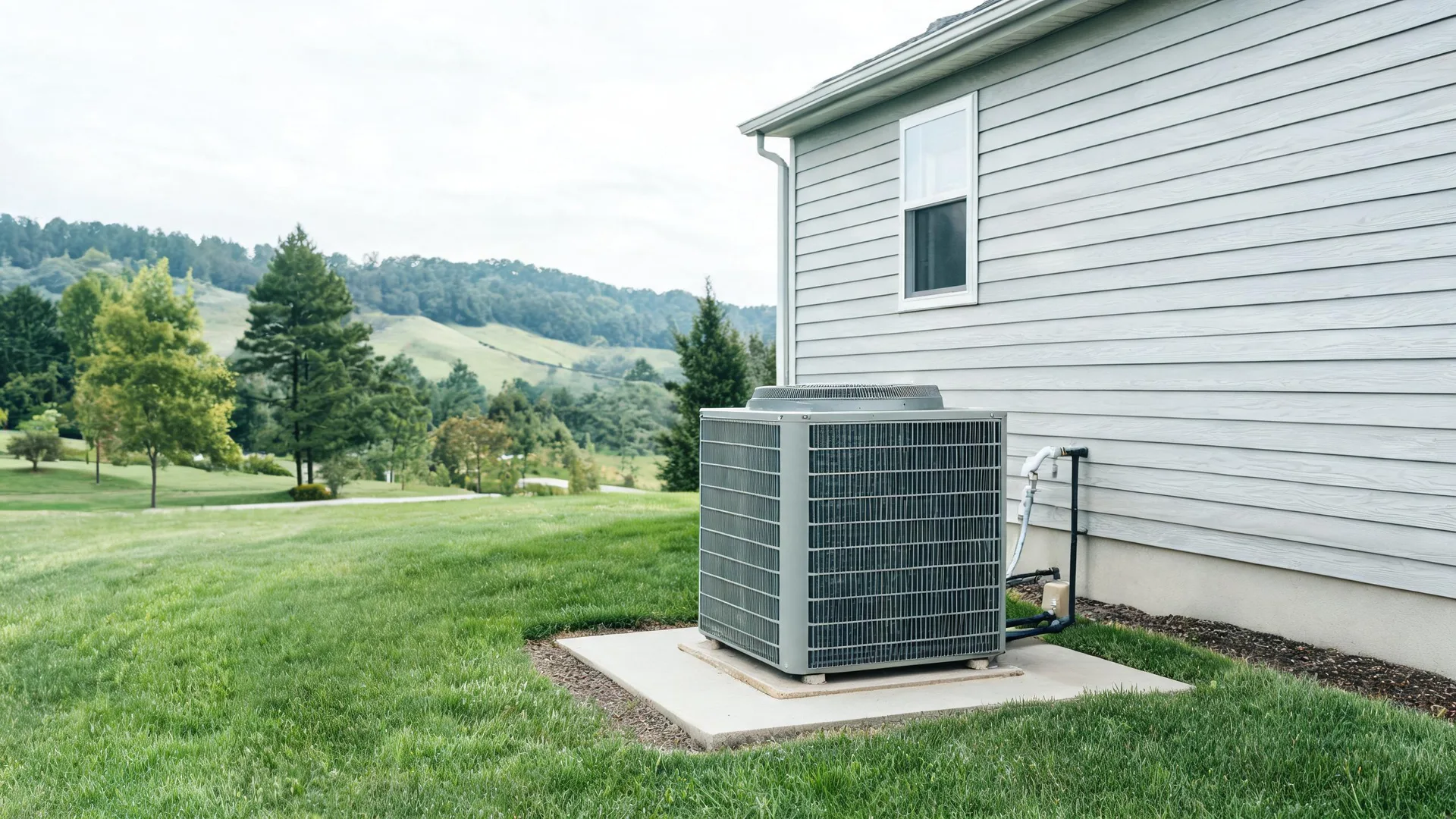
A gray residential air conditioning condenser unit mounted on a concrete pad outdoors, surrounded by green grass under a partly cloudy blue sky.

Five months of real work, every year

Your AC will run about five months a year here, May through September, with afternoon highs averaging 90°F through the peak of summer. That's a long stretch of real load, not occasional use. The compressor, the fan motor, the capacitor all put in work most of that time, not just on the hottest days. A system sized right for your house handles that stretch without strain. One that's undersized or oversized for the space will show wear sooner, because it's either running constantly to keep up or short-cycling on and off. Either way, the parts feel it before they would somewhere milder.

The old equipment gets disconnected and hauled off

Taking out the condenser and air handler is part of the job, not something left for the homeowner to arrange separately. The refrigerant in the old lines gets recovered first, since it can't be vented into the air. Once that's done, the old pad, line set and wiring come out along with the unit.

Old parts left behind can hold the new system back

A new condenser paired with an old coil or an old line set won't run the way it's rated to. Mismatched parts put strain on the new equipment and can cause problems that look like a bad install when the real cause is older parts left in the system. Matching everything to the new unit is what lets it run the way it's designed to.

Aerial view of a gray outdoor air conditioning condenser unit mounted on a concrete pad next to a house with vinyl siding.

Going above the federal minimum saves little here, about $20 a year.

  • A higher-efficiency unit$360 a year
  • A new unit at the federal minimum, 14.3 SEER2$380 a year

Estimates for a typical Marlboro County home, from EIA household energy data, South Carolina fuel prices and NOAA climate normals. Your home will differ.

Install day starts with a load calculation, not a wrench. The crew confirms the new system matches the house before anything gets disconnected. Once that's settled, the new pad goes down and the condenser gets set outside, then the air handler or coil gets positioned inside. Line sets are run or replaced and the connections get brazed. Before any refrigerant goes in, the system gets evacuated to pull out air and moisture. That step matters even though it's invisible once the job is done, because moisture left in the lines causes problems months later, not on day one. After it's charged, refrigerant levels get checked against the manufacturer's spec. Then comes the test. Airflow at every vent, the thermostat talking to the system, and a check that it cycles on and off the way it's supposed to.