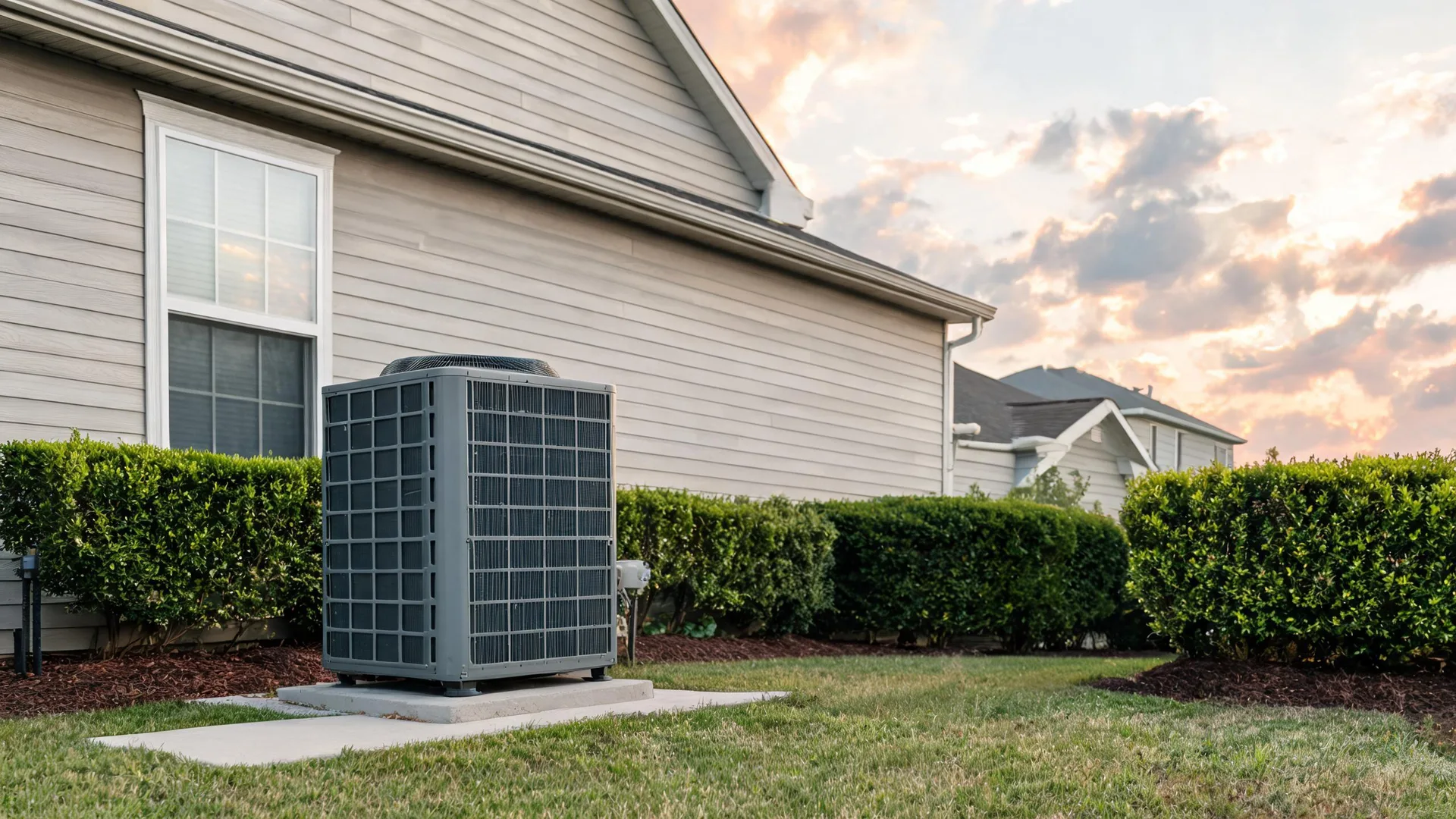
An outdoor air conditioning condenser unit positioned on a concrete pad next to a blue-sided house, surrounded by green shrubs and flowering hydrangeas at sunset.

AC Installation in Charleston, SC

Tell us about the job

Takes about a minute. No obligation.

New system or replacementCentral ACCharleston County, SC
Step 1 of 2

What ZIP code is the job in?

Bigger isn't better

An oversized air conditioner cools the air fast and shuts off before it pulls the moisture out of it. The house ends up cold and clammy at the same time, and the compressor spends its life cycling on and off instead of running steady. That short cycling wears on the parts that start the compressor each time it kicks on.


The size comes from a room by room load calculation

A contractor works out the right size by measuring the house. Window area and direction matter, so does insulation, ceiling height, how many floors, and what sits above and below each room. That calculation is what tells them the correct size, not the size of the unit being replaced. An old system may have been wrong from the day it went in.

6 months
May through October, your air conditioner is on duty
89°F
the average summer afternoon it cools against
61 hail events
in ten years, and hail bends the fins on outdoor coils
13.4 SEER2
the federal minimum any new unit must meet
Isometric cutaway illustration of a house showing interior ductwork, an air handler and furnace unit, and an outdoor condenser connected by lines outside the wall.
Your air conditioner works hardest from June through September.

NOAA nClimDiv, 1991–2020 normals

Electricity heats 75.9% of homes in Charleston County.

Most AC installs here are adding a heat pump or coil to match a home already wired for electric heat, not fitting a system to a gas furnace.

At 14.23 cents a kilowatt-hour, running at 89 degrees all summer adds up fast

Power costs 14.23 cents a kWh statewide
Cooling runs May through October
Summer afternoons average 89°F
Have it in before MayHomes here run the AC May through October

Ask the contractor what the compressor is built to run on, not just the SEER2 number on the box. A system sized off a room by room load calculation is the one that holds up when it's running day after day through June, July and August, not just on the hottest afternoon. The storm history here matters too. A condenser bolted to a weak pad or wired without a disconnect close by is the first thing to fail when wind and debris come through, and this county sees that most years. Ask how the unit will be mounted and protected outside, not just what's inside it.

Any new system has to meet 14.3 SEER2 here

Charleston falls under the Southeast's regional rule, not just the national one. A split-system air conditioner installed here has to hit 14.3 SEER2 below 45,000 Btu/h, higher than the 13.4 SEER2 the rest of the country allows. That narrows what a contractor can install. A federal tax credit is available on top of that for qualifying equipment.

Find a contractor
A man in a cap, dark long-sleeve shirt and brown work pants, seen from behind, steps up onto a porch toward a dark green door while carrying a canvas tool bag.
An outdoor air conditioning condenser unit mounted on a concrete pad beside a house, with electrical conduit running to a wall-mounted disconnect box.

This one doesn't get an off season

Six months of cooling here means the system logs more hours than a warranty number on a spec sheet suggests. A unit built for a milder state is counting on months of rest it won't get in Charleston. Ask what the compressor and coil are rated for, not just the SEER2 number, and don't assume the cheapest bid is sized or built for that kind of runtime.

Ask what the warranty actually covers

Most warranties split the compressor from the rest of the parts, and some only pay for the part itself, not the labor to put it in. A contractor should be able to tell you flat out what's covered and for how long, without pulling out paperwork to check.

Get the sound rating before you buy

A condenser sits outside, often near a patio or a bedroom window, and some run a lot quieter than others at the same size and efficiency. If you don't ask, you find out how loud it is after it's installed and running.

Overhead view of an outdoor AC condenser unit on a concrete pad next to a house with a dark shingle roof.

Going above the federal minimum saves little here, about $20 a year.

  • A higher-efficiency unit$430 a year
  • A new unit at the federal minimum, 14.3 SEER2$450 a year

Estimates for a typical Charleston County home, from EIA household energy data, South Carolina fuel prices and NOAA climate normals. Your home will differ.

Installation day starts with the old equipment coming out, not the new going in. The condenser outside gets disconnected and hauled off, and if there's an indoor coil or air handler being swapped, that comes apart too. Copper line sets usually get replaced rather than reused, since old lines are sized for the old equipment and may hold contaminants that would damage a new compressor. Ductwork gets checked at this point, and any connections that don't seal right get sealed before the new coil goes in, since a leaky duct undoes a lot of what the new system is supposed to do. The refrigerant lines get evacuated with a vacuum pump to pull out air and moisture before the system is charged, and the charge itself gets weighed in or checked against the manufacturer's numbers rather than eyeballed. Once it's running, a contractor checks static pressure, airflow at the vents, and the temperature split between the air going in and the air coming out, because those numbers say whether it's installed right, not just whether it turns on.