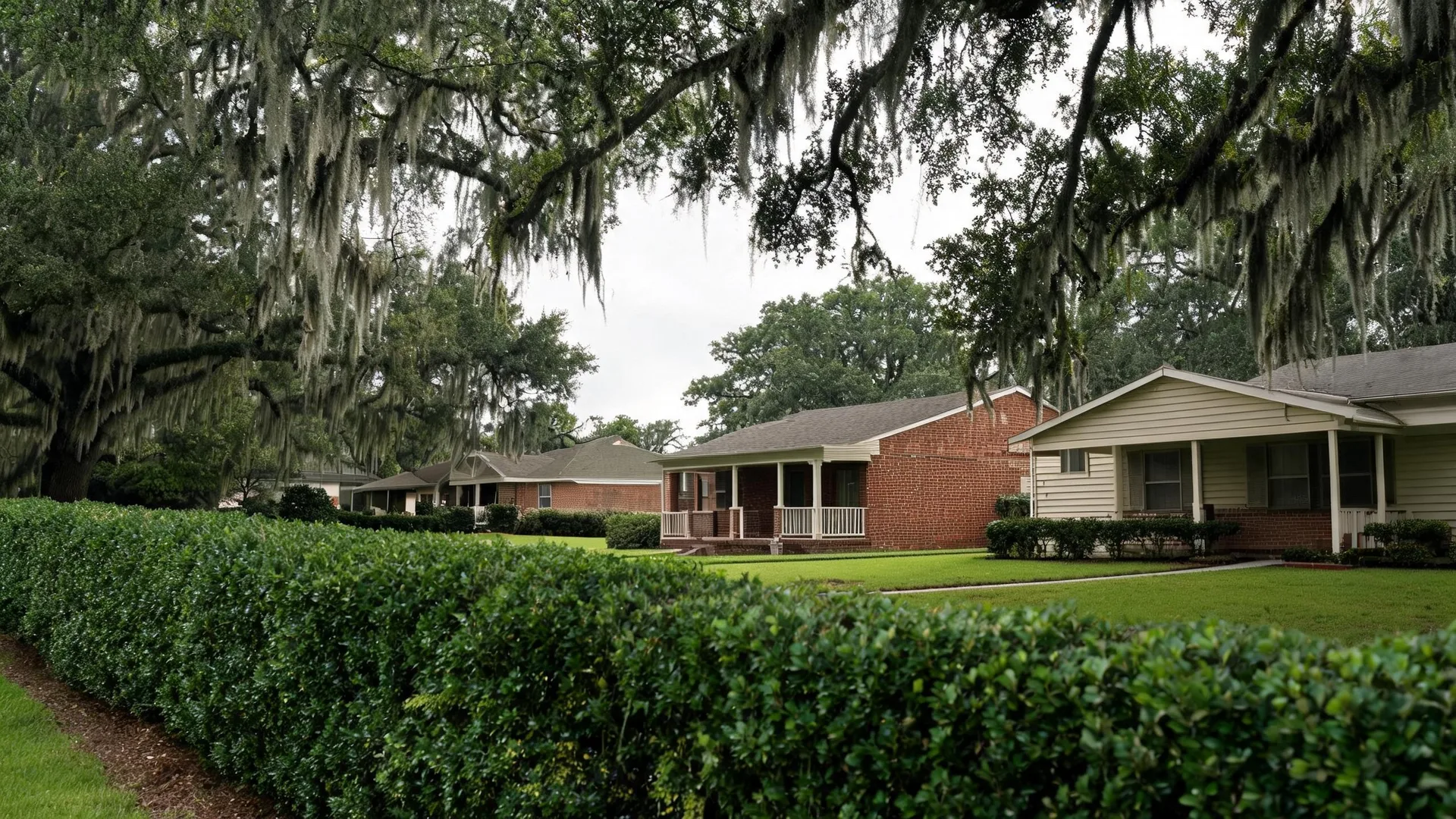





Single-story brick and siding houses with lawns behind a long trimmed hedge, framed by large oak branches draped with Spanish moss under an overcast sky.

AC Installation in Chester, SC

Tell us about the job

Takes about a minute. No obligation.

New system or replacementCentral ACChester County, SC
Step 1 of 2

What ZIP code is the job in?

Electricity in South Carolina runs 14.23 cents per kilowatt-hour. An air conditioner that's sized wrong or aging out will pull more of it every time it cycles on, and in Chester that cycle runs for months at a stretch. A unit's SEER2 rating tells you how much cooling you get for the power you put in, not how big a system you need, so it's worth asking your contractor to size the unit to your house, not just swap in what was there before. Get that match right at installation and it's the thing that keeps paying you back, bill after bill.

5 months
May through September, your air conditioner is on duty
89°F
the average summer afternoon it cools against
8 hail events
in ten years, and hail bends the fins on outdoor coils
13.4 SEER2
the federal minimum any new unit must meet
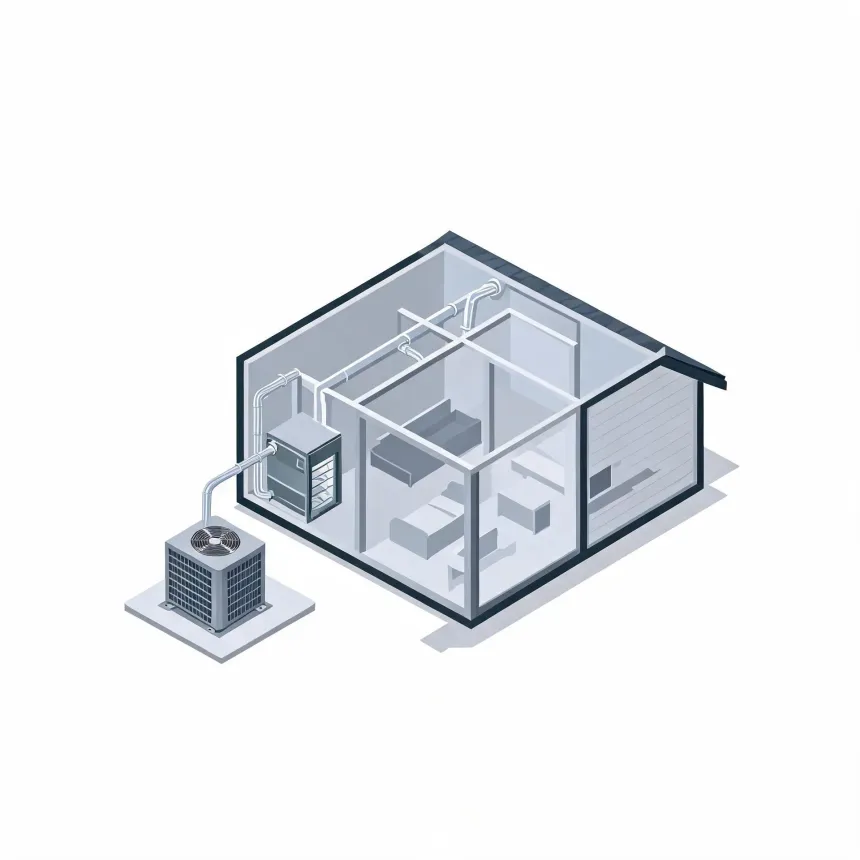
Isometric grayscale illustration of a cutaway house showing interior rooms, ductwork, an indoor air handler, and an outdoor condenser unit on a pad connected by lines.
Your air conditioner works hardest from June through September.

NOAA nClimDiv, 1991–2020 normals

Chester County logged 44 damaging wind events and 8 hail events in the last ten years.

The outdoor unit sits outside through all of it, so where it goes and what shields it matters at installation.

Ask for a load calculation before you ask for a price

Power costs 14.23 cents a kWh statewide
Cooling runs May through September
Summer afternoons average 89°F
What installation has to fitHalf the homes in Chester County were built in 1980 or earlier.

Five months of the year, May through September, the system here is running. June through August the afternoon high averages 89°F, so most of those afternoons it's working, not idling. A system that's undersized will run flat out trying to catch up and still lose ground on the worst days. One that's oversized will cool the air fast and shut off before it pulls the moisture out, so the house feels clammy even at the temperature you set. Either way you'd feel it most of the summer, not just once in a while.

Electric cooling fits most homes in Chester County

Most homes in Chester County heat with electricity, and central air conditioners run on electricity too, so an AC installation here usually ties into a system already built for it. That makes a straight swap the simpler job for most homeowners. It's still worth having the new unit sized to your house rather than matched to what's already there.

Find a contractor
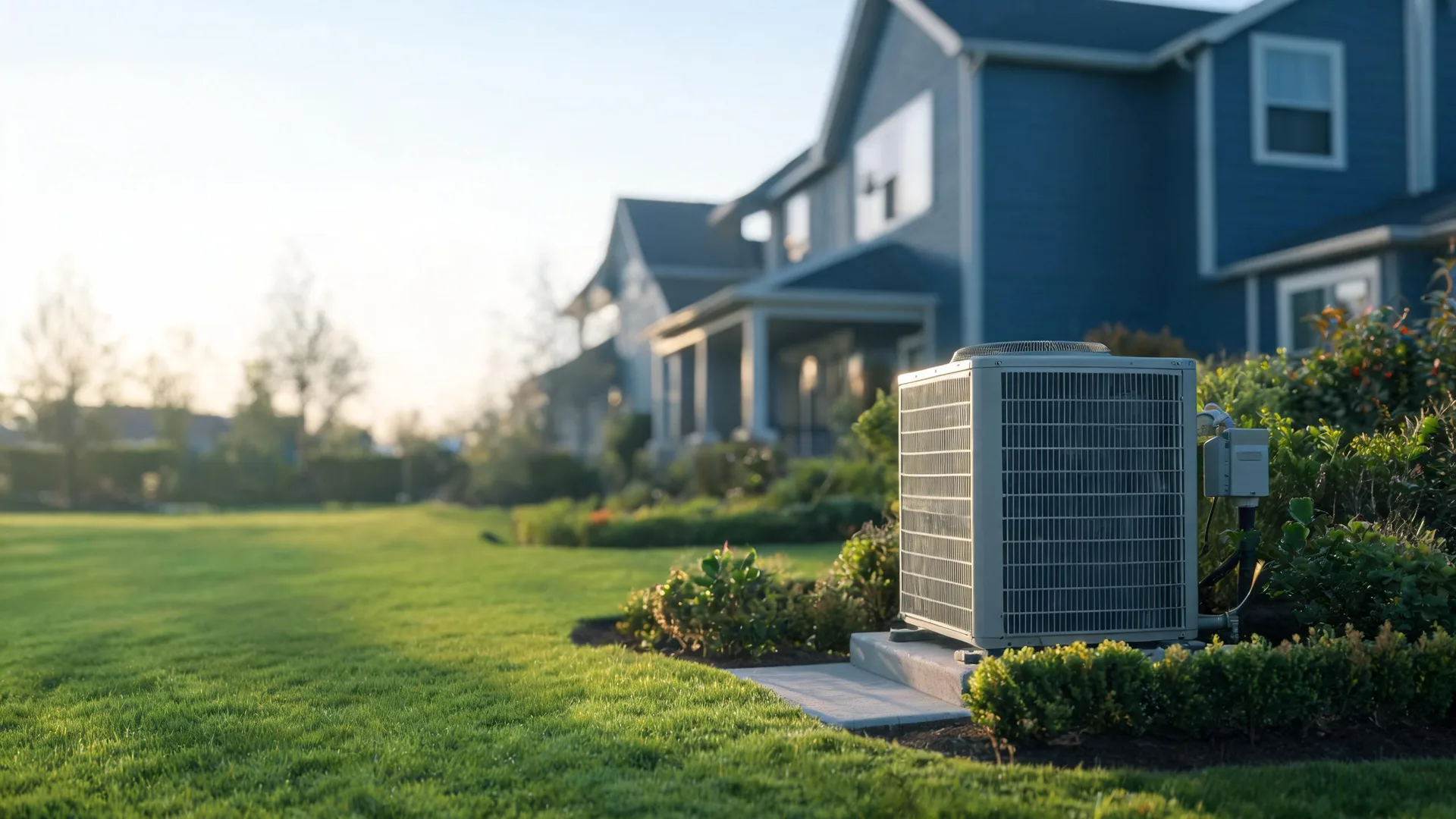
An outdoor air conditioning condenser unit mounted on a concrete pad surrounded by gravel, photographed against a partly cloudy blue sky.

Get the size right once, not every June

Five months of cooling a year is enough for sizing mistakes to show up fast and stay. Ask for a load calculation, not a guess based on the old unit's tonnage. A contractor who sizes to your house, your windows, your insulation, will land on a number that may not match what's out there now. That's the point of doing it.

Ask what the warranty actually covers

Most manufacturer warranties cover parts but not the labor to install them, and that gap is where a surprise bill shows up years later. Ask whether the warranty is registered in your name and what voids it. A unit run without regular filter changes or with a mismatched coil can void coverage even if the part itself failed on its own.

Ask what happens to the old unit and lines

If the system being replaced used a different refrigerant than the new one, the old line set usually can't be reused as is. Ask whether your contractor is reusing the existing lines or running new ones, and why. Reused lines that aren't flushed properly can carry old oil and debris into a new compressor and shorten its life.

Aerial view of a square outdoor air conditioning condenser unit on a concrete pad beside a house wall with a sliding glass door.

Going above the federal minimum saves little here, about $20 a year.

  • A higher-efficiency unit$320 a year
  • A new unit at the federal minimum, 14.3 SEER2$340 a year

Estimates for a typical Chester County home, from EIA household energy data, South Carolina fuel prices and NOAA climate normals. Your home will differ.

Installation starts with the old system coming out, not the new one going in. The outdoor unit, the indoor coil, and the line set between them all come out together, and if the ductwork needs changes to match the new unit's airflow, that gets done before anything new is set. The new outdoor unit gets leveled on its pad, the indoor coil gets matched to it, and the line set gets run, flushed, and pressure tested before any refrigerant goes in. A contractor will pull a vacuum on the lines to clear out air and moisture, because either one left behind will damage the compressor over time. Once the system runs, it gets checked against the manufacturer's specs for refrigerant charge and airflow, not just switched on and left. That last check is what separates a system that's installed from one that's just connected.