A single-story brick house with a dark hipped roof and covered porch, seen from a low angle across a lawn with blurred grass in the foreground, framed by pine trees and a large spreading oak on the right.

AC Installation in Easley, SC

Tell us about the job

Takes about a minute. No obligation.

New system or replacementCentral ACPickens County, SC
Step 1 of 2

What ZIP code is the job in?

Weather here is hard on outdoor units

Pickens County logged 69 damaging wind events and 31 hail events over the past decade, along with 11 tornadoes. A new condenser sits outside year round, so where the installer places it and what shields it from wind-blown debris is worth asking about before the job starts.


Plan for the power going out

Almost half of South Carolina households lost power for 24 hours or more in 2024. A new AC system will not run without electricity, and neither will most water heaters. If backup power matters to your household, raise it during installation, not after the first outage.

5 months
May through September, your air conditioner is on duty
87°F
the average summer afternoon it cools against
31 hail events
in ten years, and hail bends the fins on outdoor coils
13.4 SEER2
the federal minimum any new unit must meet
Isometric line illustration of a cutaway single-story house showing interior rooms, ducted air handler, ceiling ductwork, and an outdoor condenser unit connected by refrigerant lines.
Your air conditioner works hardest from June through August.

NOAA nClimDiv, 1991–2020 normals

Most homes in Pickens County run on electric heat, 60.5% of them.

A new AC system here usually shares its electrical setup with the furnace or heat pump, so the installer needs to know what that setup can handle.

A standard system handles what this county sees

Cooling runs May through September
Summer afternoons average 87°F
69 damaging wind events from 2015 to 2024

Pickens County sits in climate zone 3A, warm with long summers and a short mild winter. Any new split system below 45,000 Btu/h installed here has to meet 14.3 SEER2, a step above the national minimum. That's set by where you live, not by what's on a brochure, so every unit an installer quotes you here already clears a higher bar than one sold in most of the country. Larger systems have their own regional minimum, slightly lower than the small-system one. Either way, the climate here is what decides the floor, not the salesman.

The right size, nothing more, is the right call here

A properly sized system at the standard efficiency rating is built to run on ordinary power costs, and at 14.23 cents per kilowatt-hour, South Carolina's rates give no reason to pay more for a bigger or fancier unit than this job calls for. Get the sizing right and the rest takes care of itself.

Find a contractor
A man in a dark long-sleeve shirt, cap, and tan work pants walks up wooden steps toward a dark green front door, carrying a canvas tool bag with hand tools, beside a potted shrub.
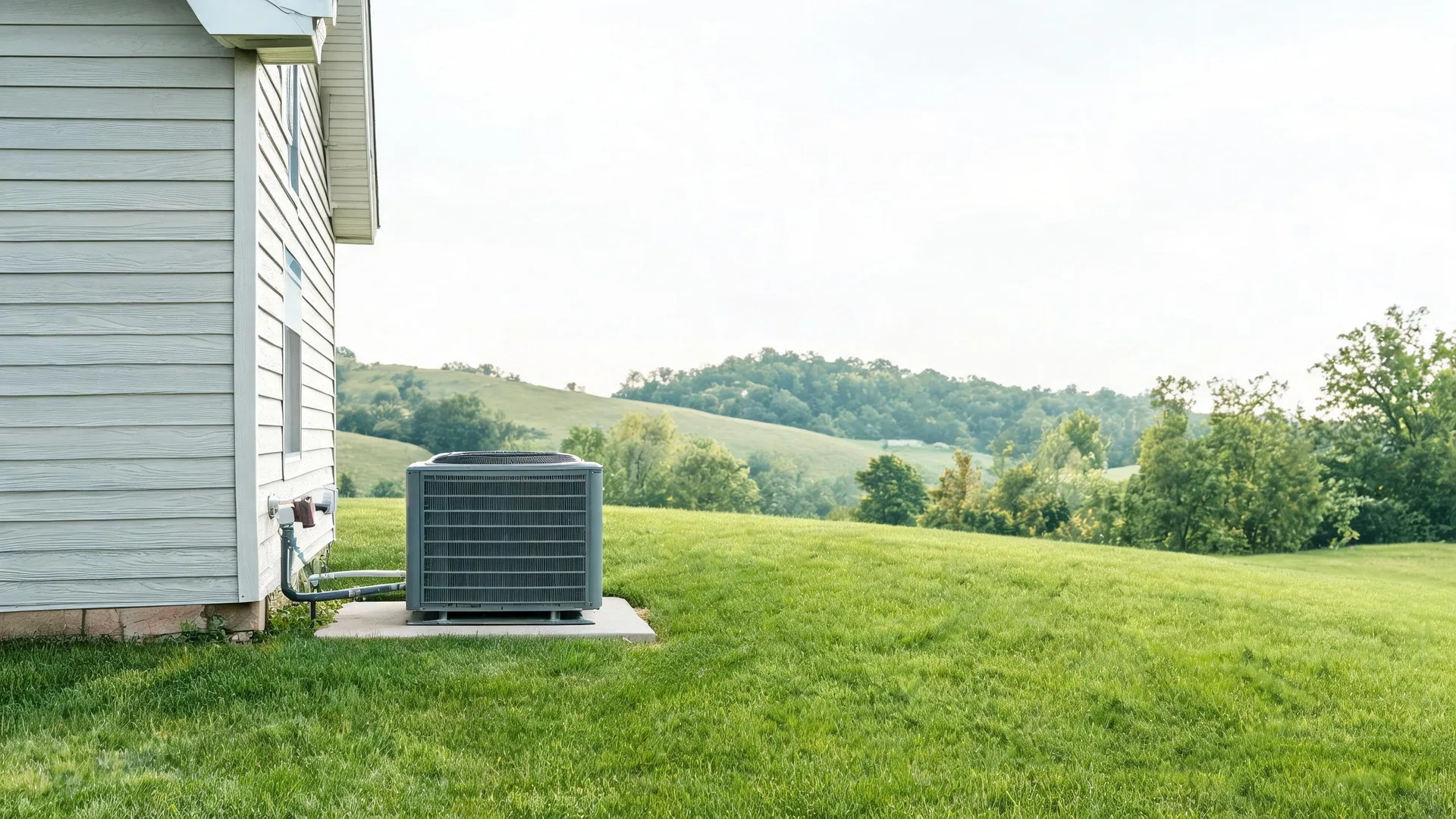
A gray cylindrical air conditioning condenser unit mounted on a concrete pad next to a light-colored vinyl-sided house exterior.

Put it in before May, not during

Cooling runs May through September here, five months a year. April is the month before that starts, and it's the better time to put in a new system. An installer working in April isn't racing the first hot week or a breakdown. There's time to size the job right, check what the electrical setup can carry, and place the condenser where wind-blown debris is less likely to reach it. Wait until the season's underway and those same decisions get made in a hurry, sometimes with the old system already down.

The old condenser and coil come out

An installer disconnects the refrigerant lines, pulls the old condenser from its pad, and takes the indoor coil out of the plenum above or beside the furnace. The refrigerant gets recovered into a tank, not released. None of it goes into the new system, even if parts look compatible.

The line set usually gets replaced too

Old refrigerant lines were sized and sealed for the old equipment, and reusing them risks leaks or the wrong charge in the new system. Most installers run new line set rather than tie a new condenser to old copper. Ask whether yours plans to reuse it and why, if that's the quote you get.

An overhead view of a residential air conditioning condenser unit mounted on a concrete pad next to a house with vinyl siding.

Going above the federal minimum saves little here, about $10 a year.

  • A higher-efficiency unit$270 a year
  • A new unit at the federal minimum, 14.3 SEER2$280 a year

Estimates for a typical Pickens County home, from EIA household energy data, South Carolina fuel prices and NOAA climate normals. Your home will differ.

Installation day starts with the old system coming out, then the new one goes in, and most of the day sits in between in steps that don't show much. The indoor coil has to seat right in the plenum, with a solid seal around it, or the system pulls air from the attic or crawlspace instead of the room. Line sets get connected, pressure tested, then pulled into a vacuum to clear out moisture and air before any refrigerant goes in. That vacuum step takes time, and skipping it is how a new system ends up with a leak or a bad charge in its first year. Once the charge is in, the installer runs the system, checks the temperature split at the vents, and listens for anything that shouldn't be there. A new thermostat usually gets wired and set up near the end, once the rest is already proven to work.