





Overhead view of an outdoor AC condenser unit on a concrete pad next to a house with a dark shingle roof.

AC Installation in Edgefield, SC

Tell us about the job

Takes about a minute. No obligation.

New system or replacementCentral ACEdgefield County, SC
Step 1 of 2

What ZIP code is the job in?

Electricity in South Carolina ran 14.23 cents per kilowatt-hour in 2024. A new AC unit runs on that rate for as long as it sits in your house, so the efficiency rating on the one you pick matters more here than somewhere power is cheap. A SEER2 number tells you how much cooling you get for the electricity you put in, not how big a system you need. Two units can cool the same house and cost noticeably different amounts to run every month, and the difference shows up on every bill, all season.

5 months
May through September, your air conditioner is on duty
91°F
the average summer afternoon it cools against
19 hail events
in ten years, and hail bends the fins on outdoor coils
13.4 SEER2
the federal minimum any new unit must meet
Isometric line illustration of a cutaway house showing interior rooms, a furnace or air handler with ductwork, and an outdoor condenser unit beside the building.
Your air conditioner works hardest from June through September.

NOAA nClimDiv, 1991–2020 normals

Half the homes in Edgefield County were built in 1988 or earlier, half in 1988 or later.

A standard installation fits either one, sized to the house you have, not the year it was built.

April is the month to put a new system in, before May asks it to run

Cooling runs May through September
Climate zone 3A
Power costs 14.23 cents a kWh statewide

Electricity heats 73.2% of homes in Edgefield County, more than any other fuel. Central air here usually shares ductwork with an electric furnace or heat pump, so a new AC unit ties into vents and a return already built for electric. Utility gas heats 13.8% of homes, and bottled or LP gas heats 9.0%. If your furnace runs on gas or propane, the installer will want to check how the new unit works alongside it rather than assume the standard setup. For most homes here, replacing like for like is the simpler path.

Five months of 91 degree afternoons is what this system has to handle

Cooling runs May through September here, five months, and afternoons in June, July and August average 91°F. That's the load a new system carries every one of those months, not just a handful of hot days. Sizing it right matters more under that kind of heat.

Find a contractor
An outdoor air conditioning condenser unit mounted on a concrete pad beside a house, with electrical conduit running to a wall-mounted disconnect box.

Five months a year, every year, from the day it's installed

Watch this system across a full day here and most of its hours fall in that 91 degree range, not above it, not below it. A unit sized for an average day will run flat out on most days, not just a few. That shortens the life of the parts carrying the load, the compressor most of all. Get the sizing and the installation right at the start, since this one has five months a year to prove it was done correctly.

The old unit comes out first

A straight swap means disconnecting the refrigerant lines, pulling the old condenser, and setting the new one on the pad. If the line set or the pad is damaged or undersized for the new unit, that gets addressed before the new system goes in, not after.

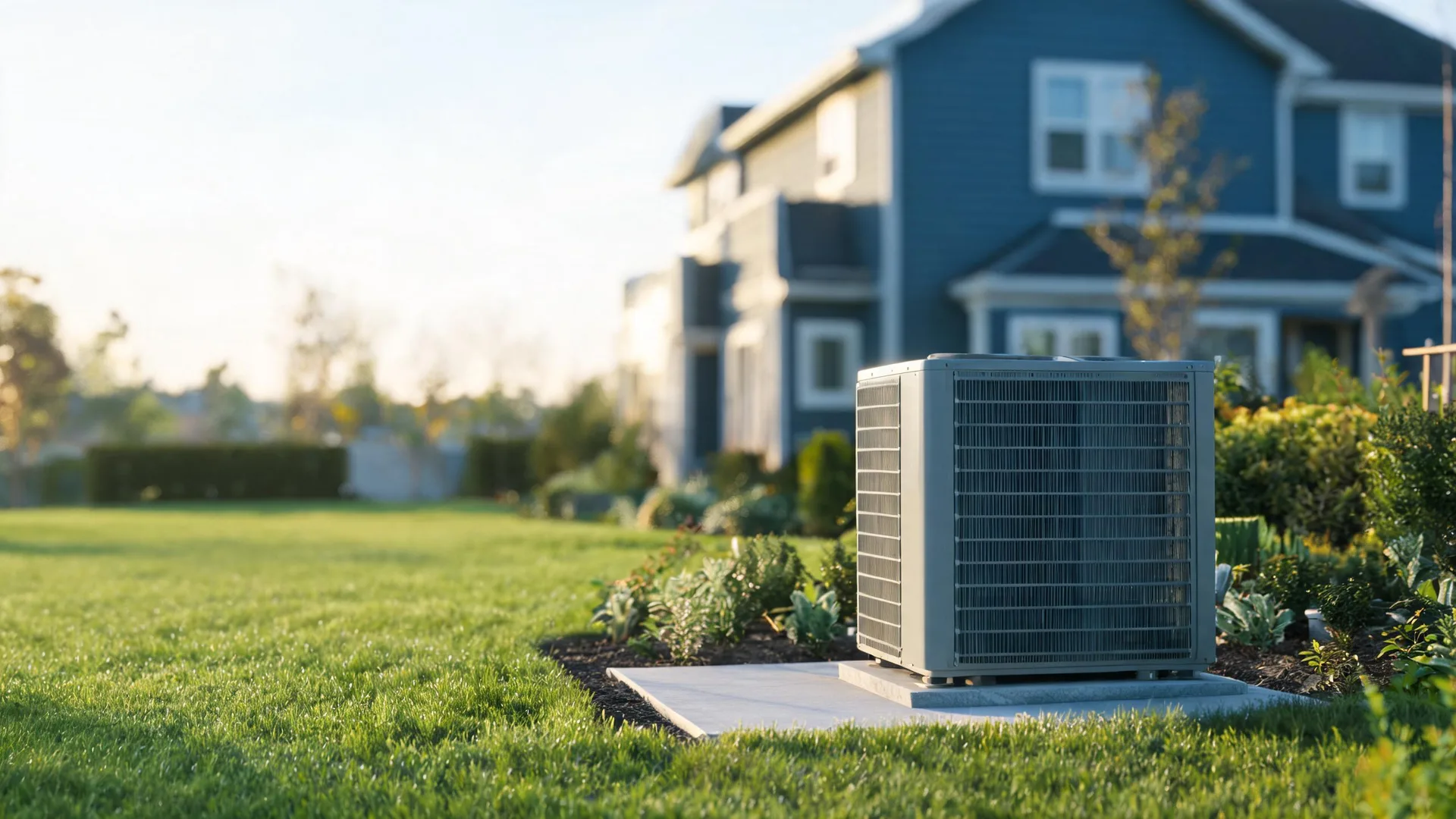
The refrigerant has to be recovered, not released

An old system still holds refrigerant, and it has to be pulled into a recovery tank with proper equipment rather than vented into the air. That work is part of removal, and it's one more reason this isn't a job for swapping parts yourself.

Aerial view of a gray outdoor air conditioning condenser unit mounted on a concrete pad next to a house with vinyl siding.

A higher-efficiency unit would save about $30 a year to run in Edgefield County compared with a new unit at the federal minimum.

  • A higher-efficiency unit$370 a year
  • A new unit at the federal minimum, 14.3 SEER2$400 a year

Estimates for a typical Edgefield County home, from EIA household energy data, South Carolina fuel prices and NOAA climate normals. Your home will differ.

Once the old condenser is out, the installer sets the new one on the pad and runs new line set or flushes the old lines before connecting them. The system gets evacuated with a vacuum pump to pull out air and moisture, since either one left behind will damage the compressor. Refrigerant goes in to the charge the manufacturer specifies, checked against the line length and outdoor temperature, not just filled until a gauge looks right. Then the installer runs the system, checks the temperature split between the return air and the supply air, and listens for anything that shouldn't be there. The thermostat gets wired in and tested last, after the system has proven it cools.