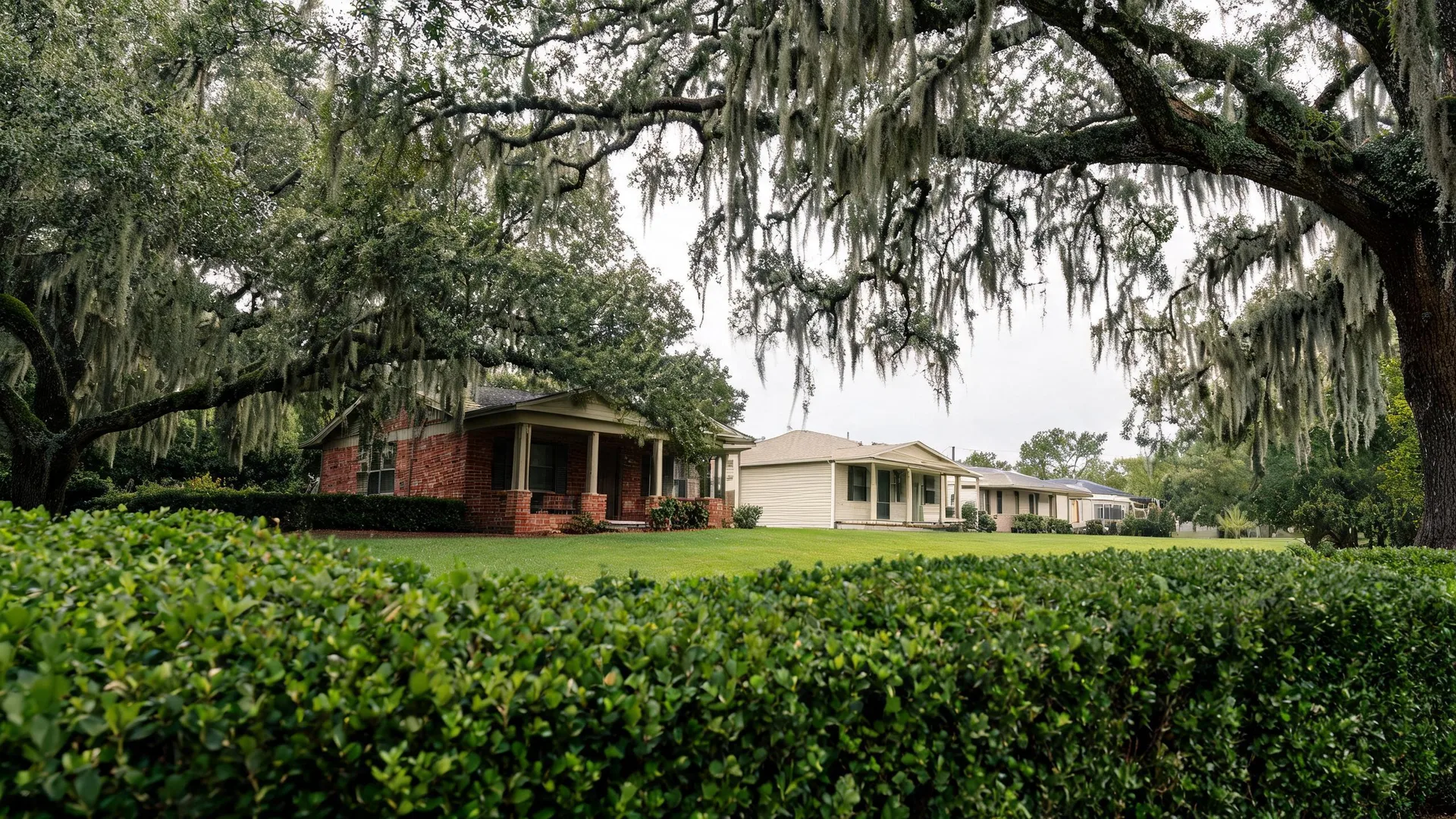
A single-story brick house with a covered porch sits on a mown lawn behind a long trimmed hedge, framed by large oak branches draped with hanging moss, with additional light-colored houses in the background under an overcast sky.

AC Installation in Gaffney, SC

Tell us about the job

Takes about a minute. No obligation.

New system or replacementCentral ACCherokee County, SC
Step 1 of 2

What ZIP code is the job in?

Storms are routine here, not rare

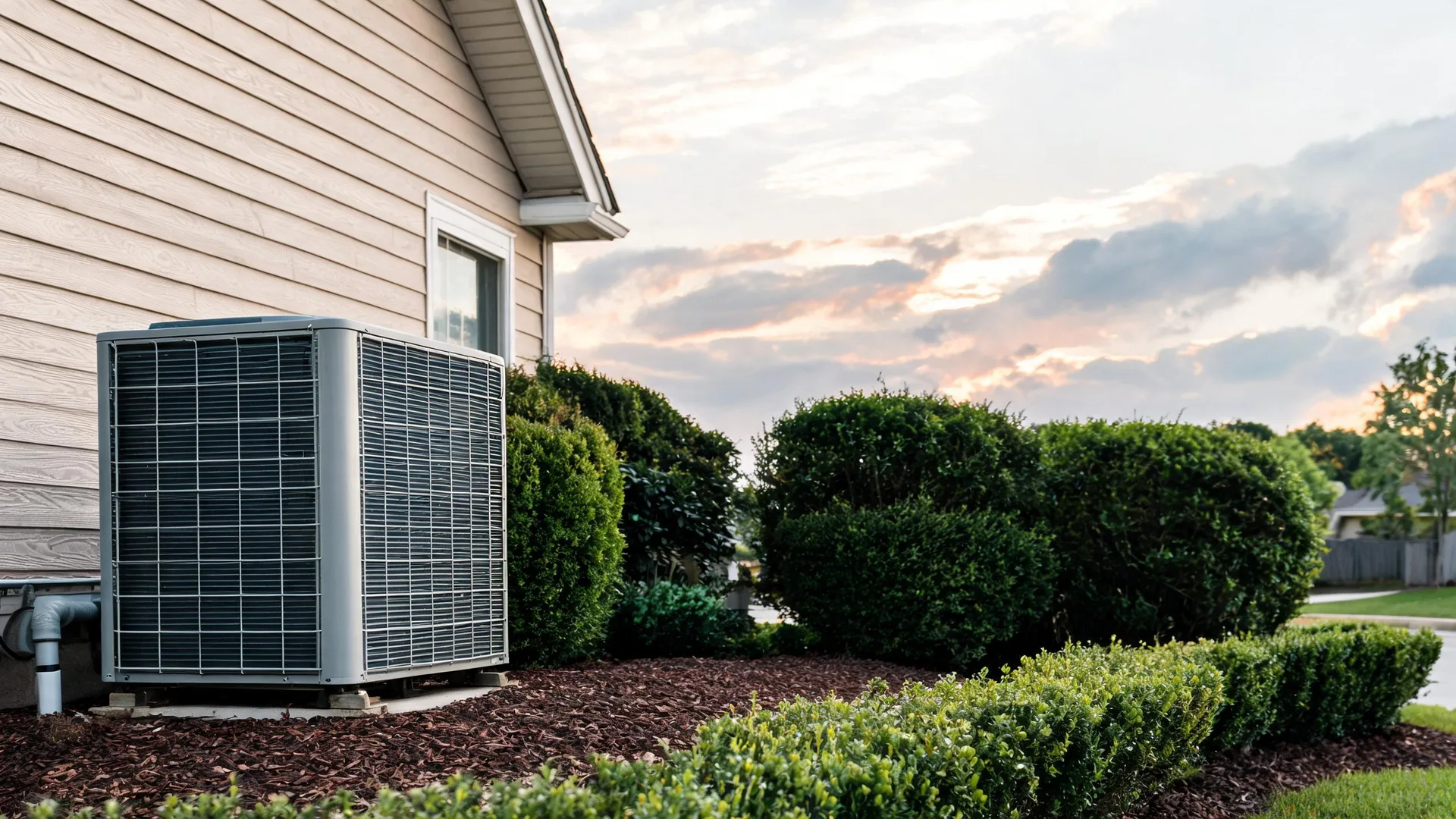
Cherokee County logged 80 severe weather events between 2015 and 2024, with damaging wind the most common by far. A new outdoor unit needs a spot clear of falling branches and away from where water runs off the roof.


The power doesn't always come right back

Almost half of South Carolina households went at least a full day without power in 2024. Ask your contractor about surge protection at the install, and what backup options make sense if the power stays out.

5 months
May through September, your air conditioner is on duty
88°F
the average summer afternoon it cools against
18 hail events
in ten years, and hail bends the fins on outdoor coils
13.4 SEER2
the federal minimum any new unit must meet
Isometric cutaway illustration of a single-story house showing interior rooms with furniture, overhead ductwork, an indoor air handler unit, and an outdoor condenser unit connected by lines at the side of the building.
Your air conditioner works hardest from June through August.

NOAA nClimDiv, 1991–2020 normals

AC here runs May through September, five months straight.

April is the month to get it installed, before the first hot stretch puts it to work.

A standard system, sized and rated normally, is right for Gaffney

Half the homes here were built by 1984
Cooling runs May through September
Summer afternoons average 88°F

Gaffney sits in climate zone 3A, warm with hot summers and a short mild winter. Any new split system below 45,000 Btu/h installed here has to hit at least 14.3 SEER2, higher than the national minimum, because the Southeast sets its own floor. A bigger system needs at least 13.8 SEER2. That rules out the lower-rated units sold elsewhere in the country. A federal tax credit is available for qualifying high-efficiency equipment, worth asking your contractor about when comparing systems.

A standard system, installed with the right spot and the right protection

Five months of cooling and summer afternoons near 88°F don't call for anything beyond a standard system at the SEER2 ratings already required here. The sizing and ratings aren't in question. What's worth settling now is where the unit sits and how it holds up when the power goes out.

Find a contractor
A man in a cap and olive work shirt carries a canvas tool bag up concrete steps toward a dark green panelled front door of a house with horizontal siding and a potted shrub.
An outdoor air conditioning condenser unit mounted on a concrete pad surrounded by gravel, photographed against a partly cloudy blue sky.

The old unit doesn't just get unplugged

Whoever installs the new system still has to deal with the one coming out. A central air conditioner near the end of its life is usually low on charge, the coil is caked with dirt that never got cleaned off, and the contactor or capacitor is already weak. None of that makes it dangerous sitting there, but the refrigerant inside has to be recovered properly rather than vented, and that's part of the job, not an extra step. If the old unit shares a line set or pad with the new one, a contractor will check whether to reuse them or start clean. Old line sets can have contamination or the wrong size for a new system, and a pad that's cracked or settled unevenly isn't worth building on again.

Sizing drives most of the cost

A contractor sizes the new system to the house itself, the windows, the insulation, the ductwork already in place, not just the square footage. An oversized system cools the air fast without pulling the moisture out of it, then shuts off before the house feels right. It costs more to buy and more to run than the system sized correctly.

What's already there changes the job

Leaky or undersized ductwork has to be fixed alongside the new system, or the equipment never performs the way it's rated to. An older electrical panel sometimes needs an upgrade to handle a new outdoor unit. None of this shows up until someone gets eyes on the house.

Overhead view of an air conditioning condenser unit on a concrete pad next to a house with asphalt shingle roofing and vinyl siding.

Going above the federal minimum saves little here, about $20 a year.

  • A higher-efficiency unit$290 a year
  • A new unit at the federal minimum, 14.3 SEER2$310 a year

Estimates for a typical Cherokee County home, from EIA household energy data, South Carolina fuel prices and NOAA climate normals. Your home will differ.

Install day starts outside, not in. The new outdoor unit gets set on its pad, the line set gets connected, and the system gets evacuated to pull all air and moisture out of the lines before any refrigerant goes in. That step matters more than people think. Any moisture left in the lines turns to acid over time and eats away at the compressor from the inside. Once the system's charged, a contractor checks the charge against the manufacturer's spec rather than just running it and calling it done. Inside, the indoor coil or air handler gets swapped or inspected, the thermostat gets wired and set, and the whole system runs through a cycle while someone checks the temperature split between the air going in and the air coming out. That split tells a contractor whether the system's actually doing its job, not just turning on.