





Single-story houses with covered porches sit behind a mowed lawn and a long trimmed hedge, framed by oak branches draped with Spanish moss.

AC Installation in Georgetown, SC

Tell us about the job

Takes about a minute. No obligation.

New system or replacementCentral ACGeorgetown County, SC
Step 1 of 2

What ZIP code is the job in?

South Carolina homes paid 14.23 cents per kilowatthour in 2024. That rate applies every time the compressor kicks on, all summer long. A new AC system that runs efficiently uses less power to move the same heat out of your house, and at that rate the difference shows up on the bill every month, not just once. Two systems can cool a house the same way and still cost different amounts to run, depending on how much power each one draws to do it. Worth asking any contractor what SEER2 rating they're quoting and what size unit actually fits your house, since an oversized or undersized unit works harder than it should.

6 months
May through October, your air conditioner is on duty
89°F
the average summer afternoon it cools against
9 hail events
in ten years, and hail bends the fins on outdoor coils
13.4 SEER2
the federal minimum any new unit must meet
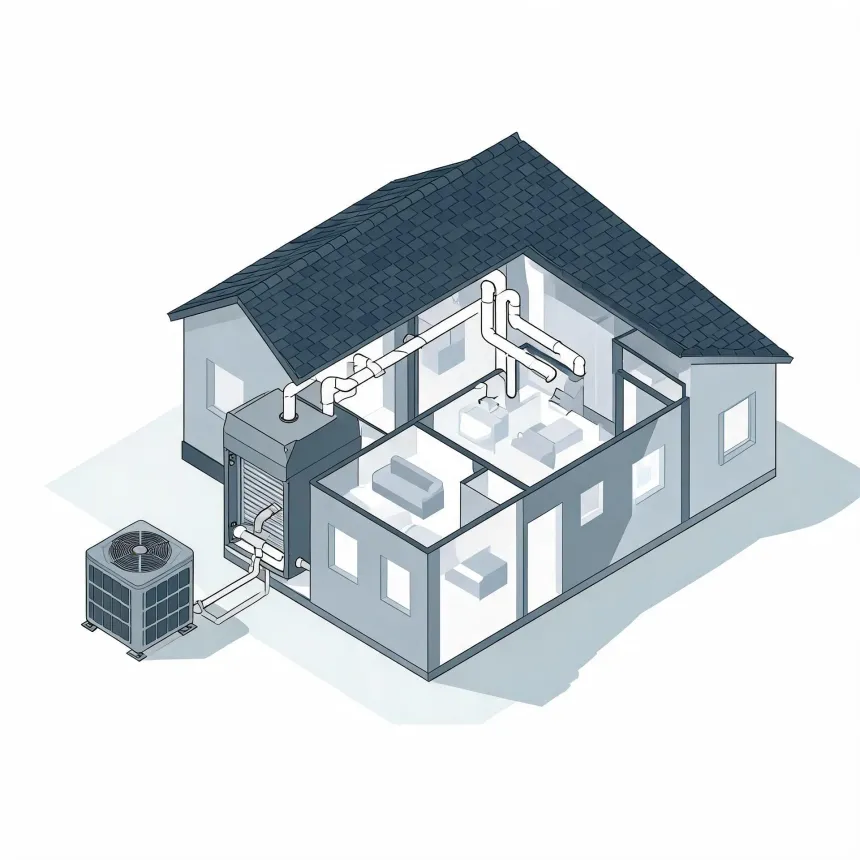
Isometric illustration of a cutaway single-story house showing interior rooms, ductwork running from an indoor air handler, and an outdoor condenser unit on a pad beside the building.
Your air conditioner works hardest from June through September.

NOAA nClimDiv, 1991–2020 normals

Quotes for the same size unit can still name different SEER2 ratings.

Ask what rating a contractor is actually quoting before you compare prices.

Almost every home here runs on electric heat, and that's what AC installation plans around

87.6% of homes heat with electricity
Cooling runs May through October
Summer afternoons average 89°F
Get it installed before MayCooling runs May through October here. April is the month to get it done.

Georgetown County is zone 3A, with summer lasting most of the year and winter barely showing up. That long cooling load is why the Southeast has its own minimum efficiency rule, separate from the rest of the country. A split-system central AC under 45,000 Btu/h installed here has to hit at least 14.3 SEER2, where the national minimum is only 13.4. Larger units have their own, slightly lower number to meet. Any quote below 14.3 SEER2 doesn't meet code for this region, whatever it would meet somewhere else.

Efficiency pays here

Power costs more here, so an efficient system pays you back on every bill.

Find a contractor
A man in a cap, dark shirt and tan work pants, seen from behind, carries a worn duffel bag as he climbs steps toward a dark green front door beside a potted shrub.
An outdoor air conditioning condenser unit mounted on a concrete pad surrounded by gravel, photographed against a partly cloudy blue sky.

Built to run most of the year

Cooling runs here from May through October, six months of the year. Afternoons sit around 89 degrees through the peak of summer, so the system doesn't get an easy stretch to recover in. It runs that hard every season, and on top of it, this county has taken a hit from a tropical storm or hurricane more than once a year on average over the past decade. A system sized wrong for your house works harder than it should on top of all that, and the parts inside it show strain sooner for it. Get the sizing right at installation.

The old unit gets hauled away

A contractor disconnects the old condenser and air handler, recovers the refrigerant from the lines, and removes the equipment from your property. Refrigerant can't legally be vented into the air, so it gets captured and taken off site. You shouldn't be left with a dead unit sitting in the yard.

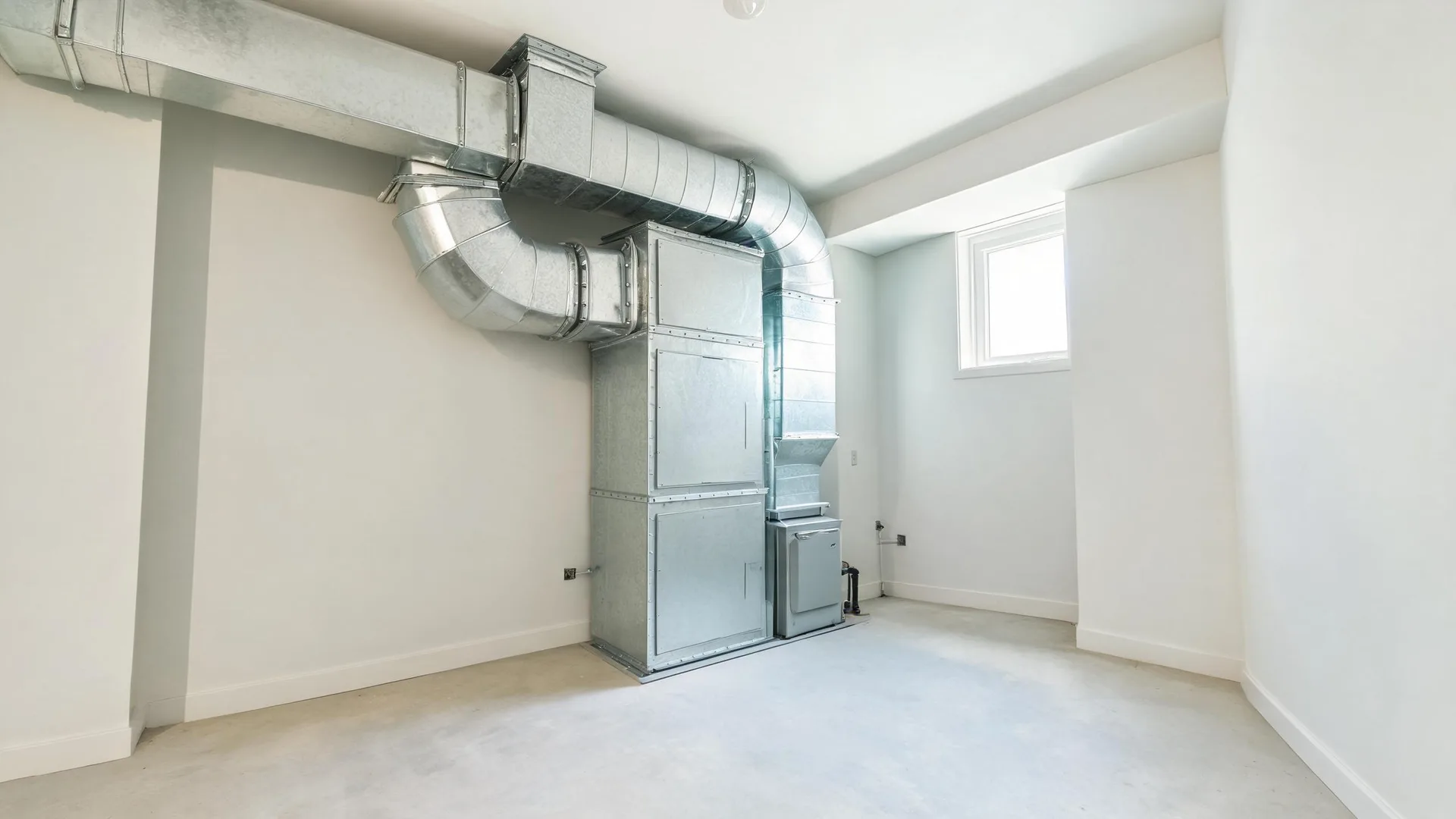
The line set usually gets replaced too

Old refrigerant lines were sized and charged for the old system, not the new one. Reusing them can trap contaminants or the wrong oil residue in a new compressor. Most installs run new line set along with the new equipment, so ask whether yours will be reused or replaced before the job starts.

An outdoor air conditioning condenser unit positioned on a concrete pad next to a blue-sided house, surrounded by green shrubs and flowering hydrangeas at sunset.

Going above the federal minimum saves little here, about $20 a year.

  • A higher-efficiency unit$380 a year
  • A new unit at the federal minimum, 14.3 SEER2$400 a year

Estimates for a typical Georgetown County home, from EIA household energy data, South Carolina fuel prices and NOAA climate normals. Your home will differ.

Installation day starts with the old system coming out before the new one goes in. The contractor sets the new condenser on its pad outside, mounts or sets the air handler, and runs new line set between them. Every joint gets brazed, then the whole line set gets pressure tested before any refrigerant goes in, to make sure there's no leak hiding in a fitting. Once it holds pressure, the system gets evacuated with a vacuum pump to pull out moisture and air, since either one left behind ruins efficiency and can damage the compressor over time. Only then does the refrigerant go in, charged to the exact weight the manufacturer specs for that unit. Before anyone leaves, the system should run through a full cooling cycle so the contractor can check the temperature drop across the coil and confirm the charge is right.