







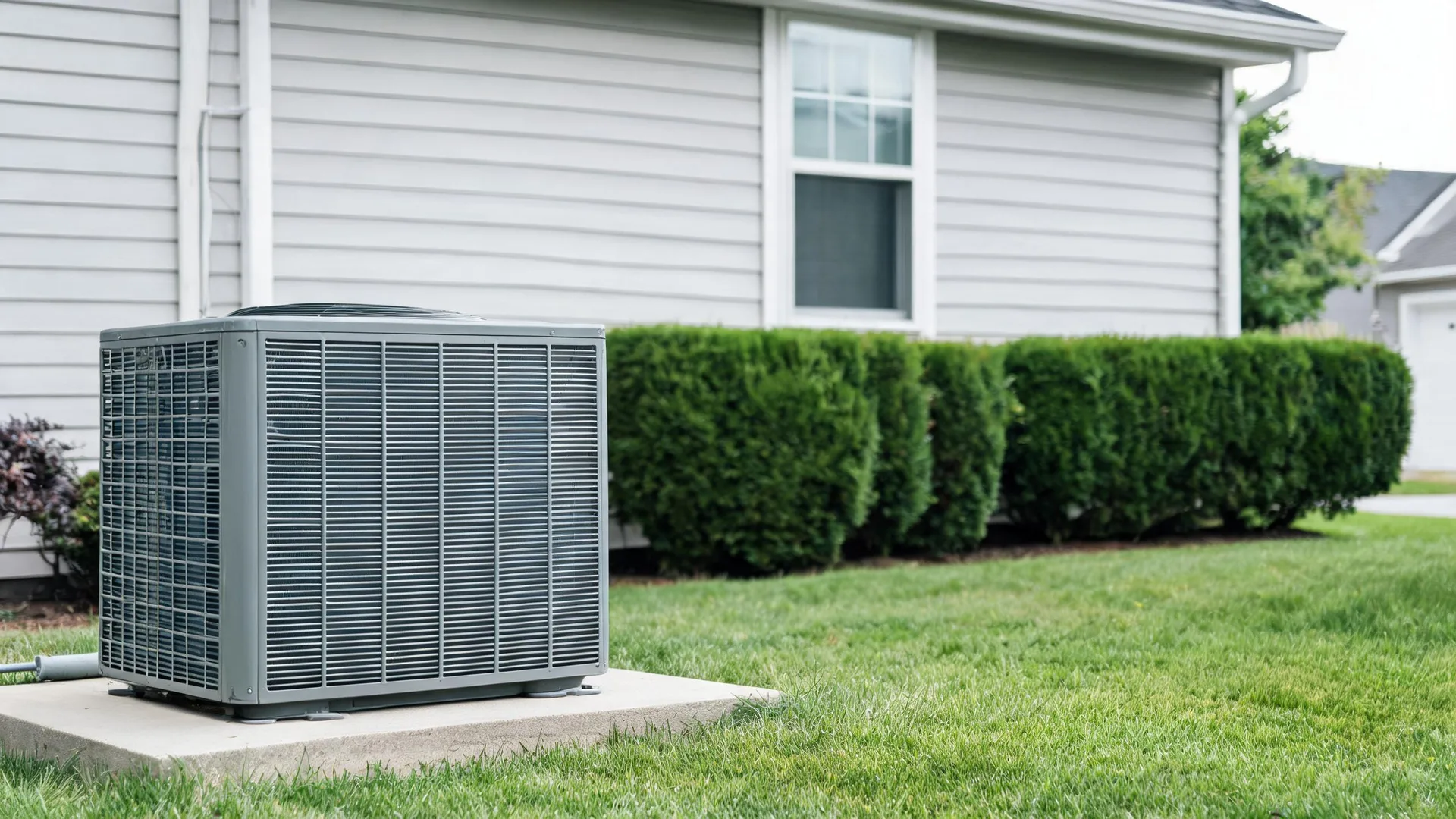
Aerial view of a gray outdoor air conditioning condenser unit mounted on a concrete pad next to a house with vinyl siding.

AC Installation in Hardeeville, SC

Tell us about the job

Takes about a minute. No obligation.

New system or replacementCentral ACJasper County, SC
Step 1 of 2

What ZIP code is the job in?

Ask what size unit they're recommending and how they got that number. A unit that's too big cools the room fast then shuts off before it pulls the moisture out of the air, so the house feels damp even when the thermostat says it's satisfied. That means someone should be measuring the house, not guessing off the old equipment's rating. Ask what SEER2 rating the new system carries and what the old one was, since that tells you how the running cost should change. Ask about the warranty on the compressor versus the labor warranty, because they often run for different lengths and a contractor should be able to explain both without checking a sheet. Ask what happens to the ductwork, since new equipment moving air through old, leaky ducts won't perform the way the rating on the box suggests.

6 months
May through October, your air conditioner is on duty
90°F
the average summer afternoon it cools against
4 hail events
in ten years, and hail bends the fins on outdoor coils
13.4 SEER2
the federal minimum any new unit must meet
Isometric line illustration of a cutaway single-story building showing interior rooms, ceiling ductwork and an air handler, connected by lines to an outdoor condenser unit beside the exterior wall.
Your air conditioner works hardest from June through September.

NOAA nClimDiv, 1991–2020 normals

Electricity heats 75.3% of homes in Jasper County.

A straight electric-to-electric swap is the simplest path for an AC installation here.

At 14.23 cents a kilowatt-hour, SEER2 is what decides your bill

Power costs 14.23 cents a kWh statewide
Cooling runs May through October
Summer afternoons average 90°F
Get it done before MayCooling runs May through October here, six months straight.

Jasper County sits in climate zone 2A, hot and humid, where the AC runs more than the heat ever will. That puts it in the Southeast region for federal efficiency rules, and the minimum here is higher than the rest of the country has to meet. A split system under 45,000 Btu/h has to hit 14.3 SEER2 installed here, where a lot of states only require 13.4. Anything a contractor quotes should already clear that bar. There's also a federal tax credit for qualifying high-efficiency equipment, worth asking about when you're comparing what each system costs to put in.

Six months of 90 degree afternoons is the normal load here

Cooling runs May through October in Jasper County, with afternoon highs averaging 90°F through June, July and August. A system sized right for that load runs steady all season. One sized off a guess works harder than it should, and the strain shows up early.

Find a contractor
A man in a dark long-sleeve shirt and tan work pants, seen from behind, steps onto a porch toward a dark green paneled door while carrying a canvas tool bag with tools in its outer pockets, with a potted shrub to the right.
A gray residential air conditioner condenser unit mounted on a concrete pad in an open grass field.

What happens to the old unit

Whoever installs the new system still has to deal with the old one. The refrigerant in that outdoor unit can't just be vented, it has to be recovered into a tank with the right equipment, and a licensed contractor already has that on the truck. Once it's empty, the old condenser and the indoor coil get disconnected and hauled off. If the new system uses the same duct runs and the same spot for the air handler, the job is mostly a swap. If the new coil is a different size or the line set runs a different path, there's more work in pulling the old pieces free and fitting the space for what's replacing them. None of that is reason to keep a failing system running longer than it should. An old condenser losing refrigerant or short cycling only gets harder on itself the longer it's asked to limp along.

The size of the job drives the price more than the brand on the unit

A straight swap, same spot for the air handler, same line set, same ducts, is the cheapest version of this job because there's nothing to rebuild. Once the new coil doesn't match the old footprint, or the line set has to run somewhere new, or the ductwork needs opening up to carry what the new system moves, the labor grows. None of that shows up on the equipment's price tag. It shows up in the quote.

A higher efficiency system costs more to put in, not just to buy

Higher SEER2 equipment usually means a larger condenser coil and a variable speed or multi-stage compressor, and both take more room and more careful setup than a single stage system does. Some of these systems also call for a communicating thermostat matched to the equipment. That's more parts and more time on the install, which is a separate cost from the unit sitting on the truck.

An outdoor air conditioning condenser unit on a concrete pad next to the gray vinyl siding of a residential home.

A higher-efficiency unit would save about $30 a year to run in Jasper County compared with a new unit at the federal minimum.

  • A higher-efficiency unit$430 a year
  • A new unit at the federal minimum, 14.3 SEER2$460 a year

Estimates for a typical Jasper County home, from EIA household energy data, South Carolina fuel prices and NOAA climate normals. Your home will differ.

Install day starts with the old system coming out, not the new one going in. The outdoor pad gets checked for level ground before anything new sits on it, since a unit that rocks wears its compressor mounts faster than it should. Indoors, the new coil has to seal tight against the furnace or air handler cabinet, or the system pulls unconditioned air into the supply side without anyone noticing. Once the lines are connected, the system gets charged with refrigerant to the exact weight the manufacturer specifies, not just until the lines feel cold. Airflow gets checked last, room by room, to confirm the ducts are carrying what the design calls for and the thermostat is reading the equipment correctly before the job is called done.