Two white Southern-style homes with wraparound porches lit by landscape lighting at night, flanked by live oak trees hung with Spanish moss.

AC Installation in Hilton Head Island, SC

Tell us about the job

Takes about a minute. No obligation.

New system or replacementCentral ACBeaufort County, SC
Step 1 of 2

What ZIP code is the job in?

Beaufort County sees its share of storms

Beaufort County logged 304 damaging wind events between 2015 and 2024, plus hail and tropical storms on top of that. That outdoor unit sits outside year round, so wind-blown debris and hail are part of what it has to handle here.


Power doesn't always come back fast

Almost half of South Carolina households went at least 24 hours without power in 2024. A new AC system runs on electricity no matter how new or efficient it is, so an outage of that length means no cooling until the power returns.

6 months
May through October, your air conditioner is on duty
89°F
the average summer afternoon it cools against
20 hail events
in ten years, and hail bends the fins on outdoor coils
13.4 SEER2
the federal minimum any new unit must meet
Isometric line illustration of a cutaway single-story house showing interior rooms, ducted air handler, ceiling ductwork, and an outdoor condenser unit connected by refrigerant lines.
Your air conditioner works hardest from June through September.

NOAA nClimDiv, 1991–2020 normals

Cooling runs May through October here.

April is the month to put in a new system, before the heat and the storms arrive.

Six months of cooling, at 89 degrees, is what this system signs up for

Cooling runs May through October
Summer afternoons average 89°F
304 damaging wind events from 2015 to 2024
Most of Hilton Head runs on electric heat79.8% of homes in Beaufort County heat with electricity, so a new AC usually means working with a heat pump or an electric furnace already in place.

Hilton Head sits in climate zone 2A, a hot and humid zone where cooling is the main job a system does all year. Any split-system air conditioner installed here under 45,000 Btu/h has to hit at least 14.3 SEER2, a higher bar than the 13.4 SEER2 required nationally. That regional minimum is what a contractor has to meet before anything else gets decided, size, ductwork, equipment line. A federal tax credit is available on qualifying high-efficiency systems, worth checking into alongside the install itself.

Power costs more here. Efficiency is what pays you back

Electricity here runs 14.23 cents per kilowatthour, higher than most places pay, and this system will lean on it through the cooling months. The SEER2 floor for this zone is already set above the national minimum. Going above that floor is what keeps the rate from adding up on every bill to come.

Find a contractor
An outdoor air conditioning condenser unit mounted on a concrete pad beside a house, with electrical conduit running to a wall-mounted disconnect box.

Six months of running time is what sizing has to answer for

Six months at 89 degrees is the running time this system is built for. A load calculation, done for this house and not guessed from square footage, is what gets the size right. Too big and the unit short cycles, on and off before it finishes pulling the humidity out of the air. Too small and it runs flat out all summer trying to catch up. Either way the parts inside wear sooner than they should. Ask what the contractor based the sizing on before the equipment gets picked.

Ductwork decides more than equipment does

If the ducts already in place are sized wrong or leak at the joints, the new unit has to fight them to deliver cooling to every room. Sealing or resizing that ductwork is sometimes the harder part of the job, and it's not something a contractor can know without getting up in the attic or crawlspace to look.

The line set and the pad matter too

An outdoor condenser needs a pad to sit on and a line set running to the indoor coil, and swapping in a new system doesn't always mean reusing the old ones. Old refrigerant lines sized for a different unit, or a pad that's cracked or sitting wrong, both add work a quote has to account for before installation day.

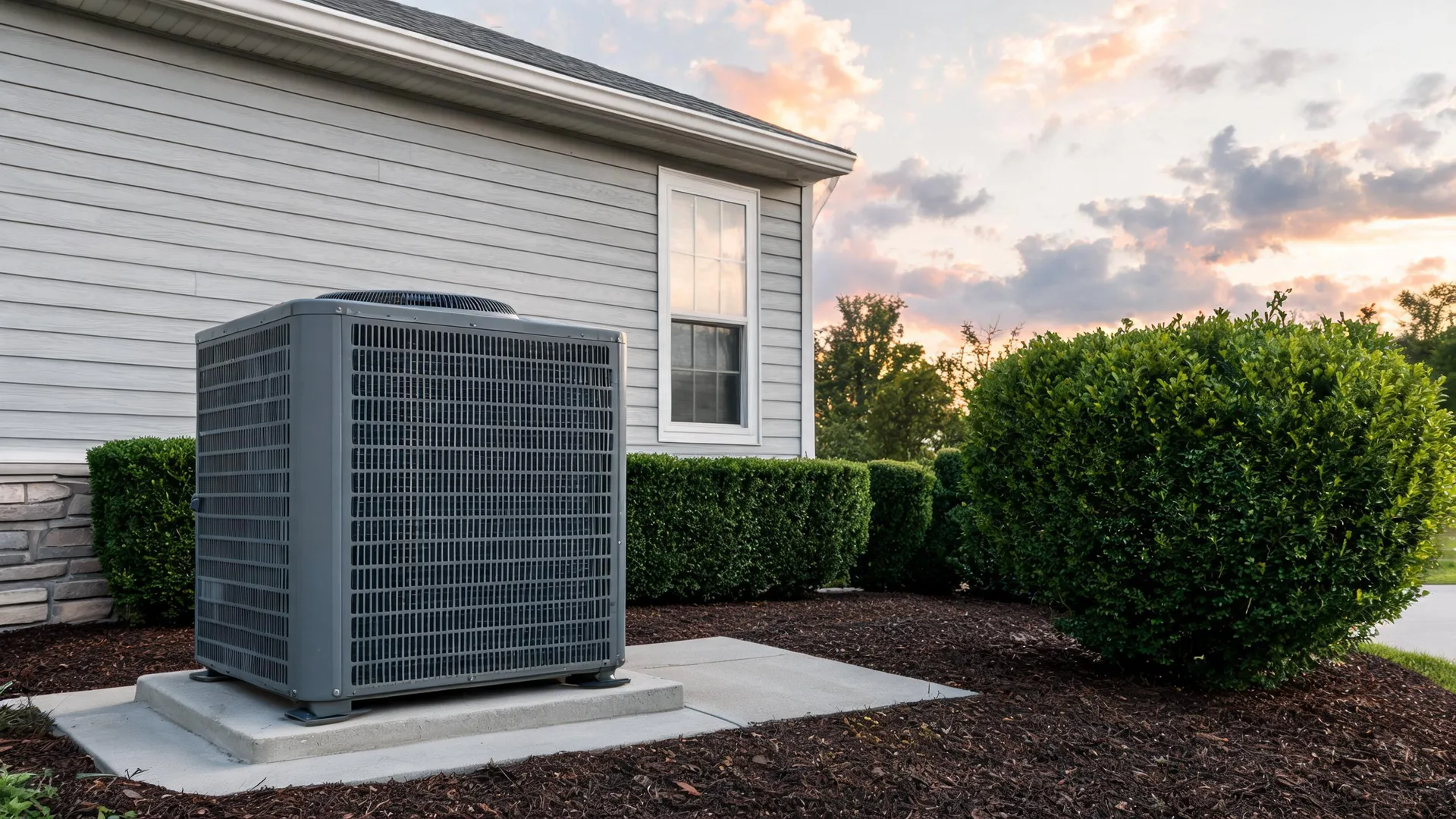
An outdoor air conditioning condenser unit installed beside the exterior wall of a blue vinyl-sided house at sunset.

A higher-efficiency unit would save about $30 a year to run in Beaufort County compared with a new unit at the federal minimum.

  • A higher-efficiency unit$450 a year
  • A new unit at the federal minimum, 14.3 SEER2$480 a year

Estimates for a typical Beaufort County home, from EIA household energy data, South Carolina fuel prices and NOAA climate normals. Your home will differ.

Installation day starts with the old equipment coming out. The indoor coil, the outdoor condenser, and the line set if it isn't being reused. Then comes the work that decides whether the system runs right for years. Setting the new pad, running or connecting line set, mounting the indoor coil, getting the refrigerant charge correct. Charge is not something to eyeball. Too little or too much and the system either can't pull heat out of the air properly or wears its own compressor down doing it. Once everything is connected, the contractor checks airflow at the vents, confirms the thermostat is talking to the system, and runs it through a cycle to see that it's actually cooling and not just turning on. A system that looks finished but was never checked running is not actually done.