






Two illuminated white colonial-style houses with wrap-around porches, flanked by oak trees draped in Spanish moss, photographed at night.

AC Installation in Laurens, SC

Tell us about the job

Takes about a minute. No obligation.

New system or replacementCentral ACLaurens County, SC
Step 1 of 2

What ZIP code is the job in?

Electricity in South Carolina ran 14.23 cents per kilowatthour in 2024. Your AC is one of the biggest draws on your bill, so every point of efficiency it has or doesn't have shows up month after month. A unit sized and installed right for your house will hold steady at that cost. One that's oversized, undersized, or just worn out works harder than it needs to, and you pay for that extra work on every bill it touches. When you're comparing systems, the efficiency rating matters as much as the price tag, because you'll be paying that electric rate for as long as the unit runs.

5 months
May through September, your air conditioner is on duty
89°F
the average summer afternoon it cools against
12 hail events
in ten years, and hail bends the fins on outdoor coils
13.4 SEER2
the federal minimum any new unit must meet
Isometric line illustration of a cutaway house showing interior rooms, ceiling ductwork connected to an indoor air handler, and an outdoor condenser unit linked by refrigerant lines.
Your air conditioner works hardest from June through September.

NOAA nClimDiv, 1991–2020 normals

Electricity heats 62.9% of homes in Laurens County.

Most AC installs here go in alongside an electric furnace or heat pump, so matching what's already there is usually the straightforward call.

A standard system is the right call here

Half the homes here were built by 1985
Cooling runs May through September
Summer afternoons average 89°F

AC runs here from May through September, five months of the year. Through June, July and August the afternoon high averages 89°F. That's the load a new system sits under, day after day, for most of the summer. A unit sized right for your house will cycle on and off and keep up without strain. One that's too big or too small for the space ends up running longer, or running too often, to hold the same temperature. That kind of strain shows up sooner here than in places where summer only pushes a system hard for a few weeks.

The minimum here is already higher than the national floor

Any split-system AC installed here has to meet 14.3 SEER2, higher than the 13.4 national minimum. That floor comes from this region's climate, not the size of the house or the brand. A federal tax credit is available for units that go above the minimum required here, worth asking about while you're already comparing what each system costs to run.

Find a contractor
A man in a gray work shirt and tan pants carries a canvas tool bag up wooden porch steps toward a dark green front door, with a potted shrub to the right.
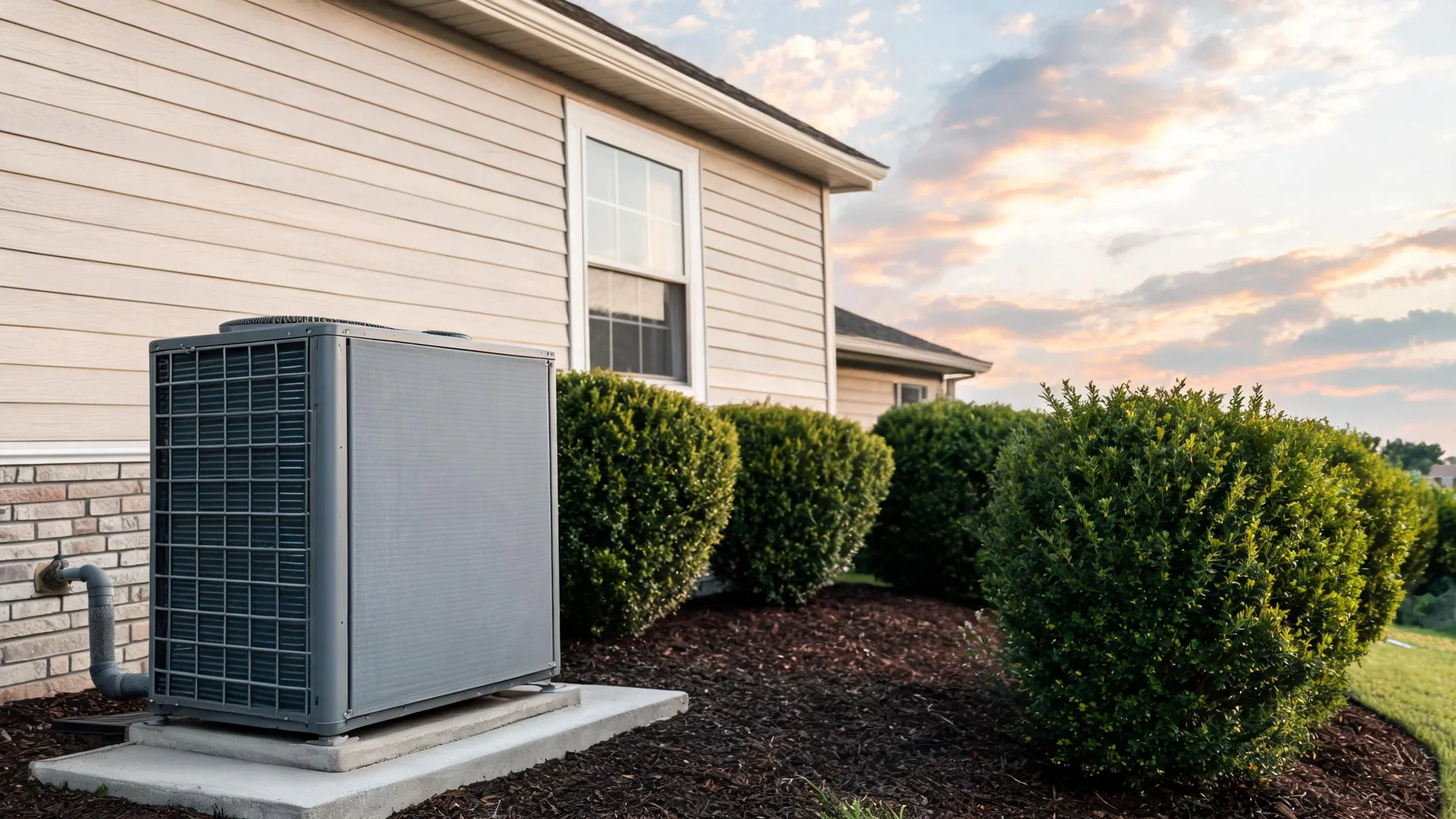
A gray cylindrical air conditioning condenser unit mounted on a concrete pad next to a light-colored vinyl-sided house exterior.

April is the month to do this, not May

Cooling here runs May through September, five months straight. Put a new system in during April and it has already settled in before it has to work for real. Wait and you're choosing a system in a hurry, once the heat has already started and the old one has already quit. An April install also means the first real stretch of work happens while someone's around to notice if anything sounds or runs wrong, instead of finding out mid-summer.

The old unit still has to come out

Pulling the old condenser and air handler isn't just disconnecting wires. The refrigerant in the old system has to be recovered properly, not vented, and the line set gets checked before anything new ties into it. If the old coil was leaking or the compressor failed, that gets noted, since it can point to problems in the line set or ductwork that would hurt the new system too.

Matching old to new isn't automatic

A new system often needs a different line set size or a different electrical circuit than the old one used, especially if the old unit was a lot less efficient. The pad or mounting might not fit the new condenser's footprint either. None of this is unusual, but it's work that gets done during the swap, not before, so the install day covers more than just setting the new unit down and connecting it.

Overhead view of a gray residential air conditioning condenser unit mounted on a concrete pad beside a house with asphalt shingle roofing.

Going above the federal minimum saves little here, about $20 a year.

  • A higher-efficiency unit$330 a year
  • A new unit at the federal minimum, 14.3 SEER2$350 a year

Estimates for a typical Laurens County home, from EIA household energy data, South Carolina fuel prices and NOAA climate normals. Your home will differ.

Install day starts with the old system still running, if it's running at all. The crew shuts it down, recovers the refrigerant, and disconnects the condenser and air handler before anything new goes in. Once the old equipment is out, they check the line set, the electrical whip, and the condensate drain to see what can be reused and what has to be replaced. Setting the new condenser and connecting the air handler is usually the fastest part of the day. Most of the time goes to pressure testing the lines, pulling a vacuum to clear out moisture and air, then charging the system to the right level for that unit. After it's running, a tech checks the temperature drop across the coil and the airflow at the vents before calling it done.