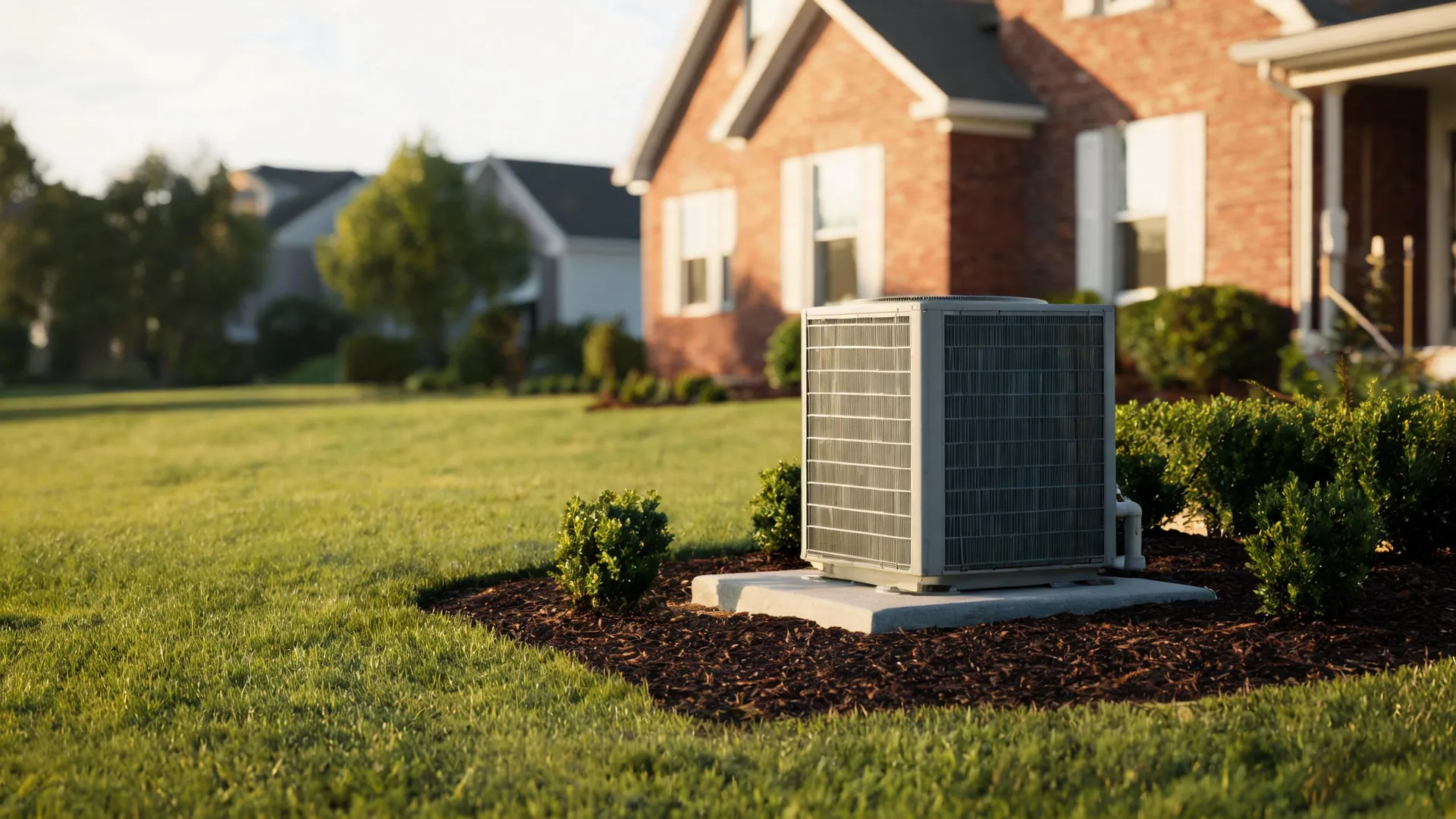
An outdoor air conditioning condenser unit positioned beside a blue-sided house at sunset.

AC Installation in Myrtle Beach, SC

Tell us about the job

Takes about a minute. No obligation.

New system or replacementCentral ACHorry County, SC
Step 1 of 2

What ZIP code is the job in?

The old unit gets hauled away

A licensed installer disconnects the old condenser and air handler, recovers the refrigerant from the lines, and takes the equipment off site. Refrigerant can't legally be vented into the air, so it gets pulled out with a recovery machine before anything is disconnected.


The line set usually gets replaced too

If the new system uses a different refrigerant than the old one, the copper lines running between the condenser and the air handler need to be swapped, not just flushed. Old oil and debris left behind in reused lines can contaminate a new compressor.

5 months
May through September, your air conditioner is on duty
89°F
the average summer afternoon it cools against
49 hail events
in ten years, and hail bends the fins on outdoor coils
13.4 SEER2
the federal minimum any new unit must meet
Isometric cutaway illustration of a small home interior with furniture and ducting, showing an indoor air handler connected by lines to an outdoor condenser unit on a pad.
Your air conditioner works hardest from June through September.

NOAA nClimDiv, 1991–2020 normals

Electricity in South Carolina ran 14.23 cents per kilowatthour in 2024.

A higher SEER2 unit costs less to run here than a lower one, every single month.

Electric heat here means the same setup works for cooling

86.4% of homes heat with electricity
Cooling runs May through September
Summer afternoons average 89°F

When you're comparing quotes, look at the SEER2 number before anything else. A unit rated a few points higher costs more to install. At 14.23 cents a kilowatt-hour, that gap in efficiency shows up on the bill every month the compressor runs, which here is most of the year. Ask the installer to size the system to your home rather than matching the old tonnage. An oversized or undersized unit loses efficiency no matter what the SEER2 label says.

Any system installed here has to meet the Southeast's 14.3 SEER2 minimum

Horry County falls in climate zone 3A. Systems installed in the Southeast have to clear a higher bar than the national minimum, 14.3 SEER2 for most residential sizes. That rules out some of the lower-end units you'll find listed online or in other states. A federal tax credit is also available for qualifying equipment. Whatever gets installed here has to meet that number first.

Find a contractor
An outdoor residential air conditioning condenser unit mounted on a concrete pad, surrounded by gravel with a blue sky in the background.

The system you pick has to last for years, so ask about the years, not just the install day

A new system has to last for years of running, and that's the real test, not the sticker on the box. Ask what the compressor and the blower motor are rated for, and ask what tends to fail first as the unit ages. Equipment with the same SEER2 number can still age differently depending on build quality and how the installer sets the charge and the airflow on day one. Ask about the warranty on the compressor separate from the warranty on parts and labor, since those terms often differ. Ask what maintenance the manufacturer requires to keep that warranty valid, because skipping a yearly check can void it even if the unit never fails. A system sized and installed right runs in long, steady cycles instead of switching on and off again and again, and that's what keeps it running this long in the first place.

Sizing comes from a load calculation, not the old unit's tonnage

A contractor works out the right size by calculating heat gain for the house. That means square footage, window area and orientation, ceiling height, insulation, how much air leaks in and out. Matching the new system to whatever tonnage was there before skips that math. It also carries over any sizing mistake the last installer made.

The wrong size shows up as comfort problems, not just a number on the unit

An oversized unit cools the air fast, shuts off, and starts again a few minutes later. Short cycles like that mean the system never runs long enough to pull humidity out of the air. The house can feel clammy even at the right temperature. An undersized unit does the opposite. It runs and runs but never catches up on the hottest days, so parts of the house stay warm no matter how long it runs.

Overhead view of an outdoor AC condenser unit on a concrete pad next to a house with a dark shingle roof.

Going above the federal minimum saves little here, about $20 a year.

  • A higher-efficiency unit$370 a year
  • A new unit at the federal minimum, 14.3 SEER2$390 a year

Estimates for a typical Horry County home, from EIA household energy data, South Carolina fuel prices and NOAA climate normals. Your home will differ.

Install day starts with the old system still running. The installer shuts off power to the condenser and the air handler before touching anything, then confirms it's off with a meter. Refrigerant comes out first, pulled into a recovery tank, then the lines and equipment get disconnected. Setting the new condenser is only part of the work. The charge has to be weighed in to match what that specific unit calls for, not eyeballed, and airflow across the new coil has to be checked against the duct system it's tied into. Most of a day's work is that calibration, not the lifting.