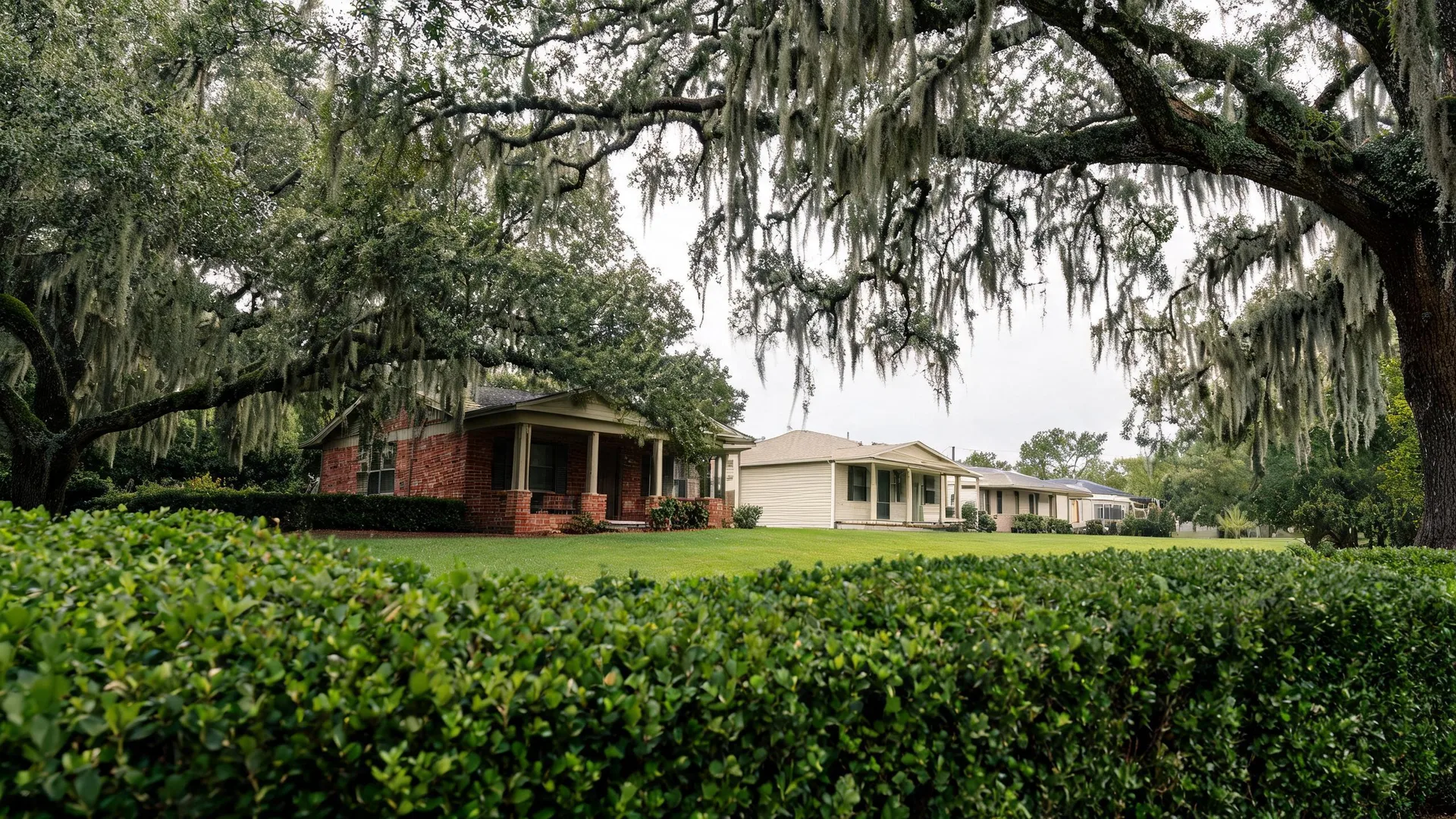





A single-story brick house with a covered porch sits on a mown lawn behind a long trimmed hedge, framed by large oak branches draped with hanging moss, with additional light-colored houses in the background under an overcast sky.

AC Installation in Newberry, SC

Tell us about the job

Takes about a minute. No obligation.

New system or replacementCentral ACNewberry County, SC
Step 1 of 2

What ZIP code is the job in?

Newberry County is zone 3A, warm with a short, mild winter and summer that runs long. Any new split-system air conditioner installed here has to meet 14.3 SEER2, the Southeast regional minimum, higher than what the rest of the country requires for the same size unit. Larger systems, 45,000 Btu/h and up, have their own floor to meet. A contractor sizing a system for your home has to work within that regional minimum, not the lower number you might see quoted elsewhere.

5 months
May through September, your air conditioner is on duty
91°F
the average summer afternoon it cools against
25 hail events
in ten years, and hail bends the fins on outdoor coils
13.4 SEER2
the federal minimum any new unit must meet
Isometric cutaway illustration of a single-story house showing interior rooms with furniture, overhead ductwork, an indoor air handler unit, and an outdoor condenser unit connected by lines at the side of the building.
Your air conditioner works hardest from June through September.

NOAA nClimDiv, 1991–2020 normals

A bigger air conditioner doesn't cool a house faster, it just shuts off before it finishes pulling the moisture out of the air.

Sizing has to come from a load calculation on this house, not a guess based on square footage.

Most homes here run on electricity, so an electric system is the straightforward replacement

66% of homes heat with electricity
Cooling runs May through September
Summer afternoons average 91°F

South Carolina homes paid 14.23 cents per kilowatthour in 2024. That rate applies to every hour this system runs, and summer here runs long. A unit built well past the regional minimum will cost less to run than one that barely clears it, month after month, for as long as it's in the house. The difference shows up on the bill, not the invoice, so it's worth asking a contractor what SEER2 rating a quoted system actually carries before deciding on price alone.

A standard system, sized right, is the correct call here

Half the homes in Newberry County were built in 1981 or earlier, half in 1981 or later. That spread doesn't call for anything unusual in a new system, a standard size built to the regional minimum fits either one. What matters is getting the load calculation right for your house, not chasing a bigger unit or a higher rating than you need.

Find a contractor
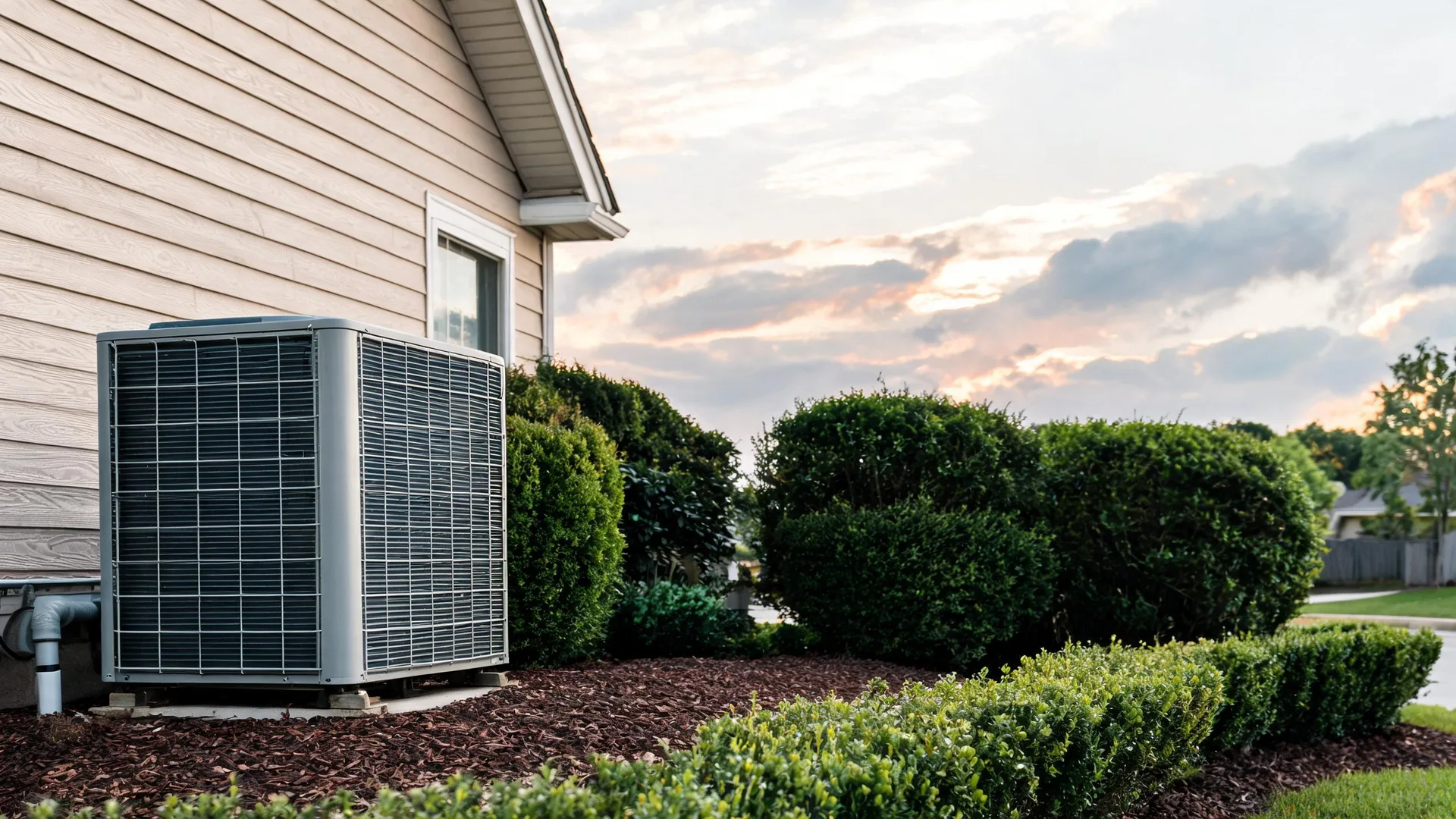
An outdoor air conditioning condenser unit mounted on a concrete pad surrounded by gravel, photographed against a partly cloudy blue sky.

Put it in before May, not during it

Cooling here runs May through September. April is the month to get a new system in, not May, when the first warm week has every contractor in the county booked out. Installing before the season starts also means the unit gets tested under light load before it has to run flat out, so anything wrong with the install shows up while it's still an easy fix.

The ductwork decides more than the unit does

A contractor has to check whether the existing ducts can handle the airflow a new system needs before quoting a price. Ducts that are too small, leaky, or poorly laid out can mean sealing, resizing, or replacing sections before the new condenser and air handler go in. That work is often a bigger part of the job than the equipment itself.

Where the equipment sits adds or saves labor

A straight swap, same spot for the condenser, same closet or attic for the air handler, keeps labor simple because the electrical, the refrigerant lines, and the drain are already routed. Moving the air handler to a new location, running a new line set, or adding a disconnect and breaker where none exists all add steps a straight replacement doesn't need.

Overhead view of an air conditioning condenser unit on a concrete pad next to a house with asphalt shingle roofing and vinyl siding.

Going above the federal minimum saves little here, about $20 a year.

  • A higher-efficiency unit$350 a year
  • A new unit at the federal minimum, 14.3 SEER2$370 a year

Estimates for a typical Newberry County home, from EIA household energy data, South Carolina fuel prices and NOAA climate normals. Your home will differ.

Installation day starts before anyone touches the old unit. A contractor disconnects power to the condenser and the air handler, recovers the refrigerant from the old lines rather than venting it, and only then starts pulling equipment. The old condenser comes off its pad, the air handler comes out of the closet or attic, and that's when problems hiding behind the old equipment show up, a cracked drain pan or a damaged line set that wasn't part of the quote. Setting the new condenser and running new line sets if needed takes most of the morning. Once the refrigerant lines are connected, the system gets pulled into a vacuum to pull out moisture and air before any refrigerant goes in, and that step can't be rushed without risking the compressor later. After charging, a contractor checks refrigerant levels against the manufacturer's spec, confirms airflow at the vents, and lets the system run a full cycle before calling it done.