Two single-story houses, one brick and one with pale siding, both with covered porches, sit behind a mowed lawn and a trimmed hedge, framed by large oak branches draped with Spanish moss under an overcast sky.

AC Installation in Orangeburg, SC

Tell us about the job

Takes about a minute. No obligation.

New system or replacementCentral ACOrangeburg County, SC
Step 1 of 2

What ZIP code is the job in?

Bigger isn't better

An oversized air conditioner cools the air fast and shuts off before it pulls the moisture out of it. The room feels cold and clammy at the same time. A unit sized right runs longer, steadier cycles and actually dries the air while it cools it.


The size comes from a load calculation

A contractor works out the size by looking at the square footage, the windows, the insulation, and how the ductwork is laid out, not by matching whatever size is already there. Homes that look alike from the street can need different sized systems once someone actually does the math.

5 months
May through September, your air conditioner is on duty
91°F
the average summer afternoon it cools against
33 hail events
in ten years, and hail bends the fins on outdoor coils
13.4 SEER2
the federal minimum any new unit must meet
Isometric illustration of a cutaway house showing interior rooms, an attic furnace with large ducts, and an outdoor condenser unit connected by a line set, on a white background.
Your air conditioner works hardest from June through September.

NOAA nClimDiv, 1991–2020 normals

Afternoon highs average 91°F across June, July and August in Orangeburg County, and the system runs from May through September to keep up with it.

A new air conditioner here needs to hold up to five months of hard heat, not just a few weeks of it.

Almost 8 in 10 homes here run on electricity, and a new AC can use the same setup

79.8% of homes heat with electricity
Cooling runs May through September
Summer afternoons average 91°F

Electricity here runs 14.23 cents a kilowatthour, and that's what every degree of cooling draws against. SEER2 tells you how much cooling you get for the power you put in. A low-end unit and a high-efficiency one can use noticeably different amounts of power to do the same job, and the difference shows up on the bill every month the system runs. Ask what SEER2 rating a contractor is quoting you, and compare it against what you're replacing.

Have it in by May

Cooling starts in May here and runs through September. Install before then and the job happens on your timeline, with time to size it right and no five-month-old system to fall back on while you wait.

Find a contractor
A man in a dark T-shirt, tan work pants and a backward cap walks up stone steps toward a dark green door, carrying a worn canvas tool bag, with a potted shrub in a green ceramic planter beside him.
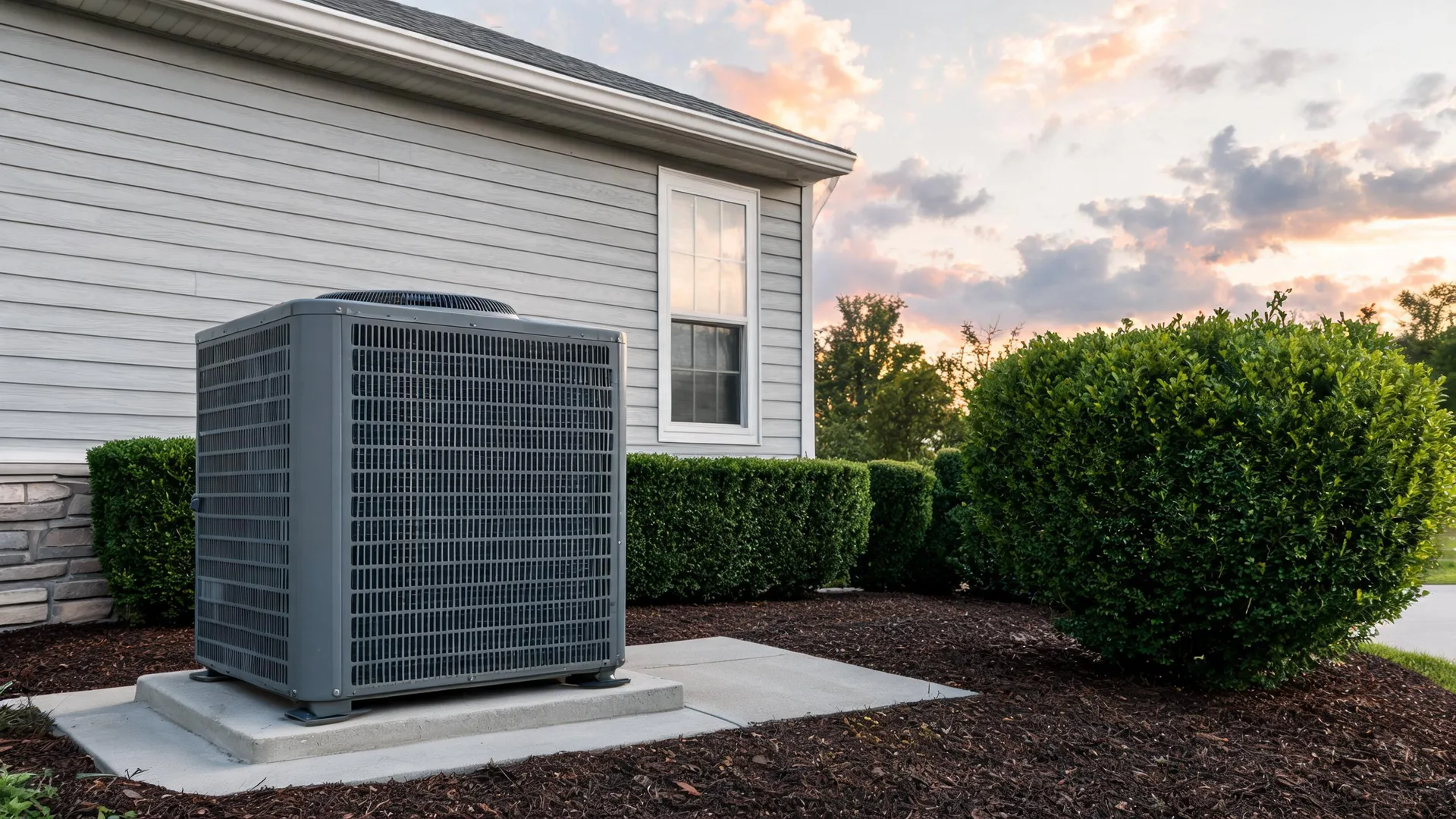
An outdoor air conditioning condenser unit mounted on a concrete pad beside a house, with electrical conduit running to a wall-mounted disconnect box.

The old unit has to come out clean before the new one goes in

The old condenser doesn't get left in place. Refrigerant is a closed loop, and code requires it to be recovered into a tank rather than vented to the air before anything gets disconnected. Once that's done the line set, the pad, and the old condenser come out. If the air handler or coil is being swapped too, those come out next, and whatever's left of the old wiring and disconnect gets pulled or reused depending on condition. None of this is optional groundwork. A new system can't go where the old one sat until that space is actually clear and the lines are open for the new charge.

The equipment is one line item

The condenser, the air handler, the coil, the refrigerant line set, the thermostat. That's the part a quote leads with, but it's not the whole job. What a contractor charges for the work around that equipment often moves the total more than which brand of condenser gets chosen.

What's already there decides the rest

If the ductwork fits the new system's airflow, it gets reused. If it's undersized or leaky, it gets modified or replaced, and that's labor and material beyond the unit itself. Where the old system sat, how the electrical is set up, whether a disconnect or a pad needs replacing, all of it adds work before the new system ever runs.

Overhead view of a gray residential air conditioning condenser unit mounted on a concrete pad beside a house with asphalt shingle roofing.

Going above the federal minimum saves little here, about $20 a year.

  • A higher-efficiency unit$400 a year
  • A new unit at the federal minimum, 14.3 SEER2$420 a year

Estimates for a typical Orangeburg County home, from EIA household energy data, South Carolina fuel prices and NOAA climate normals. Your home will differ.

Install day starts with the old system coming out, not the new one going in. The condenser gets disconnected, the refrigerant lines drained, the old air handler or coil pulled if it's being replaced too. Only once that's clear does the new equipment go in. Condenser on the pad, line set run, coil set, air handler connected, thermostat wired. Then comes the part that decides whether any of it works right. The system gets charged with refrigerant to the manufacturer's spec, the ductwork gets checked for airflow, and the whole thing runs through a cycle while the contractor checks the pressures and the temperature drop across the coil. A system that looks finished but hasn't been checked this way can run for years at the wrong charge. That wears the compressor down early and never cools quite the way it should.