





A nighttime street scene featuring a row of lit white colonial-style houses with wrap-around porches, flanked by oak trees draped in Spanish moss.

AC Installation in Summerville, SC

Tell us about the job

Takes about a minute. No obligation.

New system or replacementCentral ACDorchester County, SC
Step 1 of 2

What ZIP code is the job in?

Summerville sits in zone 3A, warm and humid with summer running most of the year and only a short mild winter. Any new split-system air conditioner installed here has to hit 14.3 SEER2, which is higher than the 13.4 SEER2 floor manufacturers can sell nationally. A unit built to that national minimum doesn't clear the bar here and can't go in. There's a federal tax credit available for equipment that goes beyond the regional minimum, if you want to look into it. Worth checking where a system lands on that number before you compare prices on it.

6 months
May through October, your air conditioner is on duty
91°F
the average summer afternoon it cools against
44 hail events
in ten years, and hail bends the fins on outdoor coils
13.4 SEER2
the federal minimum any new unit must meet
Isometric cutaway illustration of a house interior showing ducted HVAC piping, an indoor air handler unit, and an outdoor condenser with fan connected by a line, rendered in grey tones on a white background.
Your air conditioner works hardest from June through September.

NOAA nClimDiv, 1991–2020 normals

SEER2 measures how much electricity the compressor uses to cool your house over a full summer.

A system with a higher number costs less to run every month, even sitting next to one that cools just as well.

Dorchester County gets hit with storms and outages, so plan for both before the unit goes in

290 severe weather events from 2015 to 2024
45% of homes statewide lost power a day or more in 2024
227 damaging wind events from 2015 to 2024

South Carolina homes paid 14.23 cents per kilowatt-hour in 2024, among the higher rates in the country. A system that runs most of the year, the way air conditioning does here, turns that rate into a real number on the bill every month it's in use. The SEER2 floor in this zone already sits above the national minimum, so a higher-rated system is worth looking at closely before you buy. The difference between units isn't about whether one cools the house, they both will. It's about how much of that 14.23 cents you keep paying for, summer after summer.

Replace the system you already have

Electricity heats 75.5% of homes in Dorchester County. If your air handler and condenser already run on electric, the new AC can match what's already in place rather than switching the house to something it wasn't built for.

Find a contractor
A gray metal air conditioning condenser unit mounted on a concrete pad in a flat grassy field under a partly cloudy sky.

The old unit doesn't stay, and neither does everything attached to it

The old condenser doesn't get left running. Pulling it out means recovering the refrigerant first, that's the law, it can't just be vented. Once the lines are open, whoever's installing the new system has to decide whether the existing line set stays or goes. Old copper can be reused if it's the right size and free of leaks, but if it was sized for a smaller system or has a kink or a bad joint, it gets replaced along with everything else. Same with the pad and the disconnect box outside. A unit that's been sitting out there for years of summers has usually taken some corrosion on the coil fins and the cabinet, even if it still ran fine the day it came out. None of that carries over to the new equipment. The old thermostat usually comes out too, since a new system often needs different wiring at the air handler than what the old one used.

Ask what size the load calculation came out to, not just the tonnage you expect

A contractor should run a room-by-room load calculation on the house, not just match the tonnage of the unit that's coming out. A system sized larger than the house needs will cool it fast but shut off before it pulls the humidity down, so the air feels clammy even at the right temperature. One sized too small runs constantly and never quite catches up on the hottest days. The number on the old unit's nameplate isn't proof it was ever right for the house.

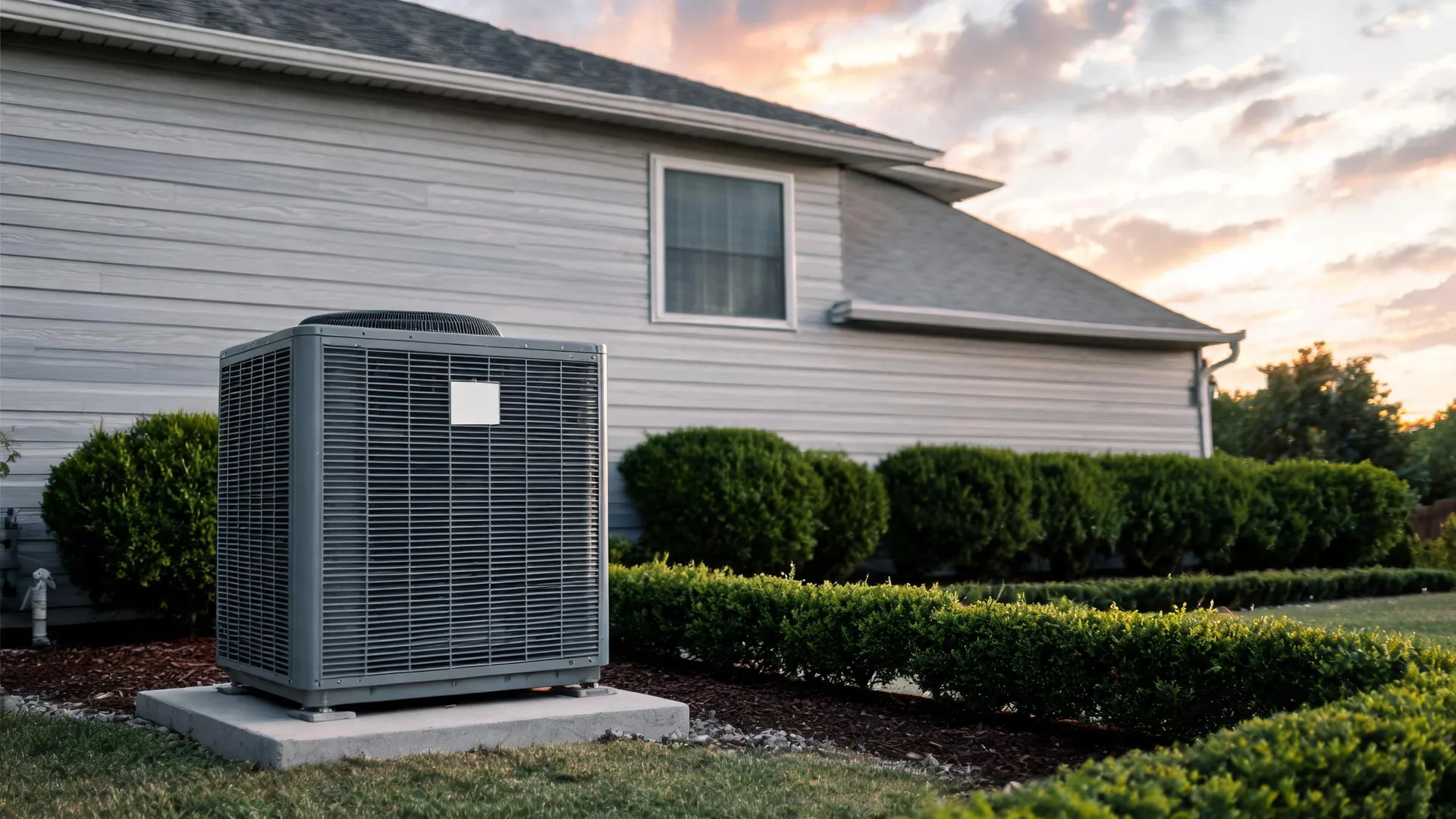
Ask what happens to the line set and whether the coil matches the condenser

The indoor coil and the outside condenser are sold as a matched pair for a reason, and pairing a new condenser with an old coil can leave the system short of the rating it's sold on. Ask straight out whether the coil is being replaced and whether it's rated to go with that condenser. Also ask about the line set, since reusing copper that's the wrong diameter for the new system makes the compressor work harder than it should, no matter how good the equipment is.

Aerial view of a gray outdoor air conditioning condenser unit mounted on a concrete pad next to a house with vinyl siding.

A higher-efficiency unit would save about $30 a year to run in Dorchester County compared with a new unit at the federal minimum.

  • A higher-efficiency unit$410 a year
  • A new unit at the federal minimum, 14.3 SEER2$440 a year

Estimates for a typical Dorchester County home, from EIA household energy data, South Carolina fuel prices and NOAA climate normals. Your home will differ.

A load calculation looks at the whole house, not just square footage. It accounts for how many windows face the sun, how much attic space sits above the ceiling, how the rooms are laid out, and how many people usually move through them. Houses the same size can need different tonnage because of those details. Bigger isn't safer here. An oversized condenser cools the air fast and shuts off before it has time to pull moisture out of it, so the house feels cool but damp. It also cycles on and off more than it should, and every start puts wear on the compressor that a properly sized unit wouldn't see. A system that's too small just runs and runs, straining to catch up on the hottest afternoons and never quite getting there. The right size is the one that runs long steady cycles, keeps humidity down, and holds the temperature without working harder than it has to.