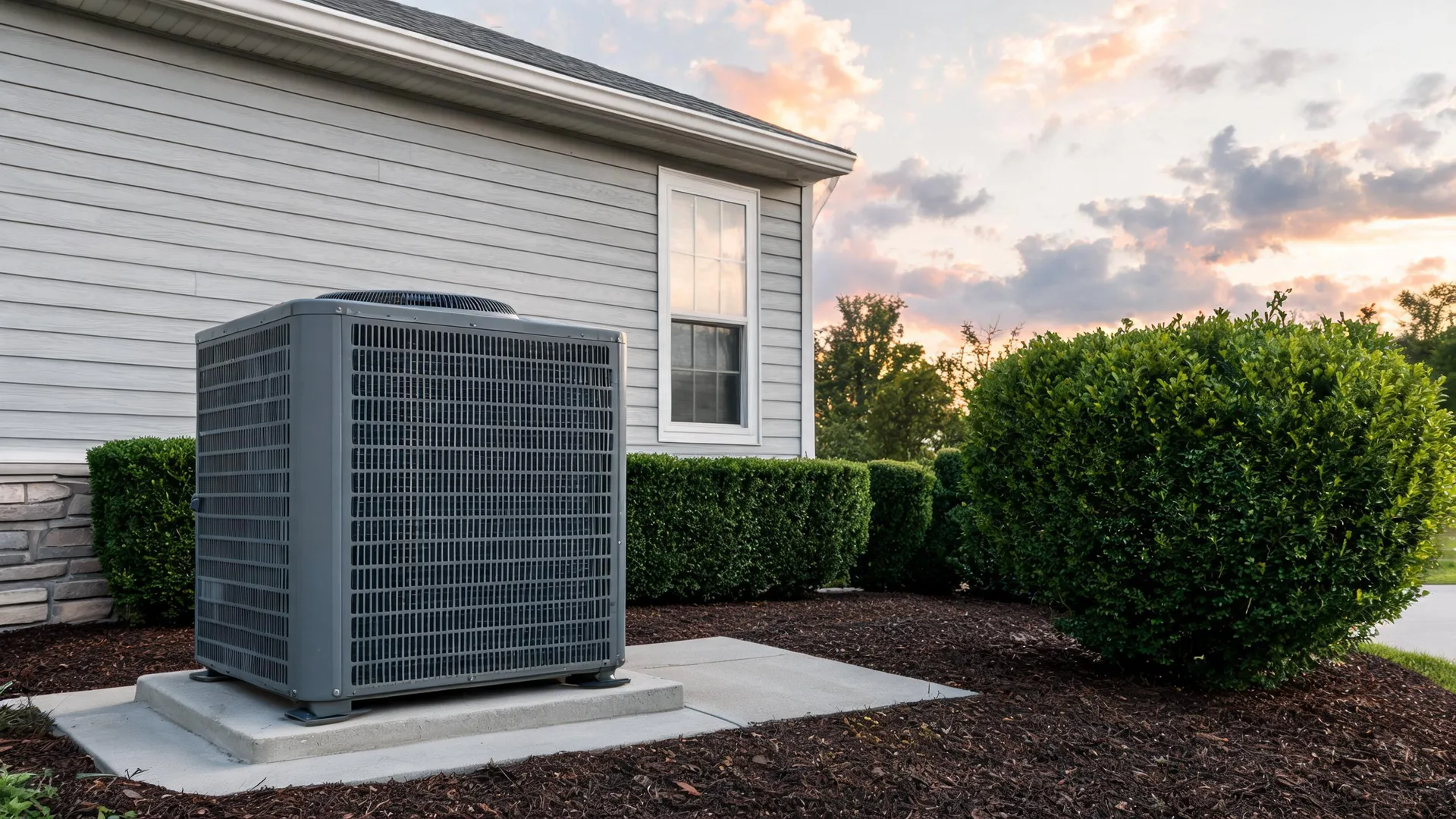
An outdoor air conditioning condenser unit installed beside the exterior wall of a blue vinyl-sided house at sunset.

AC Installation in Sumter, SC

Tell us about the job

Takes about a minute. No obligation.

New system or replacementCentral ACSumter County, SC
Step 1 of 2

What ZIP code is the job in?

The size has to match the house

A system that's too big cools the air fast and shuts off before it pulls the moisture out, so rooms feel clammy. One that's too small runs constantly and still can't keep up on the hottest days. Getting the size right takes a load calculation on the actual house, not a guess based on the old unit.


The install work decides how it performs for years

Refrigerant charge, airflow across the coil, and how well the ducts move air all come down to the work done on install day. A unit with a high efficiency rating still runs poorly if the charge is off or the ductwork can't deliver enough air. The equipment matters, but the labor is what makes it live up to its rating.

5 months
May through September, your air conditioner is on duty
90°F
the average summer afternoon it cools against
24 hail events
in ten years, and hail bends the fins on outdoor coils
13.4 SEER2
the federal minimum any new unit must meet
Isometric cutaway illustration of a small house showing interior rooms, ductwork, an indoor air handler, and an outdoor condenser unit connected by lines, on a plain white background.
Your air conditioner works hardest from June through September.

NOAA nClimDiv, 1991–2020 normals

South Carolina electricity ran 14.23 cents per kilowatthour in 2024.

A system sized and charged right earns back that rate every month it runs.

Five months of cooling start in May. April is when to put the new system in.

Cooling runs May through September
Summer afternoons average 90°F
182 damaging wind events from 2015 to 2024
Install for the storms that come through here235 severe weather events have hit Sumter County between 2015 and 2024.

Electricity heats 85.3% of homes in Sumter County. Almost all central air systems run on electricity too, so an AC install here usually means the wiring and breaker panel are already set up for it. Gas heat barely registers, at 8.8%, and bottled or LP gas even less. If your heat and your air conditioning are both electric, replacement is straightforward. The new system goes where the old one sat and draws power the way the last one did. It's still worth having the panel checked against the new unit's load before install day, especially if the old system is a lot older than what's going in.

Any new system here has to meet SC's higher efficiency minimum

Sumter sits in a warm, humid climate zone, and systems installed here have to meet 14.3 SEER2, higher than the national minimum. That rules out some of the cheaper units sold in other parts of the country. A system that meets the regional standard may also qualify for a federal tax credit. Worth asking about when you're comparing equipment.

Find a contractor
An outdoor air conditioning condenser unit mounted on a concrete pad beside a house, with electrical conduit running to a wall-mounted disconnect box.

Five months a year, 90 degrees outside. That's the job.

Five months of cooling, with afternoon highs averaging 90°F through June, July and August. That's the stretch this section's time-lapse covers, and it's what the new system has to stand up to every year, not just the first one. A unit that's sized and charged right will run long hours in that heat without the compressor or the coil taking the kind of strain that shows up early as a repair call.

The old unit gets disconnected and hauled off

The refrigerant gets recovered from the old system before it comes apart. That's required. A tech can't just cut the lines and pull it out. Once it's recovered, the outdoor unit, the indoor coil and the old line set come out, and the new equipment goes in on the same footprint most of the time.

The refrigerant in the old system can't just be vented

Old refrigerant has to be captured and stored, then either recycled or sent off for reclamation. A tech venting it to the air is against the law. If someone quotes a removal that skips this step, that's a sign to ask more questions before they touch the old unit.

Overhead view of a gray residential air conditioning condenser unit mounted on a concrete pad beside a house with asphalt shingle roofing.

A higher-efficiency unit would save about $30 a year to run in Sumter County compared with a new unit at the federal minimum.

  • A higher-efficiency unit$370 a year
  • A new unit at the federal minimum, 14.3 SEER2$400 a year

Estimates for a typical Sumter County home, from EIA household energy data, South Carolina fuel prices and NOAA climate normals. Your home will differ.

The SEER2 number on the label tells you how much cooling a system delivers for the electricity it uses, measured across a whole season rather than at one moment. A higher number means more cooling per unit of power, nothing about how big the system is or how fast it cools a room. Units with the same rating can still perform differently once installed, because that number comes from testing under set lab conditions, not from your actual ductwork. Airflow across the coil, the refrigerant charge, and how well the ducts move air all affect what the system uses to do its job. A unit with a strong rating that's undercharged or starved for airflow will draw more power than the label suggests. The rating is a starting point for comparing equipment, not a promise about what happens after it's installed.