




Single-story brick and white-sided houses behind a trimmed hedge and lawn, framed by overhanging oak branches draped with Spanish moss under an overcast sky.

AC Installation in Union, SC

Tell us about the job

Takes about a minute. No obligation.

New system or replacementCentral ACUnion County, SC
Step 1 of 2

What ZIP code is the job in?

Electricity in South Carolina ran 14.23 cents per kilowatthour in 2024. That's what every kilowatt your new system pulls gets charged at, all year. A unit with a higher SEER2 rating uses less power to cool the same house, and at this price per kilowatthour, that difference shows up on every bill it sends you. A cheaper, less efficient unit costs less to install and more to run. A contractor sizing a system for your house can walk you through what a given SEER2 rating means for what you'll pay to run it here.

5 months
May through September, your air conditioner is on duty
90°F
the average summer afternoon it cools against
11 hail events
in ten years, and hail bends the fins on outdoor coils
13.4 SEER2
the federal minimum any new unit must meet
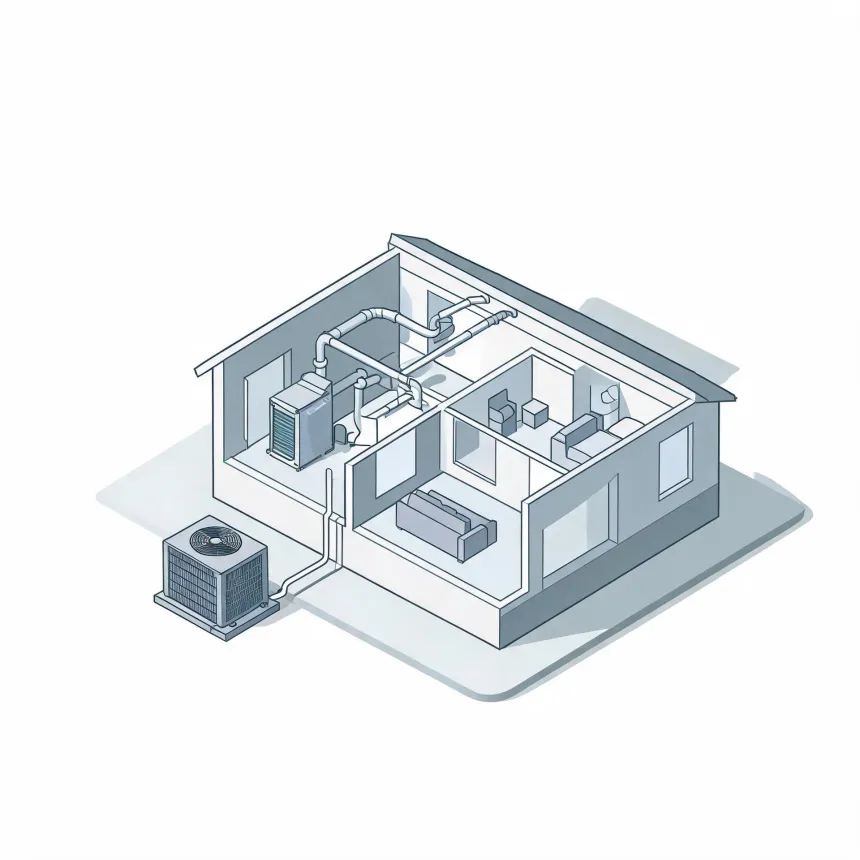
Isometric line illustration of a cutaway house showing interior rooms, a furnace or air handler with ductwork, and an outdoor condenser unit beside the building.
Your air conditioner works hardest from June through September.

NOAA nClimDiv, 1991–2020 normals

Cooling in Union County starts up in May.

April is when a new system should already be running, not when you start calling around.

Five months of 90 degree afternoons is what a new system here has to handle

Cooling runs May through September
Summer afternoons average 90°F
Power costs 14.23 cents a kWh statewide
Electric is the standard hereMost homes in Union County heat with electricity, 58.3 percent of them.

Union County is zone 3A, hot and humid for most of the year. Any split system installed here now has to meet at least 14.3 SEER2 if it's below 45,000 Btu/h, higher than what manufacturers have to meet nationwide. That's the rule for this region specifically, so it sets the floor on what a contractor can legally install in your house. A federal tax credit is also available toward the cost of qualifying equipment.

Sizing a system for a house built before the rules changed

Half the homes in Union County were built in 1972 or earlier. A system sized for your square footage on paper still has to match the ductwork and the layout already in the house, and in a house that old, that's worth having someone check in person rather than guess.

Find a contractor
A gray residential air conditioner condenser unit mounted on a concrete pad in an open grass field.

What the number on the label actually promises

That SEER2 number on the label is a ratio, how much cooling the unit produces for the power it draws. It is not how big the system is and not a promise about what any one bill will look like, because that also depends on the ductwork, the thermostat settings, and whether the unit was installed correctly. A system with a high rating still needs the right refrigerant charge and the right airflow across the coil to actually perform at that rating. Skip either one and the number on the label stops meaning much. The rating also reflects a system cycling on and off over a full season, not a single afternoon at peak heat, so on the worst days every unit is working harder than its label suggests. What the rating buys you is efficiency under normal conditions, not an exemption from a careful installation.

Size comes before price

A contractor has to work out how much heat the house actually gains before quoting a system. That means measuring the rooms, checking the windows and insulation, and looking at the ductwork, not just matching the old unit's size. A system sized wrong costs more either way. Too small and it runs constantly without keeping up. Too big and it cycles on and off without pulling moisture out of the air.

The ductwork decides what's possible

New equipment still has to move air through the ducts already in the house. Ducts that are too narrow, leaky, or poorly laid out can force a contractor to resize or seal them before the new system will perform the way it's rated to. That work isn't optional if the ductwork can't handle what the new unit pushes through it. It changes what the job involves well beyond swapping one unit for another.

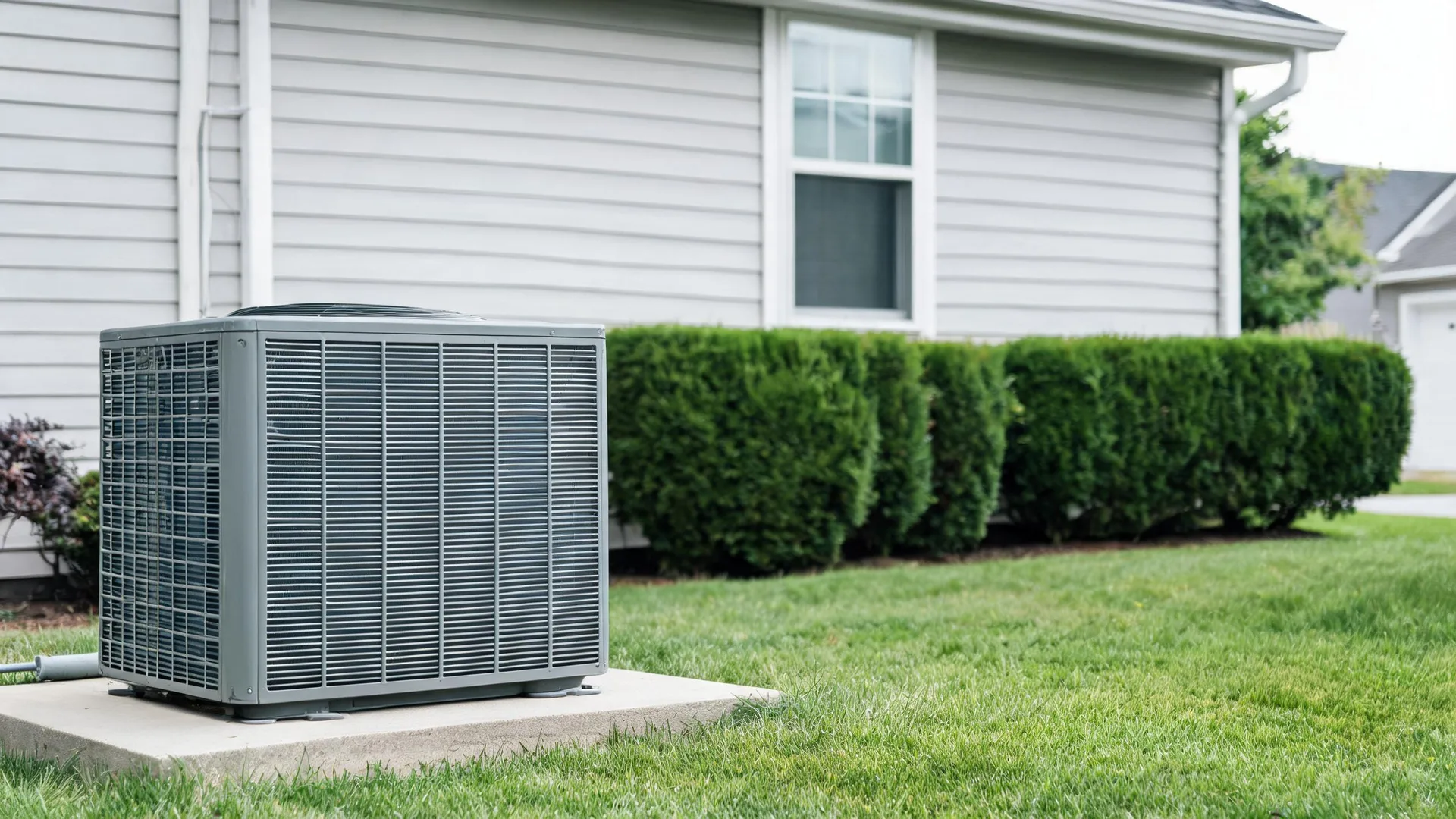
An outdoor air conditioning condenser unit on a concrete pad next to the gray vinyl siding of a residential home.

Going above the federal minimum saves little here, about $20 a year.

  • A higher-efficiency unit$320 a year
  • A new unit at the federal minimum, 14.3 SEER2$340 a year

Estimates for a typical Union County home, from EIA household energy data, South Carolina fuel prices and NOAA climate normals. Your home will differ.

Installation day starts with the old equipment coming out, not the new one going in. The outdoor unit gets disconnected and hauled off, and the coil inside, above the furnace or air handler, comes out too. If the refrigerant lines are being replaced rather than reused, whatever refrigerant is left in them has to be recovered properly, not vented into the air. Once the new coil and outdoor unit are set, the lines get connected, then pressure tested for leaks, then pulled down into a vacuum to clear out air and moisture before any refrigerant goes in. That step matters as much as anything else that happens that day, because moisture left behind turns into acid and eats away at the system from the inside over time. The refrigerant charge gets weighed in to the manufacturer's spec rather than guessed at, and airflow across the coil and through the ductwork gets checked before the thermostat is wired up and the system is run through a cycle to make sure it is actually cooling the way it should.