
Heat pump leaking water in Goose Creek, SC

RepairHeat PumpBerkeley County, SC
Step 1 of 2

What ZIP code is the job in?

Water pooling near your indoor unit usually means the condensate drain line is clogged. A heat pump pulls moisture out of the air year round, not just in summer, and that water has to drain out through a small tube that algae and dirt build up inside over time. Once it's blocked, the water backs up and spills out of the pan instead, often onto the floor near your air handler, sometimes into the ceiling below it if the unit sits in an attic. A frozen coil can cause the same thing, water everywhere as the ice melts, usually from low refrigerant or restricted airflow. With Goose Creek's long muggy summers, that drain line works hard for months at a stretch, so a clog is more likely here than somewhere drier. If you catch it early, the fix is usually quick. Left alone, the water can soften flooring, stain ceilings below, and run up a repair instead of a simple clearing.

A gray outdoor condenser unit on a concrete pad beside a house with horizontal lap siding, a conduit and disconnect box on the wall, a shrub with white flowers at right and evergreen foliage at left.

Draining the way it should

Water leaves the drain line steadily and never reaches the pan edge. The unit outside runs quiet, the pad stays dry, and no line is sweating or clogged with buildup. This is what a clear condensate line looks like from the outside.


A weathered outdoor condenser unit on a concrete pad beside a house with white horizontal vinyl siding, with refrigerant lines and conduit running to a wall-mounted electrical box.

Grime and a slow drain

Grime on the grilles and a pad that stays damp point to a drain line losing the fight against algae inside it. Left alone, the clog backs up further and the water finds somewhere else to go, usually your floor or ceiling.

Why does your heat pump work this hard nearly all year?

  • Winter nights average 38°F

    Winter nights average 38°F here, cold enough that the heat pump runs steady, not just in a cold snap, so the drain line stays busy right through winter.

  • Heat runs November through March

    Heat runs November through March in Berkeley County, five straight months where the indoor unit keeps producing condensate that has to find its way out through that line.

  • Cooling runs May through October

    Cooling runs May through October, six months of pulling moisture out of thick coastal air, which means the drain line rarely gets a break to dry out and clear itself.

NOAA nClimDiv 1991-2020

How the water actually gets there

  • Warm indoor air hits the cold evaporator coil and condenses into water the same way a cold glass sweats on a porch table.
  • That water drips into a shallow pan under the coil, then runs out through the condensate drain line.
  • A wet, dark drain line is a good spot for algae and sludge to build up and narrow the opening over time.
  • Most systems route that line to a drain near the outdoor unit or a floor drain, so a clog shows up as standing water indoors first.
  • Some air handlers have a float switch that shuts the system off once water backs up past a set point.
  • A fully blocked line can back water up into the pan faster than it was ever designed to hold, especially during a long run.

Your heat pump cools indoor air by running it over a cold evaporator coil. Moisture in that air condenses on the coil the same way a cold glass sweats on a porch table in Goose Creek. That water has somewhere to go by design. It drips down into a shallow pan mounted under the coil, then leaves the air handler through the condensate drain line, usually heading out to a drain near the outdoor unit or into a floor drain.

The line itself is what causes trouble later. It stays wet and dark inside, which is exactly the condition algae and sludge need to grow. Over months that buildup narrows the opening until water can't move through fast enough, or at all. Because the line usually runs to a drain outside or in a utility area, you won't see the clog itself. What you see is water showing up somewhere it shouldn't, usually indoors, because that's where the pan overflows once the exit is blocked.

Some air handlers have a float switch sitting in the pan that shuts the whole system down once water rises past a certain point. That's a safety feature, not a malfunction. If your system doesn't have one, or the switch has failed, a blocked line lets the pan fill past what it was built to hold, especially if the heat pump has been running a long stretch without a break.

A beige outdoor air conditioning condenser unit on a concrete pad beside a house with horizontal vinyl siding, with refrigerant lines and a disconnect box on the wall, surrounded by dark mulch and a green shrub at left.
The pad is dry and the conduit runs clean up to the disconnect, nothing dripping or pooling anywhere nearby.
An outdoor air conditioning condenser unit on a concrete pad beside a house with light horizontal siding and a concrete block foundation, with bare soil and small green plants around it.
Grime like this on the fins usually means the coil underneath is dirty too, and a dirty coil freezes up and backs water into the pan.
A woman with long dark hair in a gray knit sweater sits on a gray sofa with a cushion, looking toward a window in a living room with framed pictures and a lamp in the background.
A woman with dark hair in a bun, wearing a light linen shirt, sits on a sofa and looks to the side, with a window, houseplants and a kitchen with pendant lights blurred behind her.
A woman with long blonde hair in a light blue shirt leans back on a beige sofa with her eyes closed, in a softly lit living room with cushions and a blurred plant and shelf in the background.
A woman with long dark hair in a light grey knit sweater sits on a sofa indoors, looking to her right, with a framed landscape picture, a potted plant and a curtained window behind her.

Get matched with a heat pump pro in Berkeley County

That clog does not clear itself, and a heat pump running nearly year round in Berkeley County keeps feeding water into a line that is already slow or blocked. Each day it sits, the pan fills closer to the edge, and once it tops out, water finds the ceiling or the floor around the unit instead of the drain. A tech who works on heat pumps in Goose Creek through both the humid stretch and the mild winter has seen this line clog from algae, from dirt, from a sagging section of tube, and knows where to look first instead of guessing. One contractor taking on your call means someone local sees the whole picture, the drain, the pan, the coil above it, rather than a different person showing up for each piece. Get matched with that contractor now, before the water pooling near your unit turns into water in the ductwork or the subfloor underneath it.

A clogged drain line does not back up all at once. It fills slowly, inch by inch, until the pan can no longer hold what the coil keeps producing.

Once the pan overflows, the water does not wait for a dry day in Goose Creek to stop. It keeps coming as long as the heat pump runs, which here is most of the year.

A weathered gray outdoor condenser unit on a concrete pad beside a house with horizontal vinyl siding, with conduit, refrigerant lines, and an electrical disconnect box on the wall behind it.
Before you get your heat pump repair
An outdoor condenser unit on a concrete pad beside a gray lap-sided house, with an electrical disconnect box and conduit on the wall and shrubs with mulch to the right.
After you get your heat pump repair

Left alone

The drain stays clogged and the pan keeps filling. Water finds the ceiling below or the floor around the unit, and that damage costs more to put right than the drain ever would.

Find a local pro

Cleared out

A contractor who works on heat pumps all over Berkeley County clears the line, checks the pan, and gets water draining the way it was built to again.

Find a local pro

What are you noticing around your heat pump right now

A damp spot on the carpet or ceiling tile near the indoor unit. A musty smell in the closet or attic where it sits. Maybe a drip you can hear before you can see it, or water standing in the pan under the air handler. Outside, the pad might stay wet long after the unit shuts off. If you've checked the drain line yourself and water isn't moving through it, or it backs up again within a day or two of clearing it, the clog is further in than you can reach. Left alone, that water keeps finding somewhere to go, and in a house in Goose Creek that means stained drywall, soft flooring, or warped cabinets near the unit.

  1. A contractor checks the pan and the line for standing water.

  2. A wet or dry vacuum pulls the clog from the drain line.

  3. Vinegar or a cleaning solution flushes algae from inside the line.

  4. The float switch gets tested so it shuts the system off next time.

Clear It Yourself or Call It In

DIY clear

  • A wet-dry vacuum at the outdoor end of the line can pull a soft clog loose if you catch it early enough.
  • Vinegar poured down the indoor access point can break up algae, but it needs to sit and repeat to work through a real buildup.
  • You have no way to check whether the float switch still works once the line is clear, so the next clog can overflow again unnoticed.
  • Without pulling the panel off, you can't see whether the coil above the pan is dirty too, which is often what caused the clog to form.
  • A line that seems clear at the outdoor opening can still be blocked further up near the pan, where a vacuum from outside won't reach it.

Contractor repair

  • A contractor checks the full length of the line, not just the end you can reach, and finds where the actual blockage sits.
  • Clearing the line and flushing it gets backed by a look at the coil and the pan, so the cause gets fixed, not just the symptom.
  • The float switch gets tested as part of the visit, so the system shuts itself off before the pan overflows next time.
  • A local contractor who works on heat pumps through Berkeley County winters and summers alike has seen this particular clog many times over.
  • One contractor takes the job, so you are not fielding calls from several companies while water sits in the pan.
An older woman with short blonde hair in a cream knit sweater smiles while looking to the side in a kitchen, with a round loaf of bread on a wooden board in the foreground and a snow-covered window behind her.
A woman with her hair in a bun holds a sleeping child against her chest while both are wrapped in a grey knit blanket on a couch, with a lit lamp and potted plant blurred in the background.

Power here costs 15.58 cents per kilowatt-hour

At 15.58 cents per kilowatt-hour, running your heat pump nearly all year in Berkeley County adds up fast. A clogged drain line making it work harder, or run longer to push water through a restricted system, shows up on that bill before you ever see it pooling.

EIA-861 2025

A gray outdoor condenser unit on a concrete pad beside a light-green sided house, surrounded by mulch, ornamental grasses and a shrub, with mowed lawn in the foreground.

Outside unit, clear and dry

The pad underneath stays clean and dry, with the mulch and grass around it undisturbed. The coil fins behind the grille run clear, so air moves through them the way it should. Nothing drips from the unit, and the disconnect box on the siding stays untouched by any runoff.

An outdoor air conditioning condenser unit with a top fan grille sits on a concrete pad beside a house with horizontal siding and a concrete step.

Coil caked with grime

The fins and grille behind this unit are dark with dust and debris, built up layer by layer over time. Air cannot move through a coil like this the way it needs to, and that restriction is often what pushes water back into the pan instead of out the drain line.

A woman in a cream sweater and jeans stands in the open doorway of a white stucco house, holding the dark door, while a man in a dark quilted jacket seen from behind walks toward the entry past potted plants.

Water where it shouldn't be means a clogged drain line

Water around your indoor unit almost always comes back to that same clogged drain line. The fix is straightforward once someone gets eyes on the pan, the line, and the float switch. Left alone, it only gets worse, because the coil keeps producing water as long as the heat pump runs, and in Berkeley County that's most of the year.

Getting matched means a local contractor who works on heat pumps through every month this one runs, not just the busy stretch in summer, reaches out to you directly. One contractor, not a handful of companies competing for the callback, someone who already knows what a clogged line in this climate usually looks like before they walk in the door. From there, it's a short list: clear the clog, check the switch, make sure it drains the way it's supposed to.

Interior corner of a living room with a sheer-curtained window, a light wood console table holding a vase of greenery and a shallow bowl, a woven basket on the lower shelf, and a blurred upholstered sofa and dark wood table in the foreground.
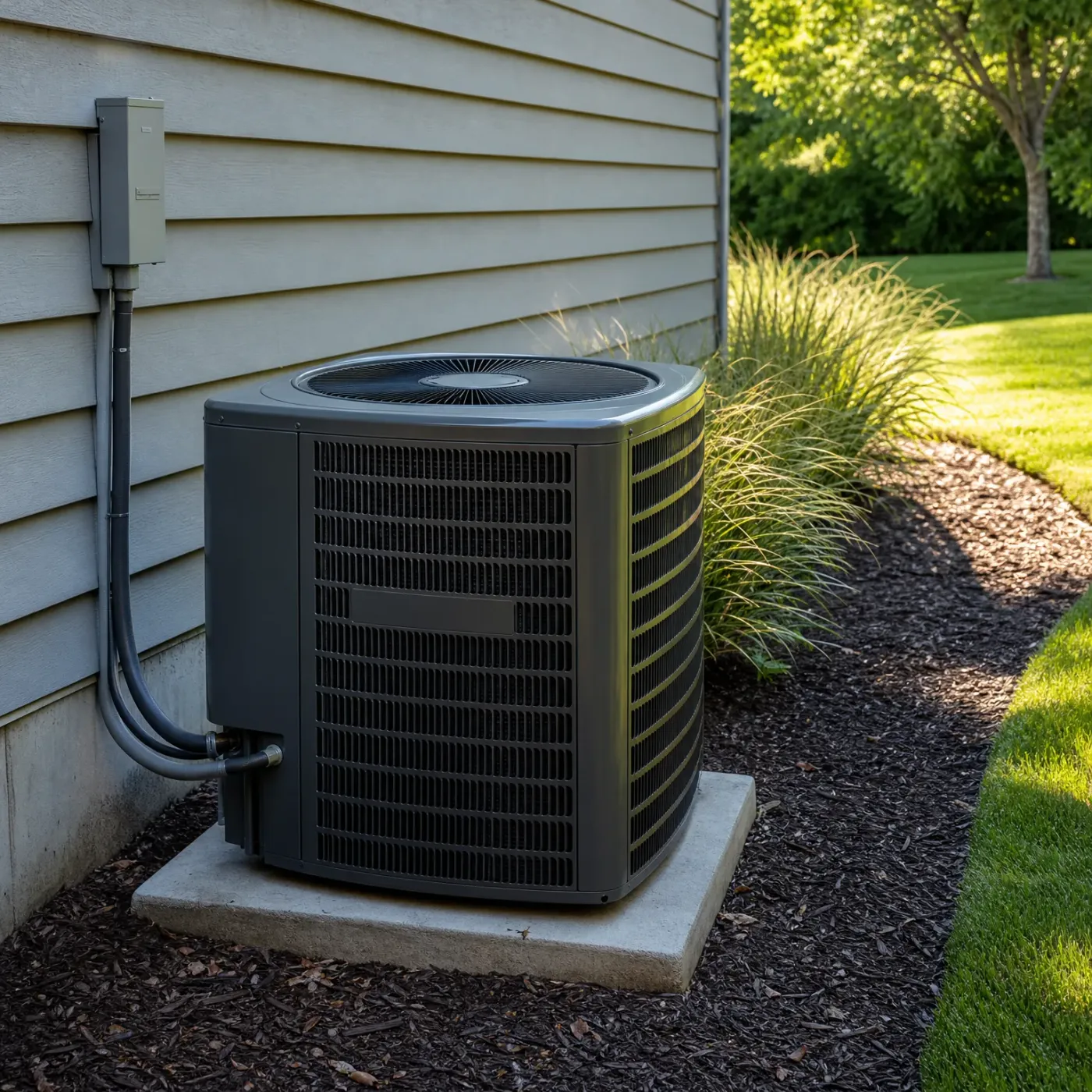
An outdoor air-conditioning condenser unit on a concrete pad beside a house with pale horizontal siding, with a gray electrical disconnect box and conduit on the wall and ornamental grasses and mulch nearby.

Get the right pro for your heat pump

Get a licensed local pro

The pro who gets in touch is licensed in South Carolina and works in Berkeley County.

No fee to send it, and nothing to sign.