







Two illuminated white colonial-style houses with wrap-around porches, flanked by oak trees draped in Spanish moss, photographed at night.

AC Maintenance in Columbia, SC

Tell us about the job

Takes about a minute. No obligation.

Tune-up, service, or cleaningCentral ACRichland County, SC
Step 1 of 2

What ZIP code is the job in?

Between visits, the main thing you control is the filter. A dirty filter chokes airflow across the coil, and the coil needs that air moving to do its job. Check it once a month and hold it up to the light. If you can't see light through it, swap it. Keep the area around the outdoor unit clear too, pull weeds back, trim bushes so air can pull through the condenser fins. Inside, make sure vents aren't blocked by furniture or rugs, since closing off rooms changes the pressure the whole system runs at. Beyond that, leave the refrigerant and the electrical side alone. That's what the tech's visit is for.

5 months
May through September, your air conditioner is on duty
91°F
the average summer afternoon it cools against
49 hail events
in ten years, and hail bends the fins on outdoor coils
360 wind events
in ten years, and wind drives debris into outdoor units
Isometric cutaway illustration of a single-story house showing interior ductwork and an air handler connected by lines to an outdoor condenser unit on a pad beside the building.
Your air conditioner works hardest from June through September.

NOAA nClimDiv, 1991–2020 normals

A quick visit checks if the system turns on and blows cold.

A real tune-up checks the refrigerant charge against the system's rating, tests the capacitor under load, and pulls the panel to look at the coil itself.

May is when cooling starts here, so April is when it gets checked

Cooling runs May through September
Summer afternoons average 91°F
360 damaging wind events from 2015 to 2024
A neglected AC spends more to do lessSouth Carolina power ran 14.23 cents a kilowatt-hour in 2024, and a dirty system burns more of it.

Half the homes in Richland County were built in 1989 or later. If yours is one of them, the AC inside it may be younger too, especially if it's been replaced once since the house was built. A system in good working order doesn't fail out of nowhere. It loses a little capacity each year from wear a tech can catch early, a capacitor starting to weaken, a coil picking up dust. A yearly check catches that wear while it's still small and keeps a newer system running the way it did when it went in.

Book it before the season

It starts running hard in the first month of the season here. Book the check the month before.

Find a contractor
A man in a dark long-sleeve shirt and tan pants, seen from behind, carries a canvas tool bag up wooden porch steps toward a dark green front door of a shingled house.
An outdoor air conditioning condenser unit mounted on a concrete pad surrounded by gravel, photographed against a partly cloudy blue sky.

A newer system is worth keeping that way

A system installed in the last several years still has most of its working life ahead of it. One check a year, every year from the start, is what keeps it running that way. Skip a few years and the small wear adds up without anyone noticing, until it shows up as a compressor that won't start or a coil so dirty the system can't keep up. Catching it early is the whole point of going every year instead of waiting until something sounds wrong.

The system tells you before it quits

A warm room that used to feel fine, a cycle that runs longer than it used to, a hum from the outdoor unit that wasn't there before. These are small changes, easy to explain away. They're also the first sign of a weak capacitor, a low charge, or a coil losing its ability to pull heat out of the air.

Some signs only show up with the panel off

A failing capacitor can still start the compressor right up until the day it can't. A coil can be coated in dust and still blow air that feels cold enough at the vent. The system can pass every test a homeowner can run from the thermostat and still be a season away from a breakdown a tech would have caught by looking.

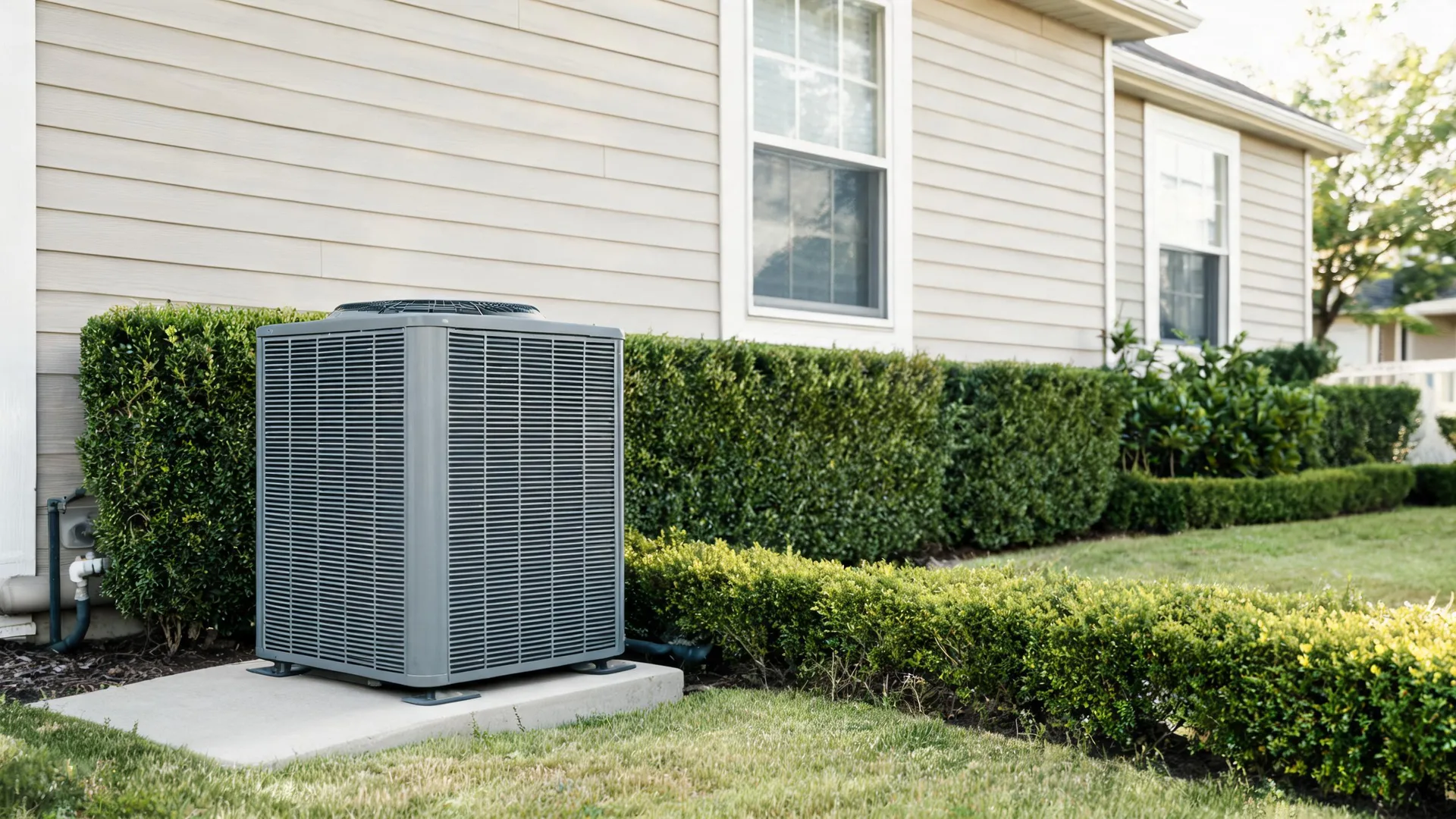
An outdoor air conditioning condenser unit positioned beside a blue-sided house at sunset.

Book your AC tune-up in April, before homes here start needing cooling in May.

  1. Jan
  2. Feb
  3. Mar
  4. Apr
  5. May
  6. Jun
  7. Jul
  8. Aug
  9. Sep
  10. Oct
  11. Nov
  12. Dec

A tune-up checks the refrigerant charge, cleans the coils, tests the capacitor and tightens the electrical connections.

A tune-up starts outside at the condenser. The tech cuts power, pulls the panel, and checks the capacitor under load rather than just by eye, since a weak one can still kick the compressor on and still fail within months. The coil gets inspected and washed if it's picked up dust, because a dirty coil can't pull heat out of the air as well as a clean one. Refrigerant gets checked against what the system is rated for, not topped off by habit. Inside, the tech checks the blower wheel for dust buildup and makes sure the motor is pulling the right amperage. Electrical connections get tightened, since a loose connection generates heat and that heat wears the connection further.